


The Fed's quarterly interest payments just went vertical.
Not rising steadily. Vertical. Logarithmic. The kind of exponential curve that appears right before systems break.
Since 2008, their debt service has compounded at rates that would bankrupt any private company.
But the Fed isn't a private company. They can print money to service debt…until suddenly they can't.
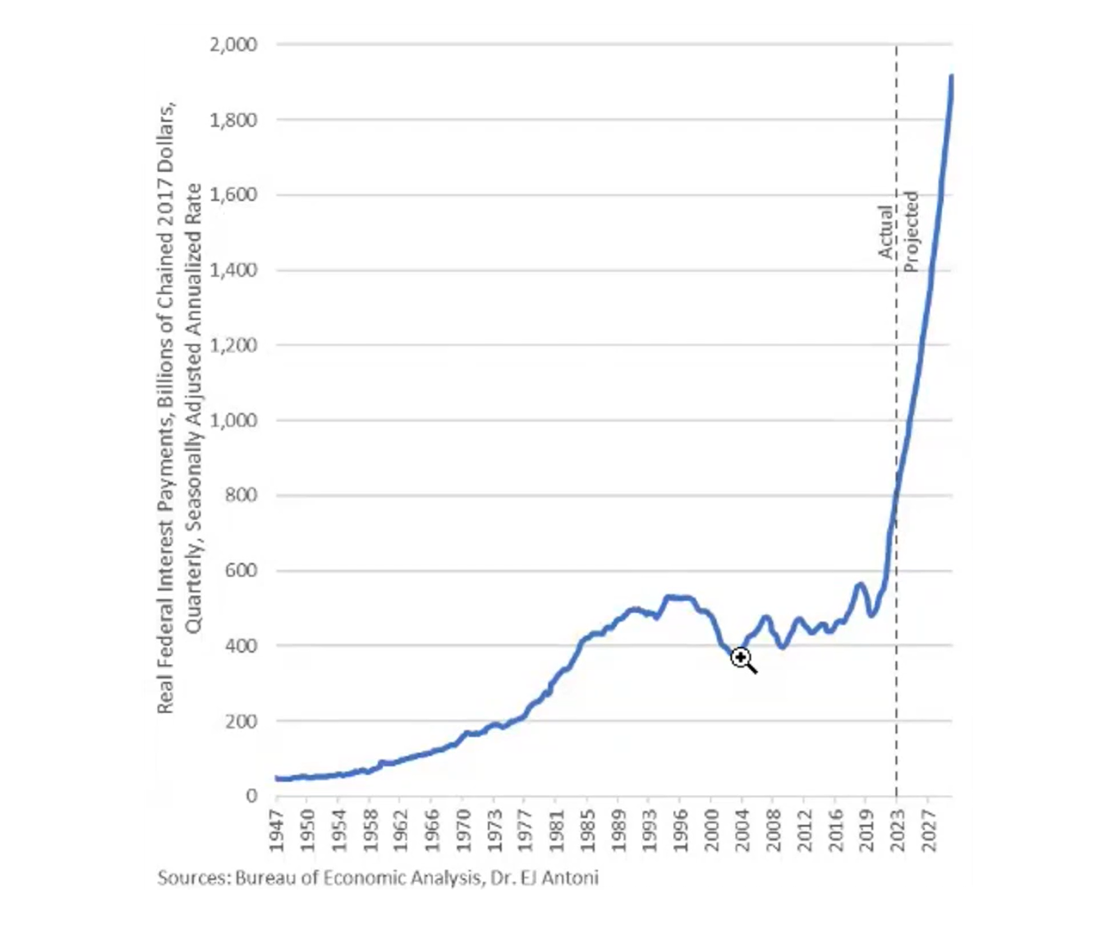
That curve tells you everything about what's coming.
When the Fed's interest payments go exponential, they have exactly two choices:
- Default on the debt
- Print more money to service it
They always choose printing, which means injecting more liquidity into a market already sitting at record highs.
That's what Ray Dalio calls "stimulating into a bubble." When central bank intervention stops preventing collapse and starts causing it.
Most traders see the S&P making new highs and think everything's fine.
They don't see the exponential debt curve underneath driving the whole system toward a breaking point.
Today I'm showing you exactly:
- How that Fed interest payment curve connects to the consumer debt crisis already showing up in the data
- Why this creates a vicious cycle that can't be stopped once it starts
- And how algorithms are already repositioning for the systematic selling that comes when this cycle breaks.
Here’s the thing, you can beat the Fed and Wall Street simultaneously.
The Genesis COG Scanner tracks these exact algorithmic behavior shifts.
When machines detect debt sustainability ratios crossing critical thresholds, they don't wait for confirmation…They reposition instantly.
The scanner reveals those footprints before weekly indicators confirm the reversal.
Now, let’s get into why the Fed interest payment curve guarantees what happens next.
Why Vertical Interest Payments Force More Debt
The Fed's exponential interest payments don't exist in a vacuum. They create pressure that cascades through the entire financial system.
Here's the mechanism.
When the Fed's debt service costs explode, they need to inject more liquidity just to keep the system functioning.
That liquidity flows into asset prices. Stocks go up. Housing goes up. Everything inflates.
But wages don't keep pace. Consumer purchasing power actually declines even as asset prices surge.
So consumers do what the Fed does. They borrow to maintain their lifestyle. Credit card balances explode. Auto loans hit record levels. The debt cycle mirrors itself at every level of the system.
Now the Fed faces a choice. Stop injecting liquidity and let asset prices collapse. Or keep printing to service their exponential interest payments.
They always choose printing. Which means more liquidity chasing the same goods. Which means inflation stays elevated. Which means consumers need even more debt just to survive.
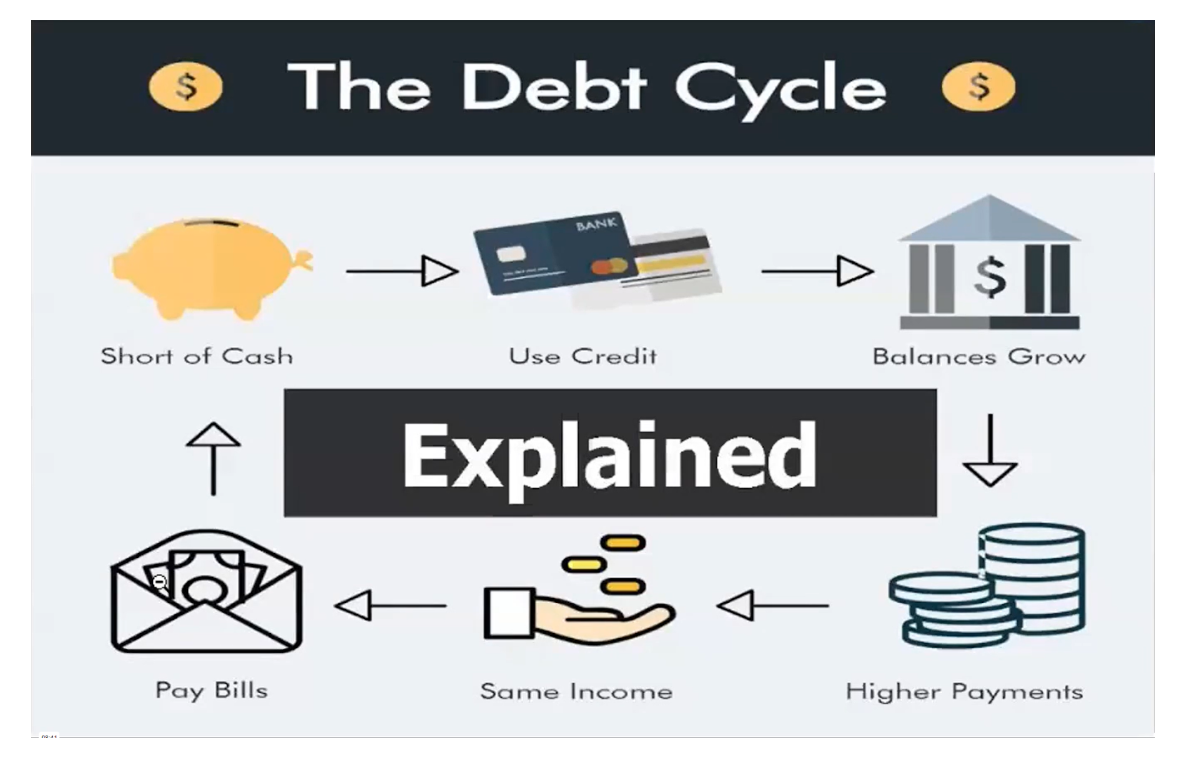
The market runs short of cash because everyone's levered. The Fed injects liquidity through repos. Asset prices stay elevated but consumer costs rise. Consumers go short of cash. They reach for credit cards. Interest payments eat them alive. They pay bills then immediately need more debt.
The cycle feeds on itself. At the Fed level. At the consumer level. At the institutional level. Everyone playing the same game of borrowing to service existing debt.
This is what economists call a vicious cycle. One negative situation triggers another. Each trigger makes the original problem worse. Once you're inside this feedback loop, there's no way to reverse course without breaking something.
The Data Showing It's Already Breaking
That vicious cycle isn't theoretical. It's showing up in three specific data points right now.
Credit card delinquencies just hit 12.41%. That's the highest rate since 2011. The data came out less than a week ago.
This number connects directly to that Fed interest payment curve. When the Fed prints money to service exponential debt costs, inflation stays elevated. Consumer purchasing power declines. Credit card balances become impossible to service.
The 12.41% delinquency rate isn't random. It's the mathematical result of the Fed's debt spiral manifesting in consumer finances.
The government shutdown has cost $75 billion over five weeks. That's $15 billion per week siphoned directly out of GDP.
This compounds the problem. Reduced GDP means lower tax receipts. Lower tax receipts mean the Fed needs to issue even more debt. More debt means higher interest payments. The cycle accelerates.
Car sales are declining while car defaults are rising. Interest rates went up. Consumers can't afford the payments. They're defaulting on existing auto loans while new sales collapse.
This is the exact pattern that preceded 2008. Consumer credit stress showing up in hard goods purchases before it shows up in employment data or market indexes.
These three data points aren't isolated statistics. They're interconnected evidence of the same debt cycle breaking at multiple pressure points simultaneously.
The Fed's exponential interest payments created the conditions. Consumer debt stress is how it manifests. The question isn't whether this breaks. It's when algorithms detect the breaking point and flip from systematic buying to systematic selling.
Why Algorithms Are Repositioning Now
The machines don't wait for consumer stress to show up in headlines. They calculate debt sustainability ratios in real time and reposition before the breakdown becomes obvious.
I built systems like this at ThinkorSwim. The algorithms measure exactly when Fed liquidity injections transition from supporting rallies to triggering collapse. When one more dose of stimulus accelerates the vicious cycle instead of stabilizing it.
Right now those calculations are showing stress levels I haven't seen since 2008. Credit card delinquencies at 12.41% while the Fed expands their balance sheet. That's not two separate events. That's the same debt cycle playing out at different levels.
When machines detect this pattern, they don't short aggressively. They rotate systematically. Building short exposure. Reducing long exposure. Repositioning before momentum indicators even roll over.
You see this in slope changes before price breaks. Volume patterns shifting before the crowd notices. Momentum divergences appearing weeks before weekly indicators confirm.
The same systematic buying that defended every dip for months flips to systematic selling in milliseconds. No announcement. No warning. Just mathematical repositioning as debt sustainability ratios cross critical thresholds.
Most traders won't see this until the weekly MACD rolls over and systematic selling has already begun. By then you're watching your account drop 10% in three days wondering what happened.
The machines saw it weeks earlier. They detected when that Fed interest payment curve crossed exponential growth levels that historically preceded corrections. They measured when consumer stress data confirmed the debt cycle was accelerating. They repositioned before the crowd knew there was a problem.
That's why I'm at 65% cash now with nine short positions and eight long positions. I'm not predicting a crash. I'm responding to the same debt sustainability calculations the algorithms are processing.
Ray Dalio's research shows typical resets range from 10% to 30%. On the horrific side, 30% to 40%. You're going to get a correction of at least 10%. That's mathematically guaranteed once debt cycles reach this stage.
The only question is whether you see the algorithmic repositioning before systematic selling begins. Or whether you're still buying dips when every rally gets sold.
Once we take out 6550 on the S&P, momentum breaks before trend. That's when you'll know the machines have fully flipped their programming. Every bounce will face systematic selling until the debt cycle completes its reversion.
The gap between what retail sees and what algorithms calculate is everything.
Retail sees new highs and thinks the party continues.
Algorithms calculate debt sustainability ratios and build short exposure before momentum indicators confirm.
That's the difference between reacting to what happened and seeing what's loading before it fires.
Watch how algorithms reposition when debt cycles reach breaking points.
Professor Jeffrey Bierman
Creator of the Genesis COG System