


I stopped ordering Chipotle.
Not because I'm cheap. I've never been stingy about food quality. After 20 years in the markets, I know what good value looks like.
But $80 for two burritos and chips delivered to my house crossed a line.
My wife started making them at home instead. Better ingredients. Better taste. A fraction of the cost. We grill the meat Sunday night and warm it up throughout the week.
That personal decision wasn't just about saving money. It was a signal. The kind of signal most traders miss because they're too busy watching the S&P bounce back to green on a Powell speech day.
The American consumer is tapped out. When consumers tap out, they don't just hurt restaurant stocks. They create massive structural shifts in currency markets that unfold over weeks and months, not minutes and hours.
Today, I'll show you:
- The specific technical levels that signal when consumer weakness becomes consumer capitulation
- Why forex traders see these breakdowns before they show up in earnings reports.
- The exact setup I'm watching right now that could define the next several months of market action.
The Charts Don't Lie
Starbucks is sitting at $87 after touching $75. That $75 level represents three-year lows. 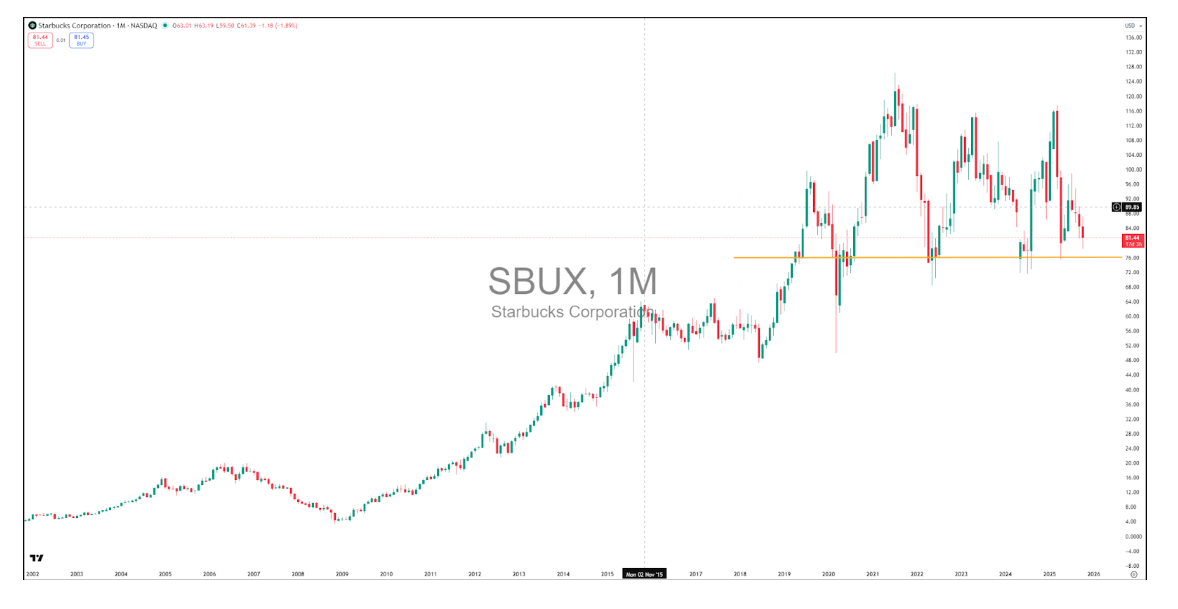
The last time we saw these prices, consumers weren't struggling. They had stimulus checks. They had savings. They had hope.
Now? Defaults are rising. Auto repos are climbing. Credit card balances are maxed.
Chipotle gapped down and hasn't recovered. 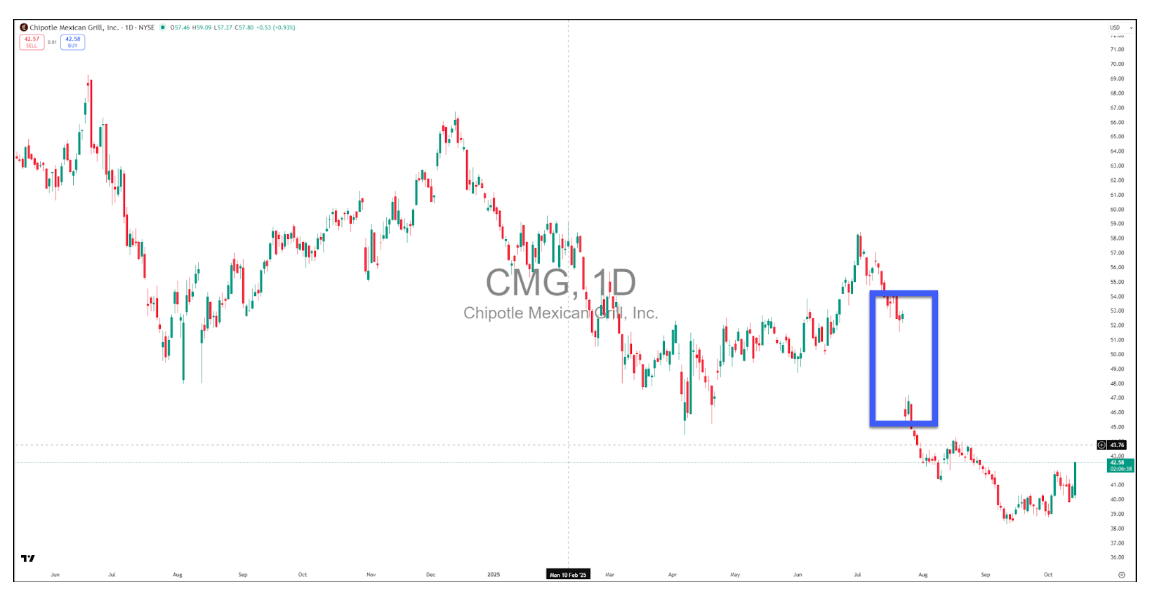
That gap sits there like an open wound. When I see a gap like that in a consumer brand that built its reputation on "quality ingredients" and then abandoned that promise while jacking up prices, I know the breakdown is coming.
Airbnb is clinging to support. 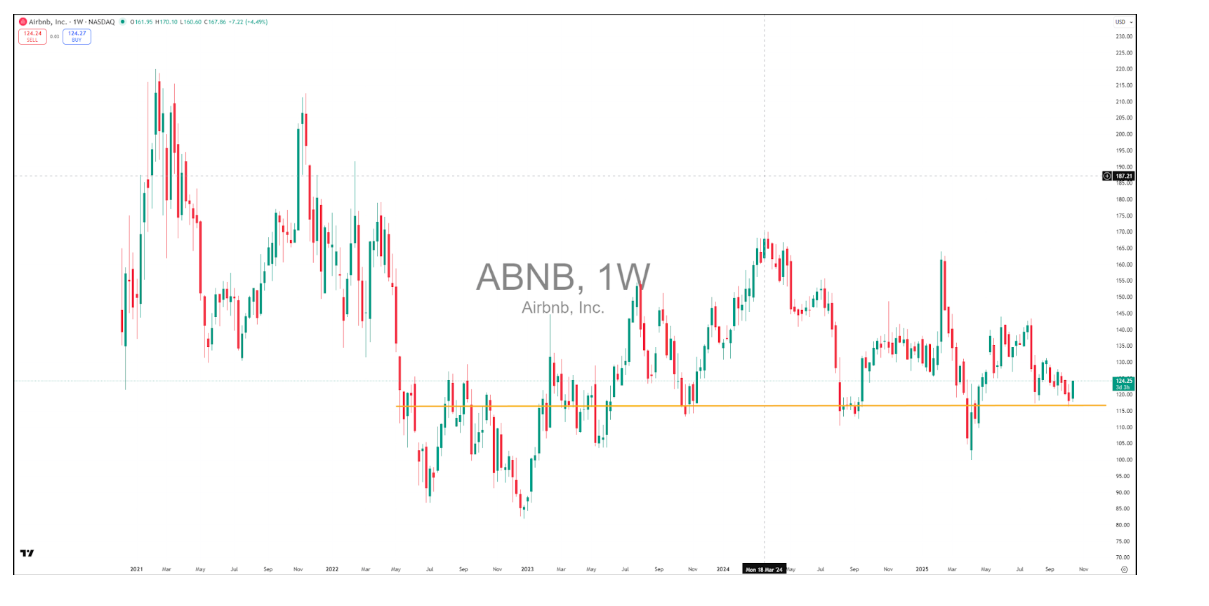
All those real estate influencers who told people to buy 15 properties and leverage them to the hilt are about to learn an expensive lesson. When consumers stop traveling, those monthly payments don't stop.
These consumer discretionary names tell a broader story about inflation. The weakness in these stocks reveals something alarming about the underlying economic pressures facing Americans. When you dig into the numbers, the picture gets worse.
The Inflation Paradox
Oil has been down for almost four years. We peaked in March 2021. In any normal economic environment, sustained energy price weakness would have crushed inflation by now.
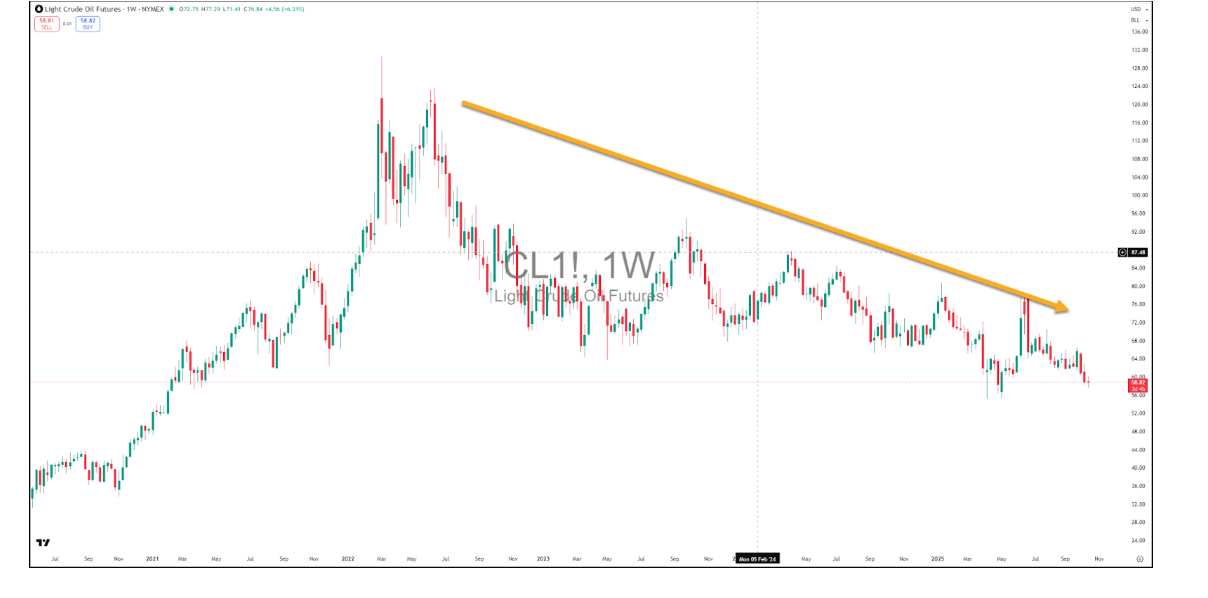
But we're still running 2.5% to 3% inflation with oil in the dirt.
What happens when oil bottoms? When energy prices reverse? Pandora's box opens and we're looking at a whole can of worms.
The Fed is cutting rates. The administration wants a weaker dollar. They're getting their way for now because oil is down. But this is borrowed time. The moment energy rebounds, inflation accelerates again.
The consumer who's already substituting Chipotle for home-cooked meals? They're done.
Why Forex Traders See This First
I trade the E6. Euro FX futures. One market. 24-hour liquidity. Structural moves that develop predictably when you know what signals to watch.
Consumer weakness feeds directly into dollar policy. When Americans stop spending, the global growth engine sputters. Central banks react. Currency flows shift. The moves happen in forex before they show up in retail earnings reports.
I'm not waiting for Starbucks to report quarterly results and gap down. I'm watching the currency pairs that signal the breakdown weeks in advance.
The E6 moves with precision. It respects technical levels. It doesn't care about meme stocks or Twitter hysteria. It simply responds to the macro forces that drive everything else.
The Levels That Matter
Watch Starbucks at $75. If that breaks, the consumer discretionary sector has real problems.
Watch Chipotle's gap. Gaps like that don't fill when the fundamental story is broken.
Watch Airbnb support levels. When over-leveraged property owners start liquidating, single-family home inventory floods the market.
These aren't stock picks. They're economic indicators telling you where currency flows are headed next.
Most traders will wait for these levels to break, then scramble to figure out what it means. By then, the cleanest part of the move is already over.
The Substitution Wave Is Here
People don't stop spending entirely. They substitute. They trade down.
$7 Starbucks lattes become home-brewed coffee. $15 Chipotle bowls become homemade tacos. $200 Airbnb weekends become staycations.
That substitution shows up in currency markets as shifting trade balances, changing import patterns, and revised growth forecasts. The E6 responds to these macro shifts with clean, tradeable moves that don't require you to guess which specific restaurant chain dies first.
I've been calling for shorts in leisure and hospitality for months. Not because I have some crystal ball. Because the charts were screaming it. Consumer discretionary stocks were forming lower highs and lower lows while sitting at multi-year support levels.
When support that held during better times gets tested during worse times, it breaks.
These substitution patterns create measurable shifts in trade flows and currency markets. The question becomes whether traders position ahead of the breakdown or scramble to catch up.
The Technical Setup Right Now
The dollar is at a critical juncture. We're testing support levels that, if they break, signal a longer-term weakening trend. The Euro is showing relative strength against a backdrop of Fed rate cuts and persistent U.S. inflation.
This isn't a one-day trade. This is a multi-week to multi-month structural shift.
The Fed can cut rates. The administration can push for a weaker dollar. But they can't fix the fundamental problem.
American consumers are over-leveraged, under-saved, and facing persistent inflation even with energy prices down. When oil reverses, inflation accelerates. When inflation accelerates, consumer spending collapses further.
The currency market will price this in long before it shows up in retail sales data or restaurant earnings.
When I see restaurant stocks at three-year lows, leisure sector charts rolling over, and consumers substituting out of discretionary spending at this scale, I know the E6 is about to reflect that reality in a sustained move.
Structural moves in currencies don't happen in seconds. They develop over hours and days. That gives you time to prepare instead of react. Time to build positions instead of chase them. Time to trade with confidence instead of panic.
The consumer breakdown isn't coming. It's already here. Restaurant stocks at multi-year lows. Leisure sector bleeding. Airbnb hosts realizing their 15-property empires were built on borrowed time.
The question isn't whether this continues. The question is whether you'll position properly for the currency moves that follow.
Do you?
Blake Young
Senior Market Strategist, TheoTRADE