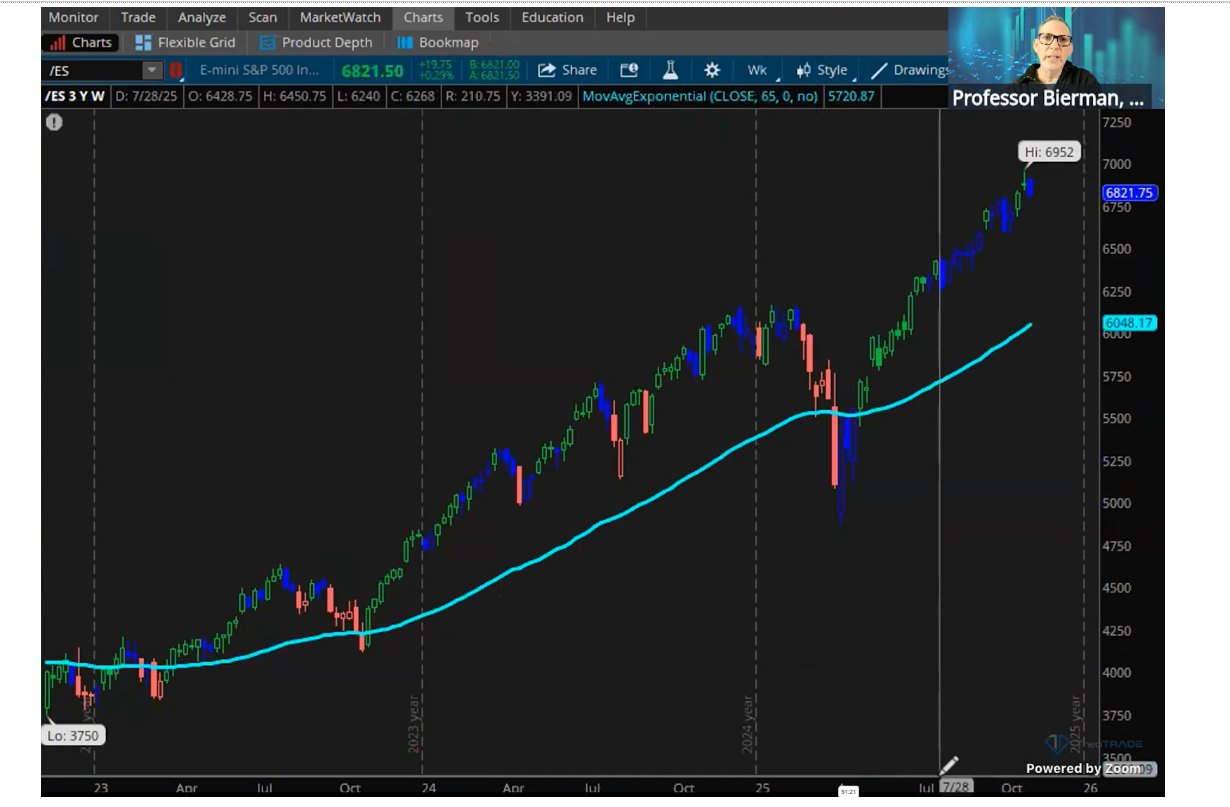


Intel rallied four dollars in a single day last month...
Every technical indicator screamed overbought:
- RSI hit 80
- MACD extended
- Price stretched far above moving averages.
So you shorted it...And the stock ripped another six dollars against you over the next week.
You focused on momentum while ignoring trend.
When these two forces disagree, you're trading blind. One says sell while the other says buy. You pick wrong and algorithms systematically punish the mistake.
Most traders worship momentum or worship trend. They never integrate both simultaneously. This creates the whipsaw pattern that grinds accounts down.
You short overbought rallies, buy oversold crashes, and fight one force while respecting the other.
The machines exploit this confusion.
They detect when retail traders focus on one indicator while ignoring the other. Then they hijack price in the opposite direction before the two forces align.
The solution isn't more analysis. It's a color-coded system that shows you exactly when momentum and trend align.
When both agree, you trade with algorithmic support.
When they disagree, you stay flat.
Simple rules eliminate the guesswork.
Today I'm showing you Alexander Elder's Impulse System.
This combines a 13-period EMA with the MACD histogram into color-coded candlesticks.
- Green means both momentum and trend point up.
- Red means both point down.
- Blue means they disagree and you don't trade.
You'll see exactly how the color-coded system works.
I'll show you why the 65-period EMA identifies optimal entry points.
And you'll understand why respecting both forces simultaneously keeps you aligned with the machines controlling 90% of daily volume.
But here's what the Elder system can't show you: when these alignments are loading before they confirm on your chart.
That's where the Genesis COG Scanner comes in.
It detects the algorithmic footprints that signal when machines are positioning for momentum and trend to converge - before the color change appears.
Before the hijack fires.
Now, let me start with the core mechanism that most traders miss.
The Color Code That Reveals Algorithmic Intent
The Elder Impulse System paints candlesticks three colors. Green for bullish. Red for bearish. Blue for neutral.
These colors aren't decorative. They represent mathematical conditions that determine algorithmic behavior.
Green candlestick requirements:
- 13-period EMA today must exceed 13-period EMA yesterday
- MACD histogram today must exceed MACD histogram yesterday
- Both conditions must be satisfied simultaneously
Red candlestick requirements:
- 13-period EMA today must fall below 13-period EMA yesterday
- MACD histogram today must fall below MACD histogram yesterday
- Both conditions must be satisfied simultaneously
Blue candlestick appears when:
- One indicator points up while the other points down
- Momentum and trend disagree
- No valid trade signal exists
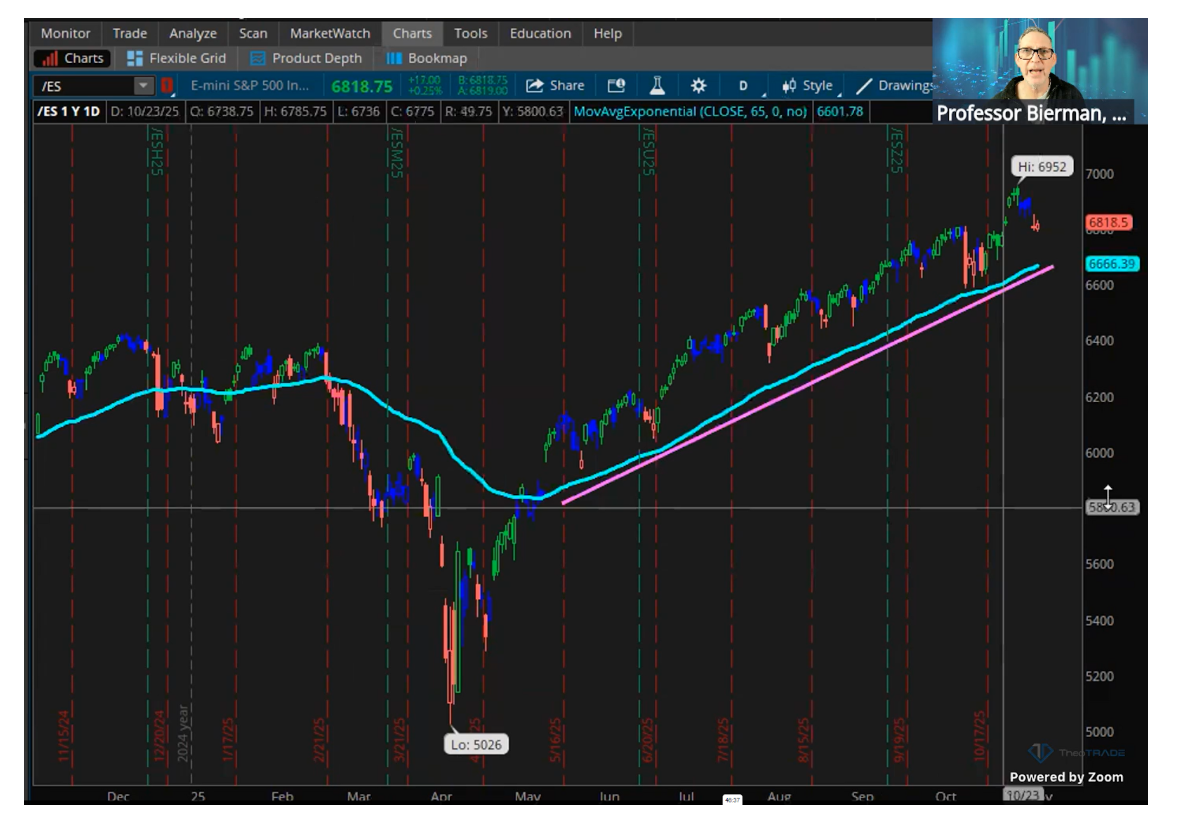 The system integrates trend and momentum into one visual signal. When you see green, algorithms are programmed to buy. When you see red, they're programmed to sell. When you see blue, they're conflicted and you stay out.
This eliminates the guessing game. You're not interpreting multiple indicators. You're watching one color that tells you everything about algorithmic positioning.
Why Blue Candles Save Your Account
Blue candles frustrate traders. No trade signal. No action. Just waiting.
But blue candles reveal the most dangerous market condition that exists. Momentum says one thing. Trend says another. They're fighting each other.
When momentum turns bearish but trend remains bullish, you get a blue candle. This means short-term indicators show weakness while longer-term structure holds. The market is at an inflection point where either could win.
Shorting here based on momentum gets you squeezed when trend reasserts. Buying here based on trend gets you trapped when momentum breaks. The only winning move is waiting for alignment.
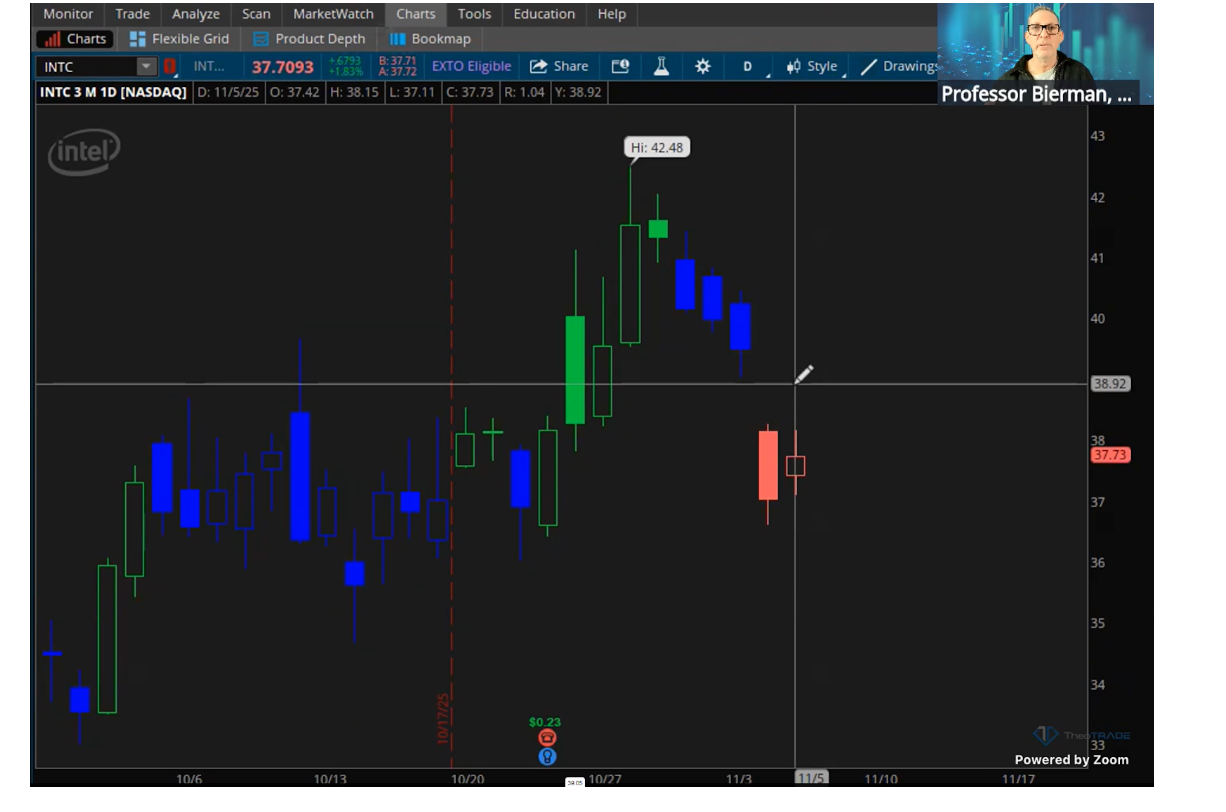
Look at what happens when Intel prints blue candles after a green run. The first blue candle appears when the 13-period EMA flattens but MACD stays positive. They disagree. You wait.
The second blue candle shows continued disagreement. Still no trade. The third blue candle appears. Then finally a red candle confirms both momentum and trend have flipped bearish.
If you'd shorted on the first blue candle hoping for reversal, you'd have been stopped out when it bounced. If you'd stayed long ignoring the momentum warning, you'd have ridden it down. The system kept you flat during the uncertainty and only signaled when clarity emerged.
The 65-Period EMA Reveals Optimal Entry
The color-coded system tells you when to trade. The 65-period EMA tells you where to trade.
This moving average represents the long-term trend that institutions respect. It's calculated as five times the 13-period EMA. This creates a smoothing factor that filters out short-term noise.
When price pulls back to the 65-period EMA and prints a green candle, you're buying at the optimal risk-reward point. Maximum support with minimum distance to stop loss. Algorithms defend this level systematically.
When Intel broke above its 65-period EMA on August 14th and printed green candles, you had the setup. Price at $20. Support established. Momentum and trend aligned bullish. The stock ran to $42 over the next two months.
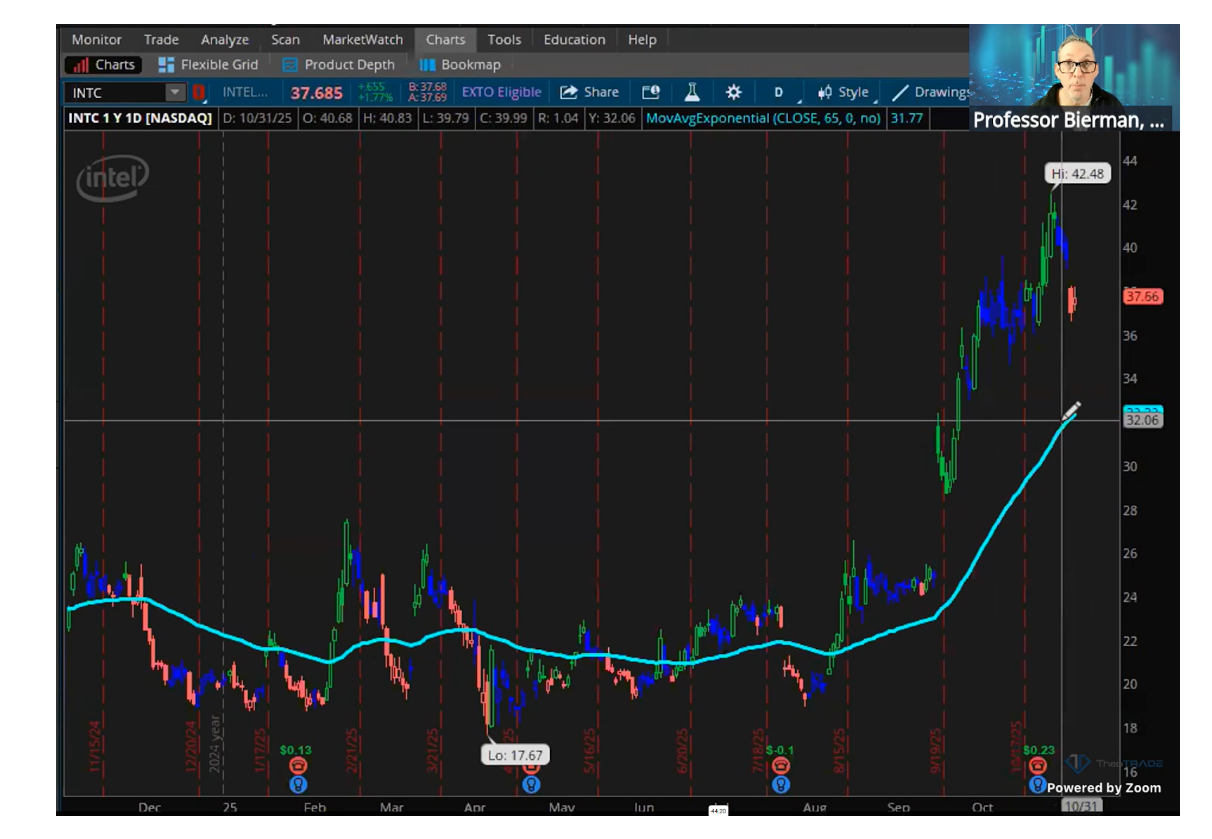
Compare that entry to buying at $36 when the stock was already extended. You could still make money. But the risk-reward deteriorated. Distance to support expanded. Probability of pullback increased.
The 65-period EMA doesn't predict. It reveals where institutions position for optimal entries. When price touches this level and color confirms alignment, you're trading where the machines place their bets.
Never Trade Against the Colors
The system has one absolute rule. Never trade against what the color shows.
Green doesn't mean you must buy that exact day. It means don't short. Don't sell. Respect the alignment. If you want to buy, buy. If you want to wait for a better entry at the 65-period EMA, wait. But don't fight it.
Red doesn't mean you must short that exact day. It means don't buy. Don't add to longs. Respect the breakdown. If you want to short, short. If you want to wait for a bounce to get better pricing, wait. But don't fight it.
The S&P 500 on a weekly timeframe printed green candles for months. Every selloff that looked like "the top" just produced another green candle the following week. Shorting any of those green candles lost money systematically.
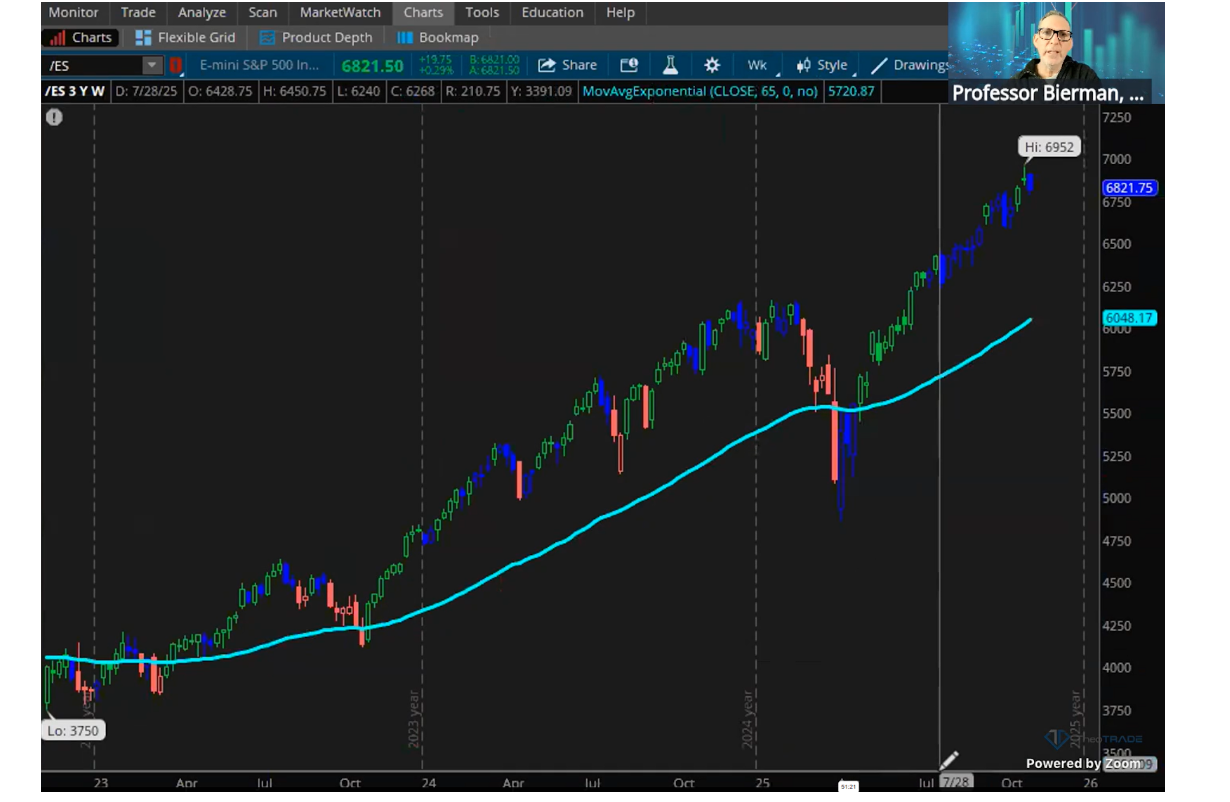
The only valid short signal came when a red candle finally appeared in October. Until then, fighting the green candles meant fighting systematic buying pressure from algorithms programmed to defend the uptrend.
This is why I don't short the market until the colors confirm reversal. Not because I'm bullish. Because I respect what the machines are doing. When the color changes, I'll change. Not before.
Why Most Systems Fail But This One Works
Most trading systems focus on one dimension. Momentum indicators like RSI and stochastic. Or trend indicators like moving averages and channels.
Single-dimension systems fail during inflection points. Momentum breaks before trend. You get conflicting signals from different indicators. You don't know which to trust.
The Elder Impulse System forces both dimensions to agree before signaling. This eliminates most whipsaws. You won't catch the exact top or bottom. But you'll avoid the grinding losses that come from fighting one force while respecting the other.
The weakness is obvious. Choppy markets produce lots of blue candles. You sit out waiting for alignment that takes weeks to appear. Your active trading time decreases.
But your win rate increases. Your average loss decreases. Your capital preservation improves. The tradeoff works because you're only trading when probability favors your position.
Your Position Right Now
Pull up your platform. Add the Elder Impulse System. It's listed as "Impulse System" in Think or Swim under studies.
Set paint bars to yes. Leave the period at 13. Choose your colors. Watch what appears.
Green candles mean algorithms defend dips. Red candles mean algorithms attack bounces. Blue candles mean they're conflicted and you wait.
Add the 65-period EMA. This shows you where optimal entries appear. When price touches this level and prints a green candle, that's your setup. When it breaks below and prints red, that's your short.
Test it on weekly timeframes for position trades. Test it on daily for swing trades. Find your DNA match. Stick with one timeframe and respect what it shows.
The system works. But it has one limitation you need to understand.
The Gap Between Confirmation and Execution
The Elder Impulse System shows you when momentum and trend align. After both forces agree. After the color confirms. After the candle prints.
You're trading what already happened. Not what's about to happen.
The machines don't wait for confirmation. They position before momentum and trend converge. They detect the setup loading. They execute before the color changes.
That's the difference between reactive and predictive trading.
I built the Elder system into my trading because it keeps me aligned with algorithmic behavior. But I didn't stop there. I spent years reverse-engineering how machines detect these setups before they confirm.
The Genesis COG Scanner reveals what I found.
It detects the algorithmic footprints that signal when momentum and trend are about to converge.
Before the 13-period EMA crosses…
…Before the MACD histogram turns…
…Before the color prints on your chart.
You see the hijack loading while other traders are still watching yesterday's candle.
That's not reaction.
That's battlefield intelligence from someone who taught these machines how to think.
The Elder Impulse System shows you when alignment happens.
The Genesis COG Scanner shows you when it's about to happen. One confirms what already occurred. The other reveals what's coming next.
See how Genesis COG Scanner detects momentum and trend convergence before the color confirms →
Professor Jeffrey Bierman
Creator of the Genesis COG System