


Hey, it’s Gianni.
Technology stocks just broke out to their highest level relative to the S&P 500 in 25 years.
Cue the panic.
"Tech hasn't been this expensive since the dotcom bubble!"
"This is 2000 all over again!"
Here's the question nobody's asking:
Is technology a bigger part of our economy now than it was 25 years ago?
Because if the answer is yes—and we all know it is—then maybe the breakout isn't insanity.
Maybe it's reality finally catching up.
The Breakout Nobody Wants to Believe
I'm looking at what I consider the most important chart in the market right now.
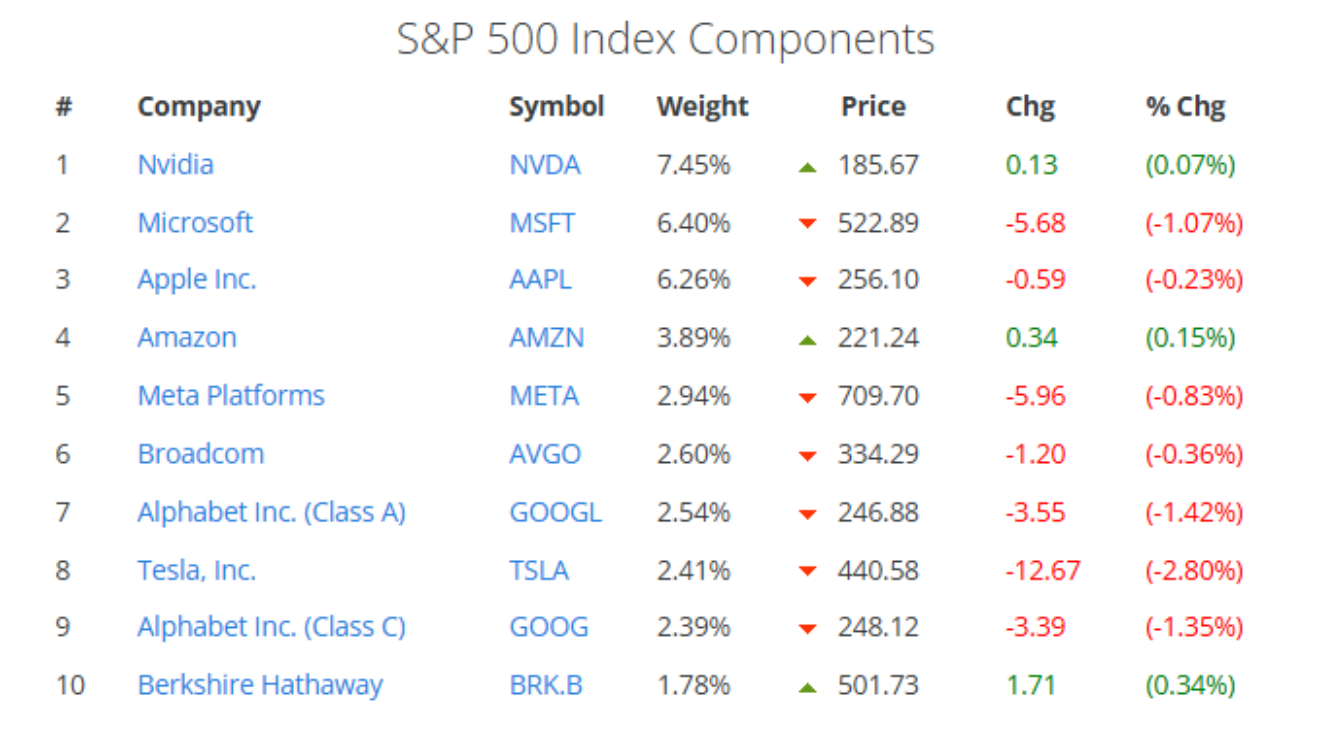
Technology's weight relative to the S&P 500.
It just broke out from a 25-year base.
Tech has never been a larger percentage of the S&P than it is right now.
The last time we were even close? The year 2000, right before the dotcom crash.
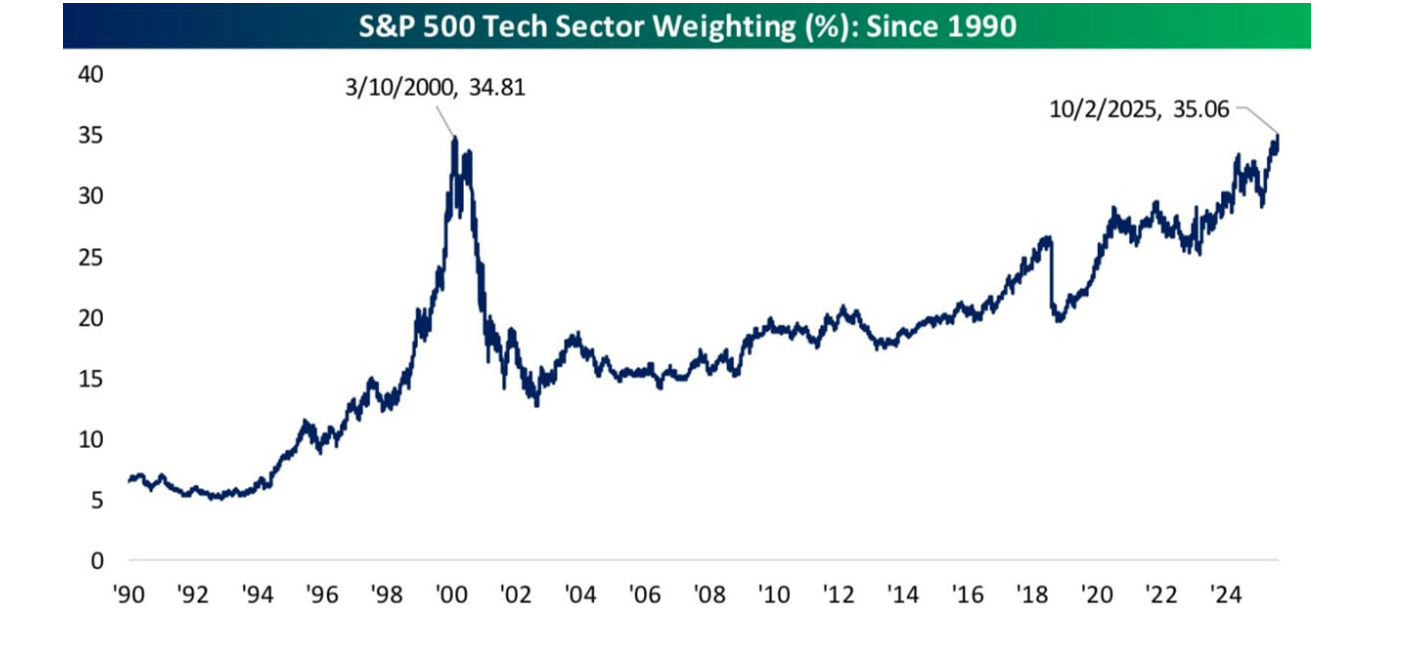
So naturally, everyone's screaming the sky is falling.
But here's what's missing from that narrative:
The world is completely different than it was in 2000.
In 2000, the internet was new. Companies burned cash with zero revenue. Pets.com spent millions on Super Bowl ads with no business model.
Now?
Technology IS the economy.
- In 2000, most people didn't own a computer. Now everyone has a supercomputer in their pocket.
- In 2000, online shopping was a novelty. Now it's 15% of all retail.
- In 2000, cloud computing didn't exist. Now every business runs on AWS, Azure, or Google Cloud.
- In 2000, AI was science fiction. Now it's processing customer service, writing code, analyzing medical images.
When pilots manually landed planes, technology was a luxury.
Now computers land the aircraft.
Technology hasn't just grown—it's embedded into every layer of how the economy functions.
So when people say "tech is too expensive relative to the market," I have to ask: Compared to when?
The Comparison That Breaks the Narrative
In 2000, technology was speculative. Companies had ideas, not earnings.
In 2025, technology is productive. These companies print cash. They control infrastructure the entire economy depends on.
Apple generates more revenue than most countries' GDP.
Microsoft runs the cloud infrastructure for Fortune 500 companies.
Nvidia builds the chips powering AI transformation across every industry.
This isn't speculation. This is dominance.
Where does growth happen in the economy? Technology.
Where does capital flow when chasing growth? Technology.
It's capital flowing to where value is actually being created.
Why the U.S. Has an Unfair Advantage
The biggest competitor to U.S. tech dominance is China.
But China has a structural problem the U.S. doesn't: Energy.
China doesn't have the oil and gas reserves the U.S. does. Meanwhile, the U.S. is the most energy-rich AND tech-rich country on the planet.
AI requires massive energy to train models and run data centers. Quantum computing will require even more.
The country that controls both the technology AND the energy to power it wins the next 20 years.
That's the U.S.
The Uncomfortable Truth About Bubbles
Do I think a bubble is forming in tech? Yes.
Do I think this bubble can get bigger? Absolutely.
Is it going to be pretty when it pops? No. It's going to be ugly.
But here's what separates traders who make fortunes from those who blow up:
Knowing when to play offense and when to play defense.
Right now, the market is telling you to play offense.
Tech is breaking out. The dollar and bonds are rallying—capital is flowing back into the U.S. The carry trade is resuming, which historically benefits tech stocks.
This is the environment where fortunes get made.
Not next year when everyone agrees it's safe. Not after the "all clear" signal.
Now. When the breakout is happening and most people are still too scared to participate.
The traders who wait for confirmation miss the move.
The traders who chase after it's run 50% buy the top.
The traders who position early, ride the trend, and exit with discipline keep the gains.
What This Means for Your Portfolio
Not every tech stock benefits equally from this breakout.
But there are specific setups positioned to capture this move with defined risk and clear upside targets.
Apple hasn't made a new all-time high in 10 months. A breakout could target $350+.
Amazon is in the same boat—eight months without a new high.
The stocks that hold up best during pullbacks? Those are your big winners when the next leg higher comes.
I'm tracking these setups every day in my Trinity Trade portfolio.
We just booked 389% on AMD calls in five days. We locked in 74% on Ion Q and 104% on QBTS this morning.
Not because we got lucky.
Because we positioned early in the trends Wall Street is still debating.
The Bottom Line
Technology relative to the S&P just broke out to 25-year highs.
Everyone's screaming "bubble."
But technology IS a bigger part of the economy than it was in 2000. The breakout is justified—until it's not.
And when it's not, we'll play defense.
But right now? The market is letting its guard down.
This is when you press the advantage.
If you want the specific stocks I'm positioning in, the exact entry levels, and the exit strategy for when this eventually turns—join me in Trinity Trades.
We don't wait for headlines to tell us it's safe.
We position early, manage risk, and take profits when the market gives us gifts like 389% in five days.
The breakout is happening now.
Stay Sharp,
Gianni Di Poce