


Silver has doubled its value relative to gold in twelve months. That move has only happened twice in the last 45 years.
Both times preceded major economic inflection points.
In 1980, it marked the peak of stagflation before the Reagan era began. In 2011, it signaled the end of the post-crisis commodity boom before a multi-year collapse.
Today, that same signal is flashing again. And most traders are completely missing it.
They see gold and silver rallying and think it's a precious metals story. They're wrong.
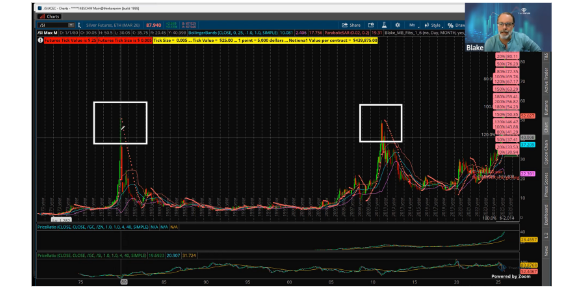
This is a stagflation indicator with a near-perfect track record. It's telling us that inflation is far worse than official numbers suggest that growth is stalling, and that the Fed is trapped.
The Ratio That Matters
One ounce of gold currently costs 52 ounces of silver. A year ago, that number was 100.
Silver has doubled its relative value against gold in twelve months.
This happens for one reason. Investors chase the cheaper inflation hedge when they believe stagflation is coming.
The Historical Pattern
In 1979-1980, at the peak of the last major stagflation period, that ratio dropped to 17.
In 2011, post-financial crisis, it fell to 32.
Every time silver accelerates faster than gold, the economy is pricing in the worst combination possible. Rising prices with no growth.
Why Silver Moves Faster
Silver serves two purposes. It's a precious metal and an industrial commodity.
When investors fear inflation but doubt economic growth, they pile into silver. It's cheaper than gold and offers leverage to the inflation trade.
Gold rose 185% from 2009 to 2011. Silver rose 530% in the same period.
That outperformance ratio is the tell.
What the Data Shows Today
I track a custom indicator comparing commodity prices to bond prices. It measures inflation expectations against risk-free returns.
That indicator just printed a new all-time high.
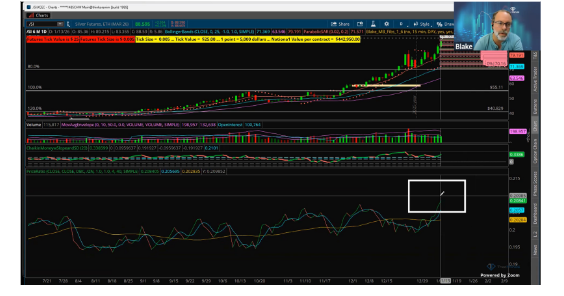
Gold versus bonds hit a record. Silver versus bonds hit a record. Oil versus bonds hit a record.
Every inflation hedge is screaming while bonds sit at their lows.
The CPI Disconnect
The official inflation number came in at 2.7%. Markets immediately sold off.
Why? Because nobody believes it.
Crude oil fell 10% last quarter. That decline masked the real inflation picture.
Here's the math. If oil has roughly a 25-30% impact on CPI and it dropped 10%, the adjusted inflation rate is closer to 5.7%.
Today, crude is up 3%. That quarterly benefit is already evaporating.
The Sector Rotation Confirms It
I always tell traders the same thing. Money doesn't disappear. It moves.
Gold is up 14.84% over the last three months. Utilities are down 5%. Bonds are down. Real estate is weak.
Investors are not buying defensive assets. They're not rotating into bonds for safety.
They're buying inflation hedges while avoiding anything tied to economic growth. That's the textbook definition of stagflation positioning.
Where Silver Goes From Here
The current ratio of 52 broke through the 10-year support level of 65. That's a technical breakout.
Using the same methodology that worked in previous cycles, I project silver could reach $100 in the next two weeks. The extended target sits at $125.
But here's the warning.
Every previous spike in silver that drove the ratio to extreme lows ended the same way. Complete erasure.
In 1980, silver went from $50 back to $5. In 2011, it went from $49 to $14.
The trade works until it doesn't. And when it ends, it ends fast.
The Copper Confirmation
I want to see copper break through $6.23 before fully committing to the $125 silver target.
Copper represents industrial demand. If copper stalls while silver rips higher, the move is purely speculative. If copper confirms, the stagflation thesis has fundamental backing.
Right now, copper is climbing but hasn't broken resistance.
How to Position
The inflation hedge trade remains intact until the ratio bottoms. Previous cycles suggest that could be somewhere in the mid-30s.
Energy stocks offer a way to play stagflation with income. ExxonMobil, ConocoPhillips, and other majors pay dividends between 3-5% while offering upside to oil prices.
Bonds are not the answer here. Neither are utilities.
When the market prices in stagflation, you own hard assets. Gold, silver, and energy.
Just remember what happened every other time this signal appeared. The trade worked spectacularly until it reversed. And the reversal erased years of gains in months.
Position accordingly.
Blake Young
Senior Strategist, TheoTrade