
A Tactical Roadmap for the Dollar, Liquidity, and Trade-Driven Opportunities.
Garrett Baldwin
The market doesn’t feel right — and that’s not just a gut call. We’re in a technical breakdown that’s happening under the surface of the headlines. The S&P 500 is below its 200-day moving average. Momentum has been negative for nearly a month. And institutional capital is raising cash, not chasing charts.
If you’re wondering why it feels harder to find footing — this is why.
Momentum, not valuation or narrative, drives modern markets. And right now, momentum is red for everything other than Materials and Healthcare. Our pressure gauge flipped on March 26.
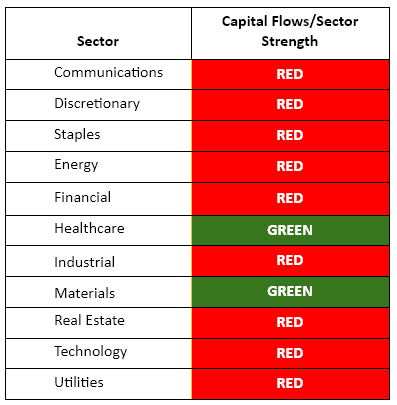
You can see it clearly in leveraged products like MicroSectors FANG Index - FNGD, which have rallied as the Magnificent 7 breaks down. You can see it in the declining participation in large-cap tech, the sudden strength in defensive sectors, and the capital flight into commodities and precious metals.
But here’s the thing — this isn't about trying to call a bottom. I’m not doing that. This is about recognizing where we are in the cycle and preparing for what happens next. We are entering a new phase, and over the next 36 months, investors and traders who align with the big drivers — the real ones — are going to outperform everyone else trying to play catch-up.
So what are those drivers? It’s not the economy. It’s not AI hype or election soundbites. It’s these four forces — and they’re already reshaping the financial system under your feet.
The Four Forces Shaping the Next 36 Months
Let’s be very clear here: the market is not driven by fundamentals. It’s driven by liquidity, debt cycles, and monetary policy.
Anyone who’s still looking at PE ratios or EPS projections as the primary input is going to get run over.
That era is gone.
What we’re looking at now are structural forces — the kind that realign capital across entire asset classes, move sovereign currency strategies, and reprice risk for the next decade.
Here are the four that matter most.
Dedollarization: Slow Erosion, Not Collapse
There’s a narrative out there that the dollar is going to collapse. That we’re on the verge of losing reserve currency status overnight and that gold is going to $10,000.
That’s not how this works. What’s actually happening is far more important — and far more subtle.
We’re witnessing a slow erosion of dollar dominance. In 2000, about 71% of global reserves were held in U.S. dollars. Today, it’s around 58%. That drop didn’t come from a crisis — it came from a series of gradual shifts: sanctions, political risk, and the growing willingness of foreign governments to bypass SWIFT or settle trade in yuan or rubles or rupees.
The biggest inflection point came in 2014 when the U.S. sanctioned Russian banks and state-owned entities. That sent a clear message to other nations: if you cross the U.S., you risk being locked out of the dollar system. Since then, China, Iran, Russia, and others have been actively building parallel financial networks — and now, even allies are hedging their exposure.
The dollar doesn’t collapse — it cycles. This chart from CrossBorder Capital shows how those waves have played out for decades, and why the next leg lower could still surprise most investors.
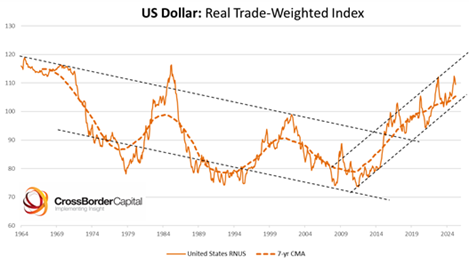
This isn’t just geopolitics. This impacts markets directly. As fewer countries rely on the dollar, the global demand for U.S. Treasuries weakens. That raises the cost of funding our debt. And it puts pressure on U.S. policymakers to either raise rates (which we can’t afford) or print more money (which fuels inflation).
It’s also one of the biggest reasons gold is at $3,500 and climbing.
The dollar won’t disappear — but its supremacy is being challenged. And that’s a long-term, structural tailwind for hard assets, commodity-linked currencies, and select global equities.
Monetary Expansion: The Central Bank Playbook Never Changes
Central banks only have one real tool: printing money.
They can dress it up however they want — “quantitative easing,” “asset purchases,” “liquidity support,” “repo operations” — but the playbook is the same every time. When the system starts to wobble, they pump.
And the market knows it.
That’s why every modern market bottom coincides with some form of intervention. March 2020. October 2022. Go back further — 2008, 2011, 2015. Every time the Fed or its global counterparts stepped in, assets surged.
Why? Because when liquidity expands, asset prices follow. Always.
This is the most important mental model you can adopt: liquidity precedes price. It’s not sentiment. It’s not GDP. It’s not even earnings. It’s liquidity.
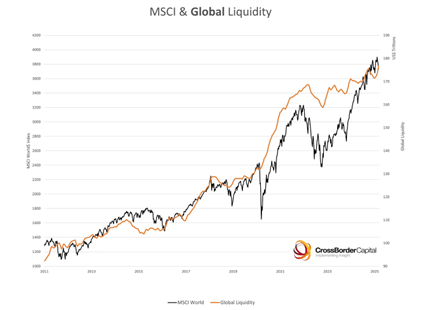
Right now, global liquidity is expanding in Europe and Asia. The U.S. hasn’t made its next move yet — but it will. The moment a credit event, geopolitical trigger, or economic downturn puts enough pressure on markets, the Fed will act. And when it does, we’ll see another wave of dollar debasement and asset inflation.
Global liquidity isn’t random — it’s cyclical. And every major expansion looks a lot like the last.
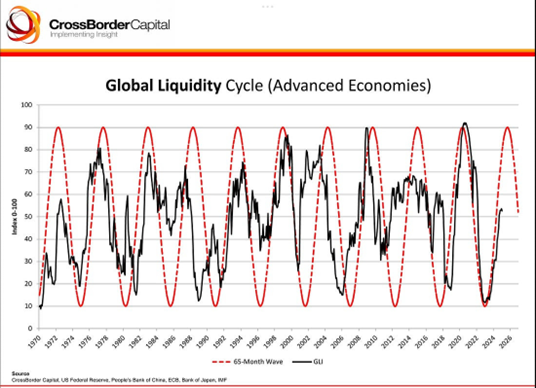
This is why we don’t fight the tape — we follow the flow. It’s also why I don’t care what Powell says about staying “higher for longer.” The moment the real pain sets in, they’ll flip.
They always do.
The Liquidity Cycle: Know the Phase, Know the Trade
If you understand liquidity cycles, you don’t need to predict the future — you just need to know where you are.
Here's a fun twist: flip the National Financial Conditions Index upside down, and you get a near-perfect overlay of the S&P 500. Loose money drives markets — full stop.
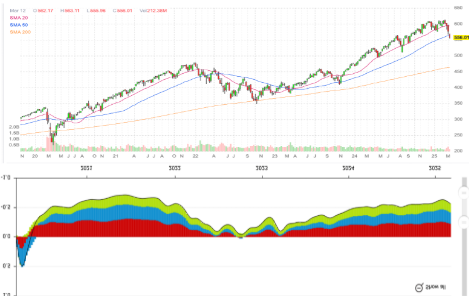
Stanley Druckenmiller, Michael Howell, and a handful of other institutional thinkers have built a framework that I lean on constantly. It goes like this: global liquidity is cyclical. It expands, it peaks, it contracts, it bottoms — and then it resets. That pattern has held for over 50 years.
There are four phases to this liquidity cycle. And each phase favors a different kind of trade.
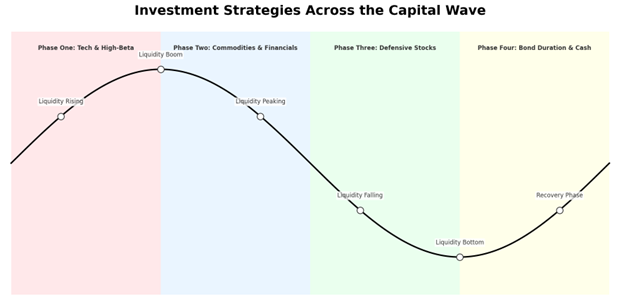
Phase 1: High Beta Mania
Liquidity turns on. Risk-on trades explode. Speculative names with no earnings skyrocket — think Carvana, Meta, anything tied to tech. This is where fast money moves first.
Phase 2: Financials & Commodities
Liquidity filters into the “real economy.” Banks benefit. Commodities rally. This phase is driven by expectations of inflation and reflation — and it’s when you start to see interest in gold, silver, and oil re-emerge.
Phase 3: Defensives & Rotation
Volatility rises. Momentum fades. Traders rotate into consumer staples, utilities, cash-flow-heavy businesses. This is a market that’s no longer optimistic — it’s preparing.
Phase 4: Duration & Cash
Everything slows. Capital flees into bonds, cash, and safety. Markets are no longer hunting yield — they’re looking for shelter.
Where are we now?
We’re late in Phase 3. Defensives are holding up. Utilities have broken above key levels. And institutional cash positions are high. But we’re not at the true bottom yet — because the Fed hasn’t acted.
That comes in Phase 4. And when it does, bond yields will collapse and duration will become king — but we’re not there yet. This is still a trader’s market, and we’ve got more rotation to play with before we bunker down in cash.
The Trump Fed: Why 2026 Is Already in Play
This isn’t about politics. This is about policy.
With Donald Trump returning to the White House, Jerome Powell is likely done by February 2026. And who comes next could fundamentally reshape monetary policy — again.
Let’s be honest: Trump has never hidden what he wants from the Fed. He’s said it explicitly:
- Lower interest rates
- Weaker dollar
- Cheaper debt
- Faster growth
- Explicit political alignment with the White House
A Trump Fed Chair is going to be pro-growth and anti-deflation — full stop. And they will not care what the optics look like.
What does that mean for markets?
It means aggressive rate cuts.
It means QE-style programs no matter what CPI says.
It means a weaker dollar and stronger U.S. equity prices — not because fundamentals justify it, but because liquidity does.
And here’s the key: markets won’t wait until 2026. They’ll start to front-run this outcome in 2025.
So even if the Fed’s sitting on its hands right now, you have to start thinking about this as a 2025–2026 positioning window. This outlook is going to shape currency, bond, and equity volatility far sooner than most people expect.
What to Own: The Core Playbook
This is where we start translating macro into moves. The goal here is twofold:
- Protect capital in a volatile and weakening dollar environment
- Position for upside as new liquidity flows emerge and reprice assets
Let’s start with what the cycle favors now — and what’s likely to outperform in the years ahead.
Gold and Silver: The Monetary Anchors
Gold isn’t a trade anymore — it’s a reserve strategy.
Every major central bank that’s even remotely skeptical of U.S. monetary dominance is stacking it. China, Russia, Poland, Singapore — they’re all accumulating. And they’re not buying because it “goes up.” They’re buying because it’s neutral, unfreezable, and not tied to the fate of any one nation’s balance sheet.
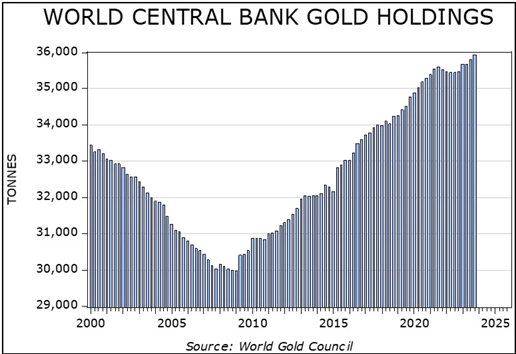
That’s the real story. We’re watching the return of gold as collateral — not just a commodity. It’s what countries hold when they don’t want their reserves sanctioned, debased, or weaponized. That’s why gold has moved from $2,100 to $3,400 — and why it’s still in the early innings.
But the more interesting trade might be silver.
Silver sits at the intersection of industrial utility and monetary history. It’s used in electrification, solar, and electronics — but it also trades like a cousin of gold.
The gold-to-silver ratio is still hovering around 100:1, while historical norms in bull markets tend to compress closer to 60:1.
That spread alone creates the potential for a sharp reversion — and that’s before you even get into the speculation around paper market suppression.
If it breaks out with momentum behind it, silver has the potential to deliver the trade of the decade — and SILJ gives you the leverage to capture it.
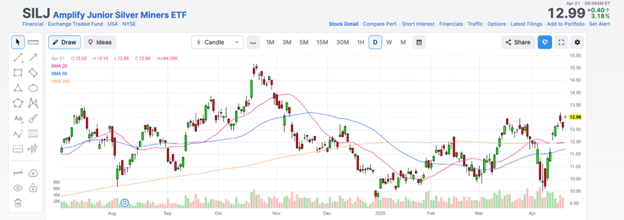
If even a fraction of that structural overhang breaks, silver could reprice violently. And unlike gold, silver remains thinly owned and lightly allocated across most portfolios.
Here’s how I’m positioned:
- For long-term exposure, I use the Sprott Physical Gold Trust (PHYS) and Physical Gold and Silver Trust (CEF).
- For tactical trades, I lean on the Amplify Junior Silver Miners ETF (SILJ) and the Direxion Daily Gold Miners Index Bull 2x Shares (GDXU).
- I also hold physical gold and silver — coins, bars, and stackable bullion — as a hedge against system risk.
If you’re trading this space, momentum is your friend.
I use the 20-day moving average as my signal:
- Buy breakouts above an ascending 20-day
- Sell or trim on breakdowns below
- Scale position size based on trend strength and volatility
This is one of the few areas with technical clarity, macro tailwinds, and a major story behind it. That’s rare in this kind of market.
Capital-Efficient Stocks: Sleep-Well-at-Night in a Tight-Money World
In a tightening cycle, the companies that fall apart first are the ones that borrowed their way into growth. Cheap credit fueled a decade of zombie companies — firms that survived only because money was free. But now, with rates higher and liquidity fading, the market is starting to punish anything that can't stand on its own.
This is where capital-efficient businesses shine.
These companies don’t rely on leverage. They don’t need to chase scale at any cost. They generate high returns on invested capital, they reinvest selectively, and they consistently throw off free cash flow. That gives them pricing power, margin stability, and the ability to return capital to shareholders — without begging the bond market for lifelines.
This is Warren Buffett’s playbook. And in this environment, it works better than ever.
We’re already seeing strong relative performance from names like Berkshire Hathaway (BRK/B) — which sits on mountains of cash and owns the kind of boring-but-beautiful businesses that print money no matter what the Fed does. Visa (V) continues to operate like a global tollbooth on electronic payments. Domino’s (DPZ), with its asset-light model, remains one of the best-run franchises in the consumer space. Deere (DE) quietly combines industrial leverage with an embedded financing arm that gives it a wide moat few competitors can touch.
And for those looking for exposure through a single vehicle, the SRH Total Return Fund (STEW) offers a tax-aware, closed-end approach with exposure to many of the names above — including Berkshire itself.
These aren’t the flashiest names in the market. But that’s exactly the point.
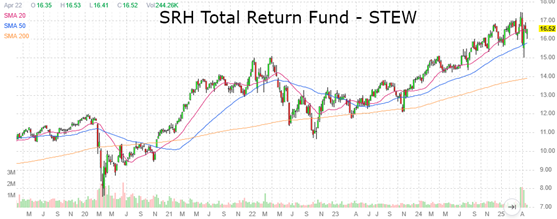
In my view, at least 40% of your core equity allocation should be in businesses like these — names that compound through cycles and don’t need the Fed to keep them alive. They offer staying power in selloffs, relative outperformance in rotations, and real upside when liquidity returns.
Utilities and Midstream Energy: The Power Cycle Has Started
There’s a story playing out right now that almost no one is talking about — and it has nothing to do with AI chips or the Nasdaq.
It’s about electricity.
AI infrastructure, EV charging networks, semiconductor fabs, industrial reshoring — they all have one thing in common: they’re power-hungry. And the U.S. grid can’t handle it. We’re running up against hard transmission limits, generation constraints, and a regulatory environment that’s still stuck in the 1990s.
This mismatch — between accelerating demand and constrained capacity — is one of the most underappreciated investment themes of the decade. And it’s already starting to move capital.
Utilities are breaking out of their sleepy reputation. The XLU ETF, which tracks the U.S. utility sector, is acting like a growth trade again.
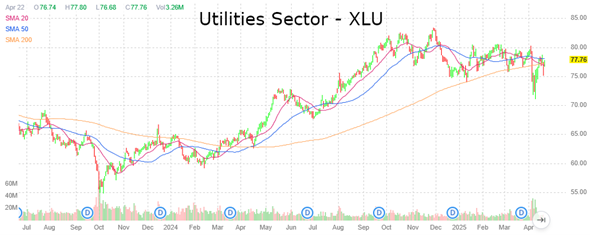
It’s defensive, sure — but it’s also one of the few areas that directly benefits from this new surge in long-term energy demand. When XLU breaks above its 20-day moving average, it’s not just a technical trigger — it’s often a signal that institutional money is rotating into the names that will power the next wave of domestic expansion.
Midstream energy is the second part of this equation. While upstream oil and gas can be volatile, midstream operators — the pipelines, storage hubs, and LNG terminals — act more like tollbooths. They benefit from volume, not price. Companies like Energy Transfer (ET) and Enterprise Products Partners (EPD) generate steady, inflation-resistant cash flows and offer yields north of 7%. They’re boring in the best possible way.
And don’t sleep on copper.
It’s the single most important metal for electrification, and it tends to move in explosive cycles — especially when China stimulates or infrastructure projects get fast-tracked. I’m not chasing it here, but I’m watching it closely. When the next policy wave hits, copper could rally 20–30% in weeks.
Put simply: this isn’t just an energy trade. It’s a power infrastructure trade. And as electricity becomes the bottleneck for growth, the companies that produce, transmit, and store power will become the new growth stocks.
Global Diversification: Quiet Strength in the Right Countries
Let’s talk about where capital is going — not just within the U.S., but globally.
We’re seeing international money flow out of dollar reserves and into politically stable, resource-rich, economically free markets. You don’t need to go all-in on international exposure, but you do need to be selective — and intentional.
Here’s the filter I use:
- Does this country have commodity leverage?
- Is it politically neutral or stable?
- Does it operate under a rule of law?
- Is its currency relatively sound (or does it hedge dollar exposure)?
My top picks right now:
- Switzerland (CHF exposure) – A consistent safe haven. Strong currency. High financial transparency.
- Poland (EPOL) – Emerging as a Central European economic power. Exposure to EU trade, military investment, and manufacturing.
- Singapore – One of the most investor-friendly markets in the world. Tight capital controls and strong currency discipline.
- Chile and Norway – Natural resource leverage (copper, lithium, oil) with relatively stable governance.
You’re not looking for moonshots here. You’re looking for durable non-U.S. return profiles, currency diversity, and hedges against American fiscal sloppiness.
Even a 5–10% allocation to these regions can give you meaningful protection if the next leg of the dollar decline unfolds faster than expected.
Tactical Trades: Fast Setups and Flow-Based Signals
Once you understand the macro backdrop, you can build real edge by aligning your trades with it. But that doesn’t mean chasing headlines — it means identifying setups that consistently work in liquidity-driven markets.
Silver remains a standout. It’s volatile, under-owned, and technically clean. I covered the full strategy earlier — but the takeaway is simple: follow the 20-day moving average. Momentum matters here more than narrative. This is where you get paid for precision.
Then you’ve got the speculative trade bucket — zombie stocks, meme names, anything with high short interest and a whiff of momentum. These aren’t investments. They’re volatility events. Time them right, keep your sizing tight, and treat 15–30% pops as exits, not trophies.
Finally, watch the flow gauges. FNGA and MAGS are two of the most useful real-time sentiment tools in the market. When they break above their 20-day MAs, risk is usually back on. When they stay pinned below — don’t force it. These are your timing filters.
In this kind of environment, structure is your advantage. Let momentum dictate action — not emotion or opinion.
How to Position Right Now
We’re not at the start of a trend. We’re in the middle of a transition — and it’s one of the most important ones in a decade.
The dollar is eroding slowly. Global liquidity is shifting unevenly. Momentum has flipped red. The Fed hasn’t stepped in — yet. But they will. And when they do, the next cycle begins. You want to be ready, not reactive.
The edge here isn’t just in knowing what to buy. It’s in understanding the forces that move capital — and knowing when to step in and when to sit out. Most investors will chase headlines. You now have a framework built on liquidity, policy, and real capital rotation.
When liquidity comes, everything moves. The question is: will you be positioned for it — or chasing it?
Stay ready. Stay liquid. Stay positive...
