


I shorted everything you bought last year.
Not because I'm smarter. Because you traded value stocks like growth stocks.
That single mistake transfers more wealth from retail accounts to professionals than any other error I've seen in 38 years.
You buy Cisco expecting 40% returns when the company is built for 8%.
You load up on utilities because someone mentioned data centers.
You chase General Mills after a bounce like it's about to go parabolic.
It never does. These companies aren't broken. They're just not built to grow anymore.
That classification determines everything about how to value, trade, and exit the position.
The Five Stages Nobody Taught You
Every company moves through the same progression. No exceptions.
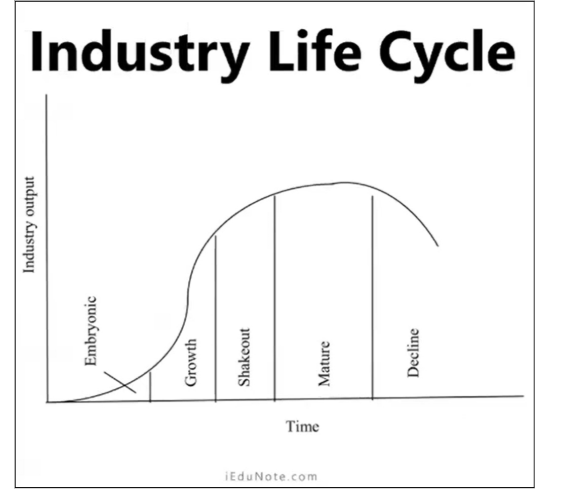 The embryonic stage is where sales accelerate but earnings haven't arrived. Costs run too high. Monetization remains a mystery. Once they crack that code, they go public and enter true growth.
Growth is parabolic. Returns hit 75% to 80% quarter after quarter. Then the law of large numbers catches up. Success itself becomes the ceiling.
The shakeout follows. Competitors see your model and want a piece. Margins erode. Pricing adjusts. You're still at the epicenter of the revolution, but the rapid expansion is over.
Maturity means the company is no longer built to grow. It's built to survive. Sales growth locks to demographics at 2% forever. Earnings might hit 5% to 10% unless AI cuts costs.
Decline is the end. Adjust the entire business model or shut the doors.
Where The Money Gets Lost
The destruction happens at the transition points.
Traders buy mature companies expecting growth stage returns. They see AT&T mentioned alongside AI and assume parabolic gains are coming. They watch Verizon tick up and project another 50%.
That's not how this works. These companies hit their ceiling years ago.
I started shorting utilities again today. Hit NiSource at $42.25 on the open. Every time utilities rally, I short them. They're priced as growth stocks where there is no growth. Data center narratives don't change the fundamental math.
The Genesis Cog is also short Cisco. Another company priced for growth where none exists. Cisco temporarily reinvented itself, but don't fall in love. The lifecycle stage doesn't lie.
How To Apply This
Before any trade, answer one question. What stage is this company in?
Then match your expectations accordingly:
- Growth stage: Expect 40% to 80% annual returns, accept higher volatility, pay premium multiples
- Shakeout stage: Expect 15% to 30% returns, watch for margin compression, monitor competitive threats
- Mature stage: Expect 5% to 10% returns, demand dividends, refuse to pay growth multiples
- Decline stage: Trade momentum only, never hold long term, or avoid entirely
The valuation you pay must reflect the stage you're buying. A 40x multiple on a mature company is theft. A 15x multiple on a true growth company is a gift.
The Nvidia Warning
There is a point where Nvidia hits the maturity stage.
Are we there yet? No.
But when it happens, not one of you will ever buy it again. You'll move to the next horse and forget this one existed.
Nobody holds a monopoly forever. Every company that dominated eventually became a value stock that people ignore. IBM reinvented itself temporarily with AI. It will eventually return to being a stodgy tech company. That's the lifecycle.
The Millionaire Formula
I became wealthy by understanding this single principle.
Don't buy value stocks priced like growth stocks. Don't value growth stocks like value companies. Match the valuation to the lifecycle stage, and the rest becomes clear.
The Genesis COG System integrates this framework into every trade alert. We identify the stage before entry, set expectations accordingly, and price our risk to match reality.
You can keep chasing utilities on data center headlines. I'll keep shorting them back to where they belong.
[See how Genesis COG classifies lifecycle stages before you commit capital →]
Professor Jeffrey Bierman
Creator of the Genesis COG System