


I was in Lisbon last year.
While there, I rode the funicular up the steep hillside - two train cars that are connected by a cable over a pulley.
As one climbs, the other descends. Equal speed. Counterbalanced.
That image stuck with me because it perfectly explains what's happening in this market right now.
You're riding an algorithmic funicular.
And here's what you need to understand: the mechanics of the climb up determine the mechanics of the crash down.
They're not separate events. They're connected by the same cable.
Let me show you why this matters more than anything else I've told you this week.
The Two Cars on the Cable
Picture the funicular system.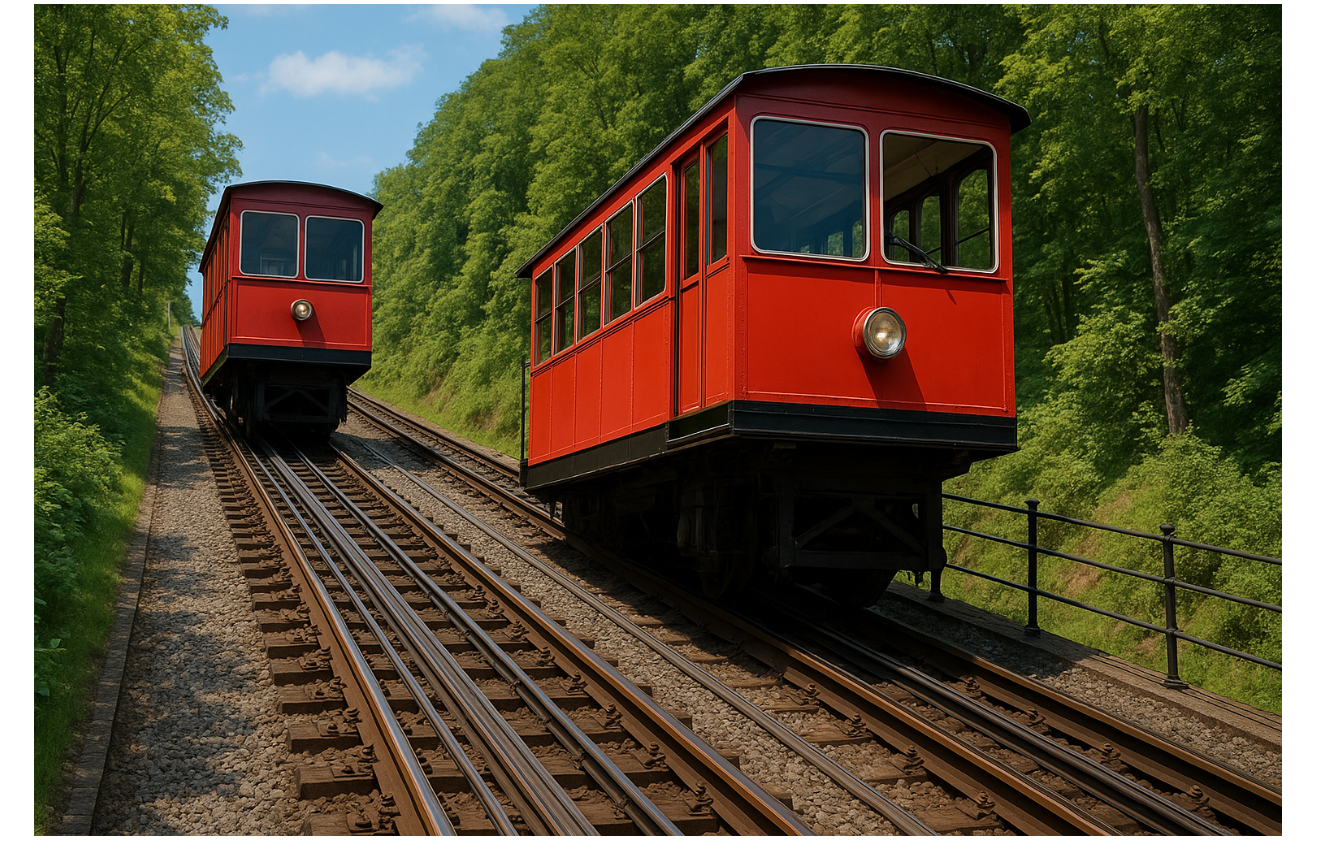
Car One climbs the mountain slowly. Steady. Methodical. It takes its time walking up that steep incline.
Car Two sits at the top. Waiting. It doesn't move until Car One reaches the peak.
Then gravity takes over.
Car Two plunges down the mountain at devastating speed while Car One finally arrives at the summit. The descent happens fast. Really fast. No brakes. No hesitation. Just pure momentum in reverse.
That's your market.
The S&P has been Car One for six months. Climbing. Grinding. Every dip bought. Every pullback absorbed. The weekly indicators point straight up.
Car Two hasn't moved yet. It's sitting at 5,600 right now. Waiting for the cable to shift.
Why the Descent is Always Faster
Here's what most traders don't understand about funiculars:
The ascent is controlled. The descent is not.
Going up requires constant energy. The motor pulls the cable. The system fights gravity every inch of the way. It's slow by design.
Coming down? That's just gravity. No resistance. No friction. The weight of the descending car actually helps pull the ascending car up.
When the cable reverses, the physics change completely.
Applied Materials announced a $500 million revenue shortfall Thursday. The stock barely dropped. It should've crashed 50 points.
Southern Company got downgraded at 52-week highs. It opened lower. Call buyers rushed in within minutes.
Data Trek shows excessive confidence levels that preceded every major correction since 2023. Nobody cares.
The funicular is still climbing. The machines are programmed to buy every dip. The weekly indicators haven't turned yet.
But when they do? That's when Car Two starts moving.
The One Thing You Cannot Do
Never jump off a moving funicular halfway up the mountain.
I won't buy this market. The risk is too high. But I'm smart enough not to short it either.
You see overbought conditions and think it's time to fade the move. Bad decision. The machines controlling 90% of daily volume don't care about your technical analysis. They only see slopes. And the slopes point up.
Shorting now is like trying to jump onto the descending car while it's still at the top. You'll get crushed by the ascending car on its way up.
The two-hour indicators are vertical. The four-hour indicators are vertical. The daily indicators are vertical. The weekly indicators are vertical.
Wait for the weekly to turn. That's your signal the cable is reversing.
What Happens When Traction Breaks
Last year in Lisbon, one of the funiculars broke.
The cable snapped. The descending car lost all control. It ran down the mountain and killed people. This isn't hyperbole.
That's what happens when the algorithmic funicular loses traction.
The unwind is violent. The selling pressure is systematic. Every bounce gets sold. Every rally attempt gets crushed. The machines that bought strength for months will sell weakness with the same mathematical precision.
You won't get out. You'll buy every dip thinking "it can't go lower." You'll hold positions thinking "it has to bounce." You'll watch your account evaporate day after day as Car Two accelerates down the mountain.
The ride up took six months. The ride down could take six days.
Your Position Right Now
Stay hedged. Manage position size carefully. Never commit more than 5-6% to any single trade.
Don't try to time the top. Don't try to call the reversal. Just understand where you are in the cycle.
Car One is still climbing. The weekly indicators haven't peaked. The MACD hasn't rolled over. The cable is still pulling upward.
When the weekly stochastic breaks down, that's the first sign. When money flow reverses, that's confirmation. When the MACD turns negative, Car Two starts moving.
That's when you either positioned correctly or you pray for mercy.
The funicular is still walking up the hill. But it's getting steeper. And the higher it climbs, the more violent the descent becomes.
The Genesis Cog system doesn't predict when the cable reverses. It tells you the moment it happens.
It tracks weekly MACD peaks, stochastic breakdowns, and money flow divergences across multiple timeframes. Not to call tops. To identify when the algorithmic funicular changes direction.
Watch how the Genesis Cog detects the exact moment the cable shifts →
Professor Jeffrey Bierman
Creator of the Genesis COG System