


Hey there, it’s Garrett.
While everyone's watching the Fed, Japan is about to pull the plug on the global liquidity machine that's been running for 30 years.
I know, I know. You're thinking, "Great, another Japan story. What does this have to do with my portfolio?"
Everything.
Let me explain why the Bank of Japan meeting this week could matter more than anything Jerome Powell says for the next year.
The Invisible Money Machine
Here's what most people don't understand: the carry trade isn't actually a trade. It's a liquidity engine.
For decades, you could borrow money in Japan for essentially zero percent. Then take that capital, flush it into US equities, make 10-15% a year, pay back that 1% borrowing cost, and pocket the difference.
This wasn't just hedge funds doing this. Japanese insurers, pension funds, and institutions have been the backbone of US market liquidity for three decades. They've been the invisible buyers propping up everything from Treasury bonds to tech stocks.
But here's the thing about invisible support systems: you only notice them when they're gone.
The August Warning Shot Nobody Understood
Remember last August? The Nikkei had its worst day since 1987. US markets flash-crashed. Everyone blamed unemployment data.
Bullshit.
Japan hinted at rate hikes. The carry trade hiccupped. Global correlations went to one as everything sold off together. Then Japan backed down, and markets rebounded.
But here's what should keep you awake at night: we've never had VIX declines of 40% over 10-day periods before 2011. It's happened five times in the last 12 months.
That's not normal volatility. That's funding stress creating artificial calm between violent dislocations.
Modern carry trades aren't just "borrow yen, buy S&P futures" anymore. They're embedded everywhere: private credit markets, basis trades, volatility control funds, systematic strategies.
If you don't understand what I just listed, congratulations - that's the point. The leverage is now institutional, hedged, and buried inside products retail investors can't even access.
Click here to continue reading…
The Math That Makes This Inevitable
Carry trades only work when rates don't move. Period.
Japan's rates are heading to 30-year highs. The yield differential between Japan and the US is compressing. Hedging costs are spiking.
When Japanese bond yields become competitive again - when domestic assets stop being "dead money" - Japanese institutions will bring their capital home. We're talking about institutions that have been funding US markets for three decades suddenly becoming net sellers.
This is always where financial crises come from: cross-border capital flows. Long-Term Capital Management, 2008, our 2022 tightening that broke England's pension system - it's the same pattern.
But this time, instead of massive hedge fund blowups, we'll get smaller, marginal bids disappearing. Tighter liquidity. Higher volatility per dollar of flow. The market will feel broken before it looks broken.
Why "Gradual Then Sudden" Should Terrify You
Think of it like this: imagine a room full of water, and someone starts slowly opening a window. For a while, nothing happens. The water level drops gradually, imperceptibly.
Then suddenly, physics takes over. The water rushes out all at once.
That's capital repatriation. The Bank of Japan is being careful, incremental, obsessed with avoiding shock. That's exactly what makes this so dangerous.
What to Watch (And When to Panic)
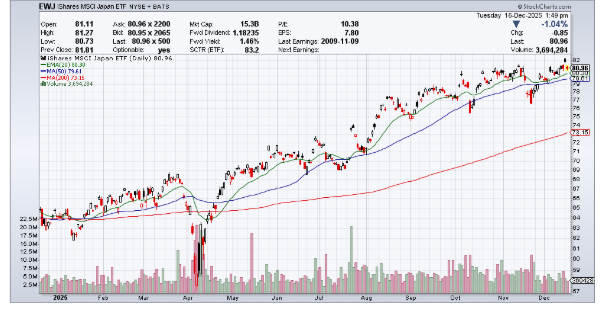
I track three things religiously:
- EWJ (Japan ETF) - Already showing some signs of weakness
- FNGD (Inverse tech leverage) - Where the real stress shows up first
- Our momentum readings - The early warning system
When Japanese institutional capital starts flowing home, you'll see it in these indicators before CNBC talks about it.
The Uncomfortable Truth
I wish I could unlearn all of this stuff. I really do. There's a burden that comes with understanding how these global funding mechanisms actually work.
The carry trade has been the hidden engine of global asset prices for three decades. When that engine stops, everything that's been artificially elevated by cheap Japanese money gets repriced.
My best guess? This plays out over 2026-2027. But when this liquidity engine finally breaks, there's no Fed tool that can replace 30 years of Japanese capital flows.
Stay vigilant. Stay defensive. And remember: the next crisis always comes from where you're not looking.
In this case, it's coming from a small island nation that most investors completely ignore.
Stay Positive,
Garrett Baldwin