

21,000 call options. Four massive prints. Someone bet serious money that an 80-cent stock was going to $1.
Most traders see a $1 call option trading for 9 cents and think "lottery ticket nonsense."
I see something different.
On April 22nd, that someone bought 21,000 calls on PLUG at the $1 strike for December expiration.
Four separate prints, all buying. That's not retail money throwing darts -- that's institutional flow betting big on something.

So I followed. But I didn't copy them exactly.
Instead of the December calls, I went with June 20th expiration.
Same $1 strike, but only 48 days to live when I bought it for 9 cents. Sold it 48 days later for 29 cents. 222% gain.
Why did I do that?
PLUG had a massive short interest sitting there like kindling.
When you see large call option activity on a heavily shorted stock, you're not just betting on the company. You're betting on what I call a "squeezequake" -- gamma squeeze triggering a short squeeze.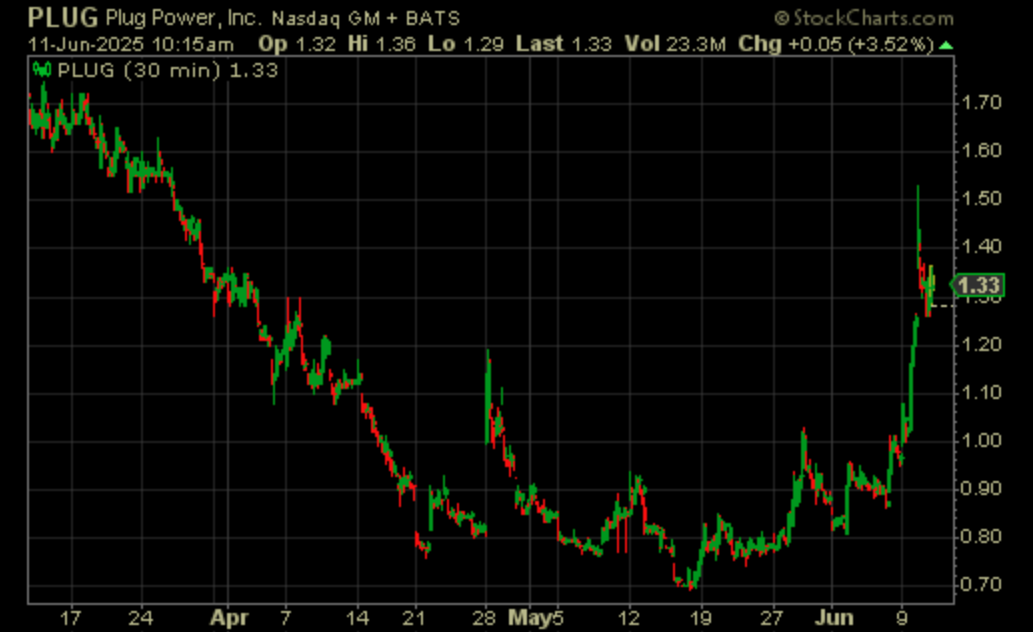
How the Squeezequake Actually Works
Most folks don't understand the mechanics behind these moves, so let me break it down.
When someone buys a massive amount of call options, the market makers who sold those calls have to hedge their risk.
They do this by buying shares of the actual stock -- the more the calls move in-the-money, the more shares they have to buy. That's called delta hedging.
Now here's where it gets spicy.
Let's say PLUG is trading at 80 cents and someone buys thousands of $1 calls. Initially, market makers might only need to buy a small amount of stock to hedge because those calls are out-of-the-money. But as PLUG moves toward $1, the delta on those calls increases exponentially.
At 90 cents, those calls might have a 30 delta. At 95 cents, maybe 50 delta. But cross $1? You're looking at 70+ delta and market makers buying hand over fist.
But wait, there's more.
PLUG had massive short interest -- meaning tons of people had borrowed shares and sold them, betting the stock would go down. When the gamma squeeze pushes the price higher, those short sellers start getting margin calls. Some of them panic and buy shares to cover their positions, adding even more buying pressure. 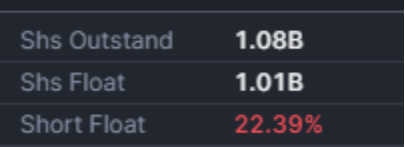
Boom. Squeezequake.
Why I Went Shorter-Term Instead
Look, I don't know what that whale knew about PLUG's fundamentals, and honestly, I didn't care.
I could've copied that December trade exactly. But here's my thinking: if this squeeze was going to happen, it would happen fast.
Eight months of time decay versus 48 days of pure gamma potential. Easy choice.
PLUG doesn't have the luxury of time to slowly grind higher. It's either going to explode or it's not.
Going shorter-term meant if I was wrong, I'd only be out 9 cents per contract instead of watching time decay eat me alive through December.
And if I was right? Well, gamma works faster on shorter expirations anyway.
The green energy space had been seeing squeezes for months. One name pops, then another, then another. When you're short a basket of these names and one starts moving, you don't wait around to see what happens next -- you start covering everything.
What Actually Went Down
We got the initial squeeze right on schedule. My 9-cent calls started moving, everything looked perfect for about five minutes, then PLUG fell back down.
Classic. You think you've got it figured out and the market reminds you who's boss.
But here's where it gets interesting -- the call activity didn't stop. Throughout my entire 48-day holding period, more large call trades kept showing up in my Ghost Prints alerts.
Different strikes, different expirations, but the same message: someone kept buying.
That persistence eventually paid off with another breakout, and I got out at 29 cents.
The Real Lesson Here
High short interest creates explosive potential, but high short interest plus large call option flow? That's when you've got something worth paying attention to.
The beautiful thing about understanding gamma dynamics is you can spot these setups before they happen.
Most traders miss this because they're staring at charts or reading earnings reports. They're not watching where the smart money is actually placing bets in the options market.
Now folks, I'm not saying go blow up your account chasing 9-cent calls.
Position sizing matters here more than anywhere. But when you see high short interest, large out-of-the-money call trades, and sector momentum all lining up? That lottery ticket might not be such a gamble.
And before you discount the PLUG trade as just luck, I’ve actually closed out 16 out of the last 16 trades as winners in my Ghost Prints service.
The next squeeze is already being telegraphed somewhere in the options flow. You just have to know how to read the signals.
The question is: are you watching for the signals, or are you going to read about it in someone else's win story?
If you’d like to trade alongside me in Ghost Prints, or would like to learn more about the strategy, click here to watch this training.
Cheers,
Brandon Chapman