Only 4.9% YoY Earnings Growth Expected In Q3
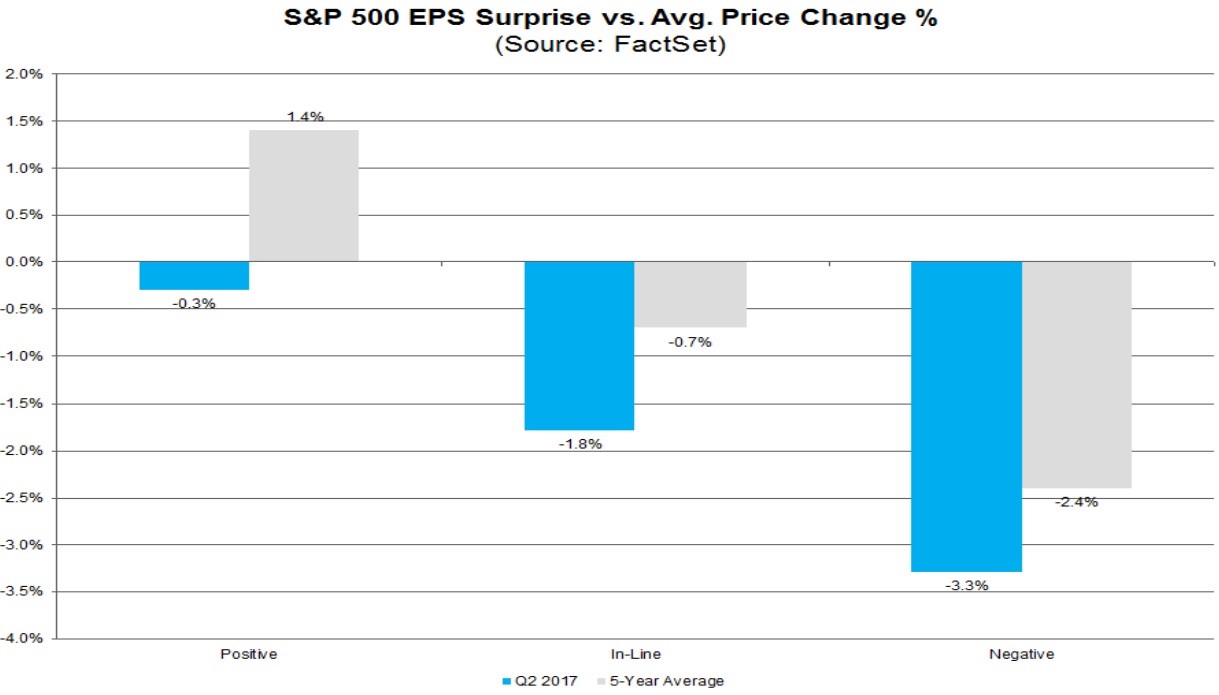
The FactSet weekly earnings presentations resumed this week. As you can see from the chart below, the finalized metrics from the Q2 earnings season show there was a negative bias to every type of report which meant even firms that beat estimates fell. This action was reversed after earnings season as technology and healthcare had the highest beat rates and the best returns in the ensuing few weeks. It seems that this indicator may have been overly hyped to mean something. If you consider that many stocks which beat earnings may have sold off initially and then rallied, does that sound bad? It sounds like initial volatility occurred around earnings and then cooler heads prevailed. This seems to be nothing more than a statistical anomaly.
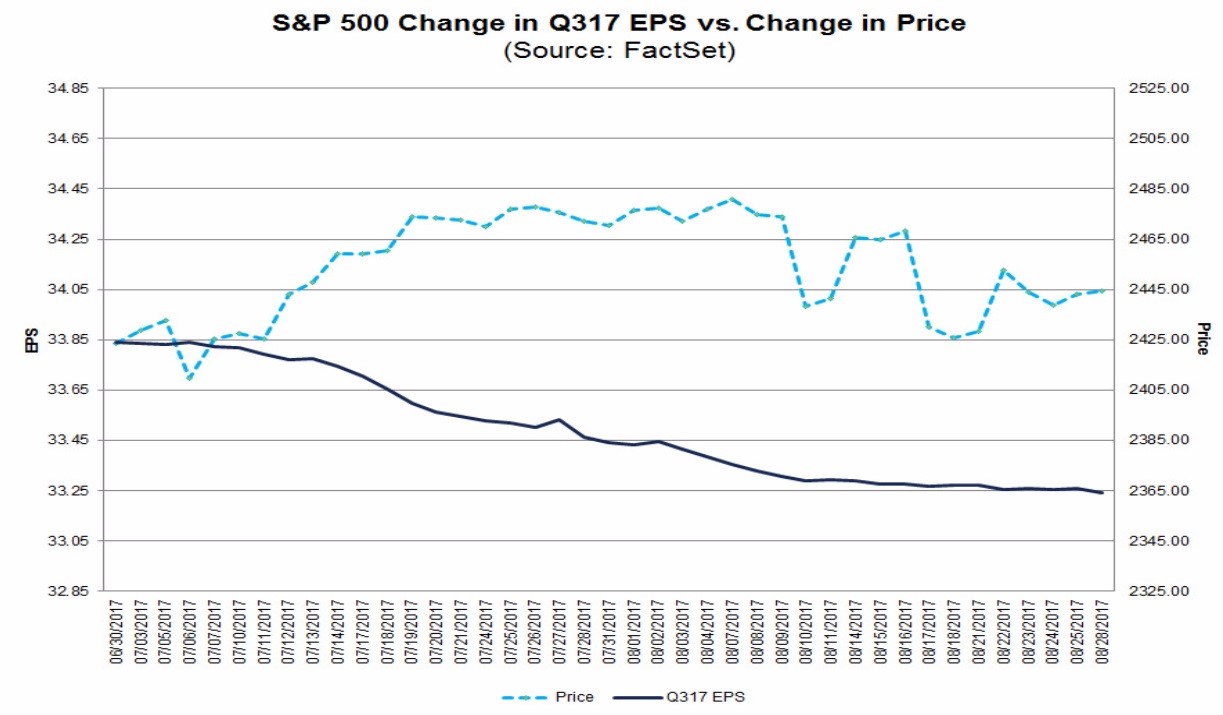
We already know that Q2 was a great earnings season. It’s now time to focus on the expectations for Q3. As you can see in the chart below, analysts have lowered their expectations. According to FactSet, there will only be 4.9% year over year earnings growth. The surprising aspect of this decline is that the percentage of firms issuing negative guidance for Q3 was lower than normal. 62% of the 115 S&P 500 firms issuing guidance were negative. The 5-year average is 75% negative. This analyst negativity is surprising given the weakening dollar. It’s too early to claim this will be a bad quarter because if estimates are beaten more than usual, the quarter can still be salvaged. The numbers are drastically different when looking at the S&P Dow Jones report. They show earnings growth being 15.7% in Q3. That’s only a slight slowdown from the 15.9% growth in Q2. Both reports show growth re-accelerating in Q4 which is because Q4 2016 was relatively weak.
Debt Ceiling Stage Is Being Set
There have been new rumblings on the debt ceiling debate issue as we inch closer to the deadline. It seems as though the ceiling will be reached earlier than mid-October. Treasury Secretary Steve Mnuchin says the deadline is September 29th. He says it can be even earlier than that because of the spending on hurricane relief. Speaking of hurricane relief, as was mentioned in a previous article, FEMA is running short on cash. The leaders in the Senate are trying to attach the Harvey relief spending to the debt ceiling increase. The House already passed a $7.85 million aid package to increase the money FEMA has. The Senate wants to put the debt ceiling issue in that package and send it back to the House. This idea has been floated for a few days. The fact that the House didn’t put the debt ceiling raise in the bill shows how they feel about the concept.
The factions of this process are the GOP leadership, the Democrats, and the conservative Republicans. The GOP leadership will try to get this bill passed the Senate. In the House, either the conservatives or the Dems will need to support the bill. A Democratic aide made the following point when asked if the Democrats would support the bill. The aid said, "Likely to depend on length of time and GOP plans for the rest of the to do list for September. Does the debt ceiling increase they propose make it more or less likely that we get bipartisan deals on the things we need to get done this fall, or not." The ‘length of time’ comment refers to the fact that the debt ceiling will be changed. Instead of tying the debt ceiling to a specific number, it will be tied to a date.
This doesn’t solve the problem at all because the debt ceiling should look at the percentage of debt to GDP not a time or an amount. In the end, this current debt ceiling raise also has a deadline. The only improvement is the deadline will be known after this change instead of like now where it could be September 29th or a few days earlier. This is minor band-aid over the real problem. Even changing the ceiling to the debt to GDP ratio is a band-aid. The real solution would be growing the economy without running up huge deficits. Unsurprisingly, the Congress has no plans to take that up.
Getting back to the Democratic positioning, they will want to get something in return for raising the debt ceiling after the GOP got the sequester from Obama after he raised the debt ceiling. Hurricane Harvey relief won’t be enough because even the conservatives who hate spending like that. The issue the GOP leadership will be faced with is which faction offers a more reasonable compromise. It could come down to whether the absolute value of the Dems spending is more or less than what the conservatives are offering in cuts.
As you can tell, the conservatives don’t like the concept of attaching the Harvey spending to the debt ceiling increase. Mark Meadows is the leader of the House Freedom Caucus. He said, “The Harvey relief would pass on its own, and to use that as a vehicle to get people to vote for a debt ceiling is not appropriate. That sends all the wrong message: ‘Let’s go ahead and increase the debt ceiling, and by the way, while we’re doing it let’s go ahead and spend another $15, $20 billion?’ That’s not to undercut the importance of Harvey relief. We’re going to fund Harvey relief without a doubt, but I think it just sends the wrong message when you start attaching it to the debt ceiling.” This doesn’t seem like a logical argument because he supports raising the debt ceiling and relief spending. He just opposes the optics of the legislation which seems immaterial considering the fact that most Americans don’t know much about the issue. I’m sure the Freedom Caucus would be fine with the optics if the bill included spending cuts. The question is if these proposed spending cuts are more or less reasonable than what the Dems offer in spending increases.
The stage is now set. The first back and forth action will occur this week. We should know what will happen by next week.