Economic Data Is Irrelevant
It seems like the only people who care about the economic data are macro nerds. The stock market is rising despite bad data. Many don’t disagree with the rise in cyclical stocks. One theory is that the economy will recover after the vaccines are widely given out this spring. Obviously, slowdowns happen all the time. Usually, you must decide if the slowdown is anything serious.
In this case, the market is emphatically saying the weakness doesn’t matter. This slowdown could be worse than the typical one. If there wasn’t a virus, most would ignore the current weakness, because we’re only seeing it in high frequency data. However, we can anticipate the weakness in November and December to be worse than the typical slowdown. That’s just a guess, but it doesn’t matter because the market has decided the late fall and winter are irrelevant.
Updated TSA Flying Data
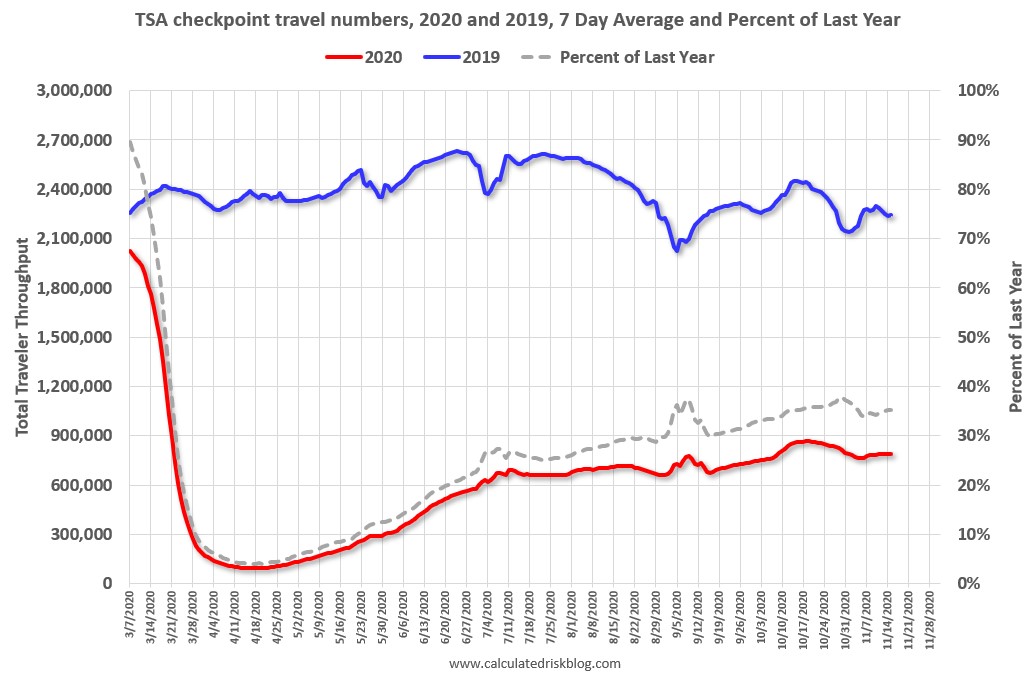
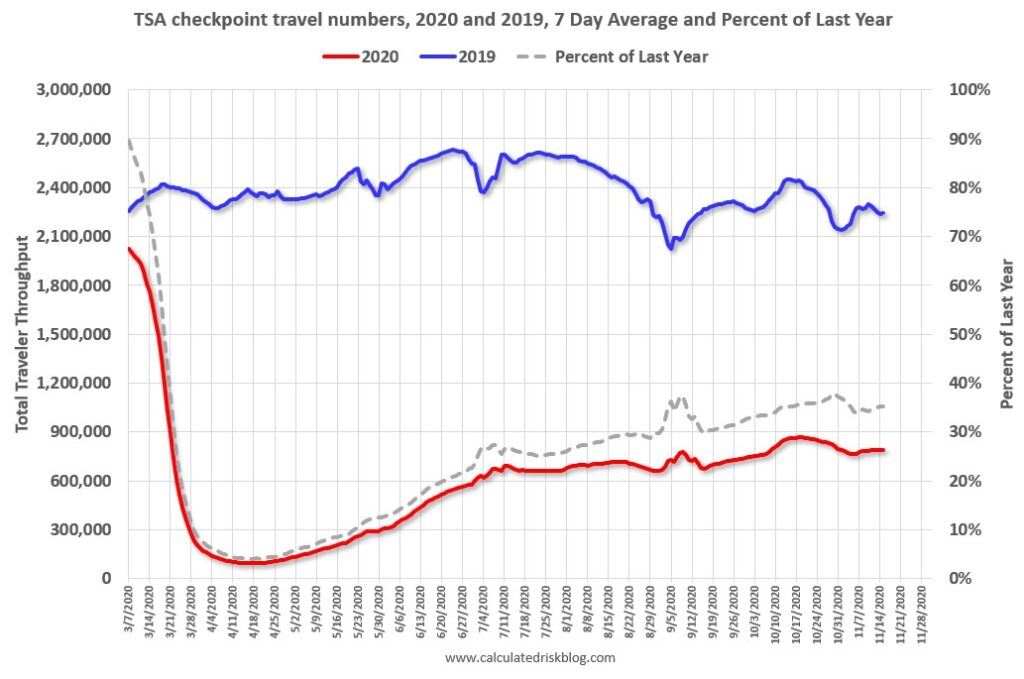
TSA data below shows there has been a modest decline in flying since the middle of October, but the decline hasn’t been getting worse in the past 2 weeks. On a year over year basis, growth has actually gotten better. That doesn’t jive with the massive spike in cases. It jives with the idea that people are overlooking the virus and getting on with their daily lives.
The concept that a vaccine is coming in 3-5 months doesn’t motivate people to stay at home because they were told in the spring if the country locked down for 4-6 weeks, everything would be fine. That's not choosing a side because every small decision has a cost and a benefit. It’s up to people to decide what is worth the risk.
Those collective decisions are leaning in the direction of COVID-19 fatigue. Unlike flying, movie going hasn’t recovered at all. That’s likely because flying is more of a necessity than the theaters. Plus, many movies are being delayed until next year.
7 day average of yearly growth in seated diners from online, phone, or walk in reservations has declined the most in Illinois (out of 6 major states) because it is in the Midwest. 2nd worst is New York which hasn’t fallen much from the summer, but recovered the least from the start of the pandemic before the latest tailing off in the past few weeks.
Restrictions are the tightest in New York because leaders don’t want a repeat of the spring where New York City had the most deaths out of any other major city globally. Dining only is allowed until 10PM.
Will Housing Become Expensive?
Housing market is obviously on fire right now with low interest rates, the movement towards single family homes because of the pandemic, aging millennials (low 30s), and delayed buying from the spring. On the other hand, rising prices counter those trends. Rising rates would be a problem obviously. It’s a tenuous battle.
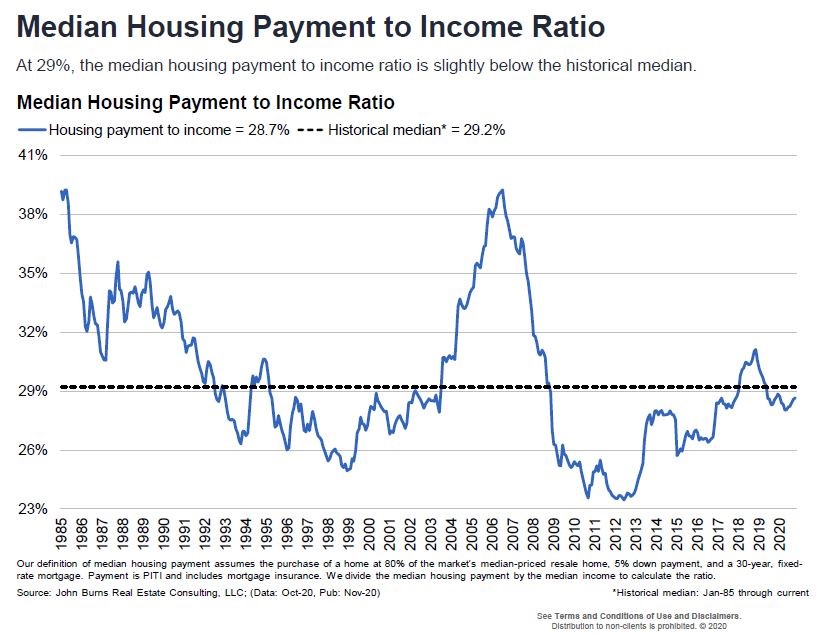
The chart above shows the median housing payment to income ratio is about at the historical average, proving this isn’t a bubble like the mid-2000s. In the 2000s, people were buying 2nd homes to make a profit; people who couldn’t afford houses were buying them without documentation. If someone buys a house to flip it, the price is irrelevant. If people who can’t afford houses are still allowed to buy them, then affordability becomes less of an issue.
And if interest rates were to spike next year, house price growth would fall. Housing wouldn’t be allowed to become as unaffordable as it was in the mid-2000s. Risk of rising rates isn’t baked into the market. 10 year yield is at 91.2 basis points. This won’t be bad for homeowners since they haven’t taken out HELOCs.
It’s simply bad for housing related stocks. Toll Brothers is 8.25% off its recent high because of the rise in rates. With the market at a record, that’s a decent amount of underperformance. That’s only the beginning if rates rise further. It makes zero sense to buy a home builder when home building sentiment is at a record high. There is only one way to go: down!
Details On Student Loan Debt
We have gotten some interesting data on student loans that suggests it is less of a crisis than initially was let on. This is being discussed because, once again, there are debates if student debt will be forgiven.
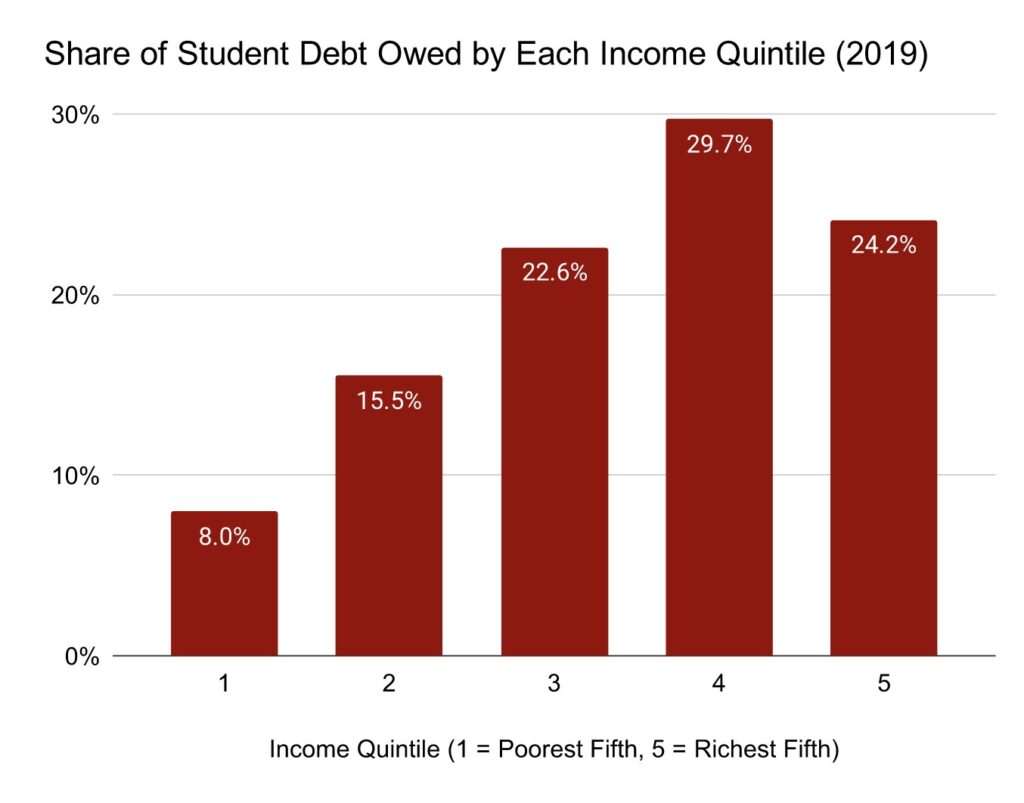
As you can see from the chart above, 53.9% of student debt is held by people in the top 40% of incomes. This obviously supports the argument against forgiving all loans. More importantly for us, this shows the issue isn’t catastrophic for the economy. Net worth stats aren’t the same as this, but that’s because younger people carry student debt. If someone has a high net worth later in life, they will have paid off their loans.
Net worth is largely a function of age. That being said, here's the data. 25.2% of student loans debt is owed by those in the top 40% in terms of net worth excluding student loans. On the other hand, 48.5% of the debt is held by the bottom 40%.
Themes Are Popular
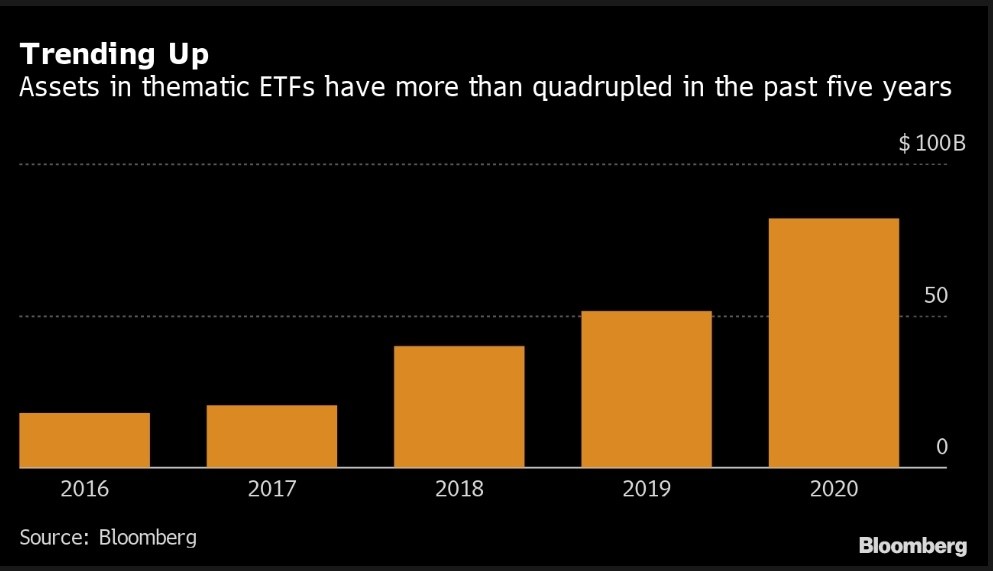
Thematic investing is buying certain stocks based on big trends like environmental sustainability. This goes along with ESG and growth investing. It’s a fad based on low rates. You can see the steady trend in assets going to these thematic investments. Quadrupling in 5 years doesn’t mean I’m wrong. It actually proves my point as fads become really popular before fading away. If we get higher rates, the amount of money invested in these themes will fall.
Conclusion
The stock market doesn’t care about the rise in COVID-19 cases. There is fatigue which might be why flying isn’t falling. That’s leading to more cases which could lead to shutdowns.
We could see modest weakness on shutdowns, but investors won’t fear them because the vaccine will be distributed within a few months. Moderna’s vaccine was proven to be 94.5% effective just like we expected. Be wary of thematic investing when rates rise next year.