Tariffs Dominate Headlines
The tariffs on steel and aluminum have continued to dominate the headlines as the story hasn’t gone away as some expected. President Trump doesn’t appear to be backing down on his proposal even as House Speaker Paul Ryan, the Club for Growth, and the Heritage Foundation all have come out in opposition to the across the board taxes on steel and aluminum imports. The big change which came Monday morning is Trump stated he would remove the steel and aluminum tariffs if NAFTA was renegotiated. He’s against trade deficits, so anyway they are lowered would be a positive. We knew this reaction was a possibility since America’s trade deficit increased in his first year in office.
Potential To Rescind NAFTA In Place Of Tariffs
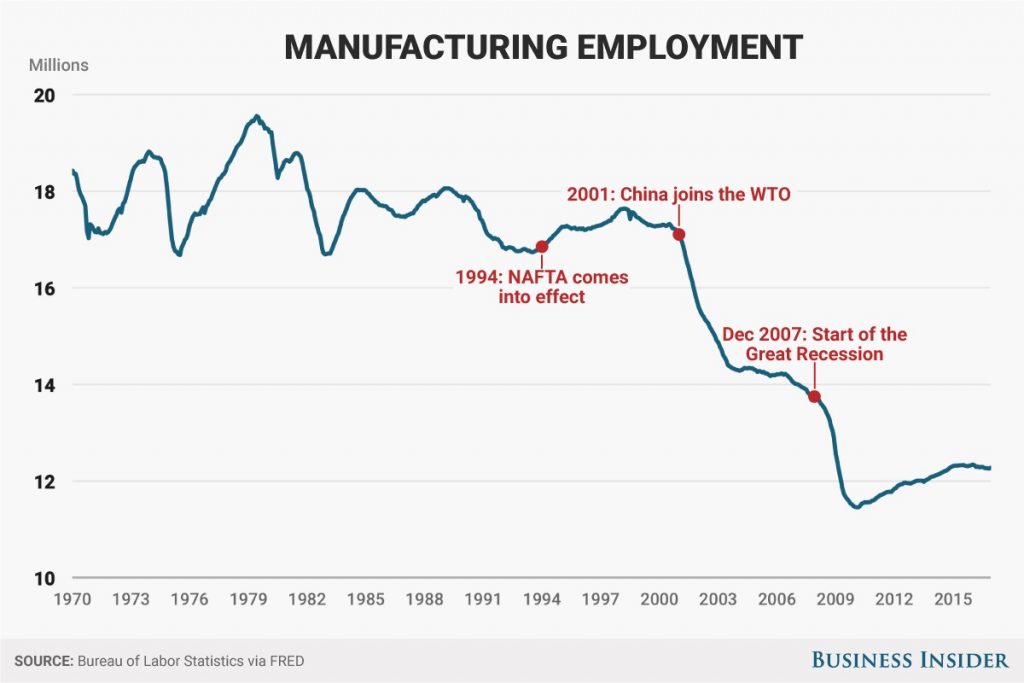
Getting rid of NAFTA wouldn’t help the trade deficit. As you can see from the chart below, after NAFTA went into effect in 1994, there wasn’t much of a change in manufacturing employment. The sharp change came after 2001 when China joined the WTO. Manufacturing’s share of total employment has been declining in Europe, Japan, the U.K., and America since 1980. The growth of the tech sector, outsourcing, and automation have all been catalysts for the decline in manufacturing employment’s percentage of the labor market. It seems almost impossible for the government to regain the lost manufacturing jobs. The good news is the government doesn’t need to do that because services have picked up the slack. With the ISM manufacturing PMI at the highest point since May 2004, the cyclical strength in manufacturing employment probably won’t improve much from here.
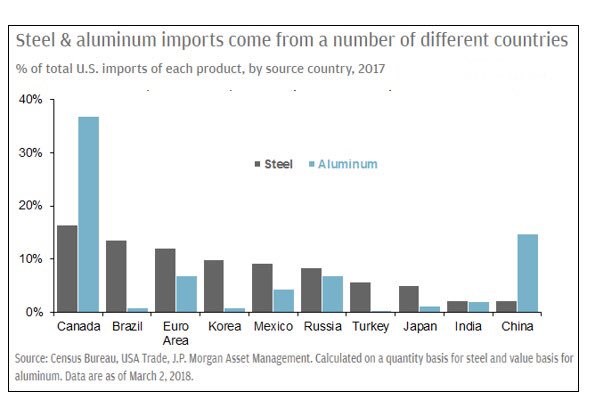
NAFTA is a small part of the U.S. trade deficit. The biggest country America has a trade deficit with is China. Therefore, it makes little sense to get in a trade war with Europe, Mexico, and Canada to reign in the trade deficit. China and America don’t have a trade deal for Trump to rescind. As I mentioned in a previous post, it’s a good situation for America because China buys such a large portion of American treasuries. It appears Trump is bringing up NAFTA for two reasons. First, he blames Mexico for the American opioid crisis and wants to use trade as leverage. Secondly, as you can see from the chart below, Canada is the largest importer of steel and aluminum. Since Trump wants those jobs to come back, he’s focusing on NAFTA.
Tariffs Not The End Of The World
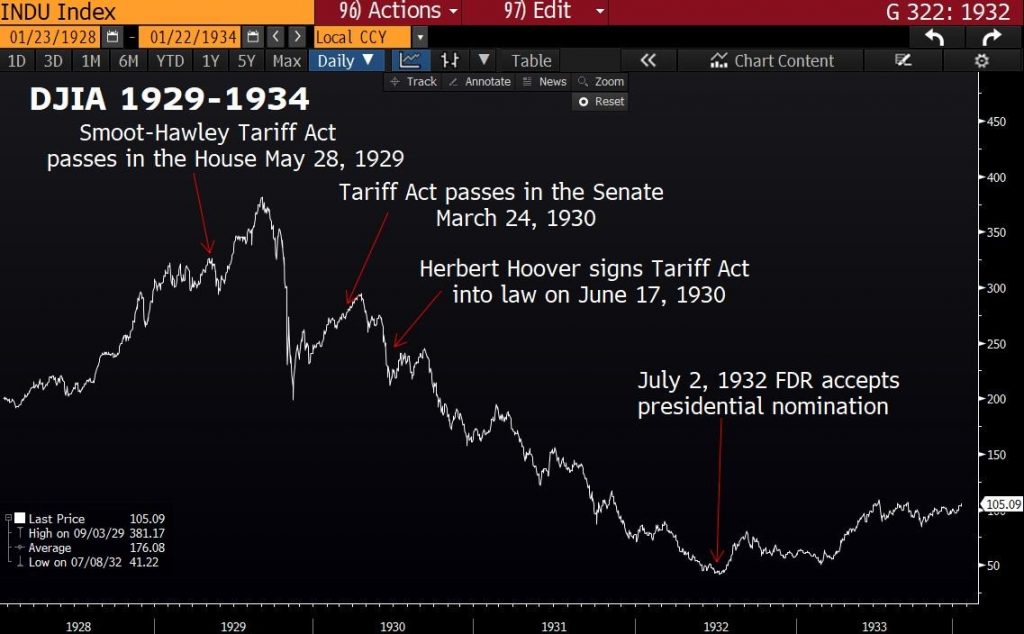
Whenever the stock market is falling on negative headlines, it’s very easy to spread fear. The uncertainty allows fear to proliferate. The steel and aluminum tariffs are negative catalysts which could hurt trade and cause retaliatory measures, but they won’t necessarily cause this bull market to end. Comparing this tariff to Smoot-Hawley in 1930 and then making the leap that stocks will crash as a result is wrong on two counts. First, this tariff is much smaller than the tax on 20,000 items. Secondly, as you can see in the chart below, Smoot-Hawley wasn’t the only reason for the stock market crash in 1929. While it’s certainly possible that the tariffs played a role in the recession, the fact that the tariff became law after the 1929 crash means it probably didn’t cause the decline. It had only passed the House when the crash occurred. It could have played a role in causing the crash, but you can’t ignore the excessive valuations and speculation. The 1920s stock market bubble was the 2nd biggest in history and caused the Shiller PE to hit levels only surpassed in the tech bubble and the current market. To be clear, I don’t think a 1929 style crash is coming because of similar Shiller PE multiples and because tariffs were discussed then and now.
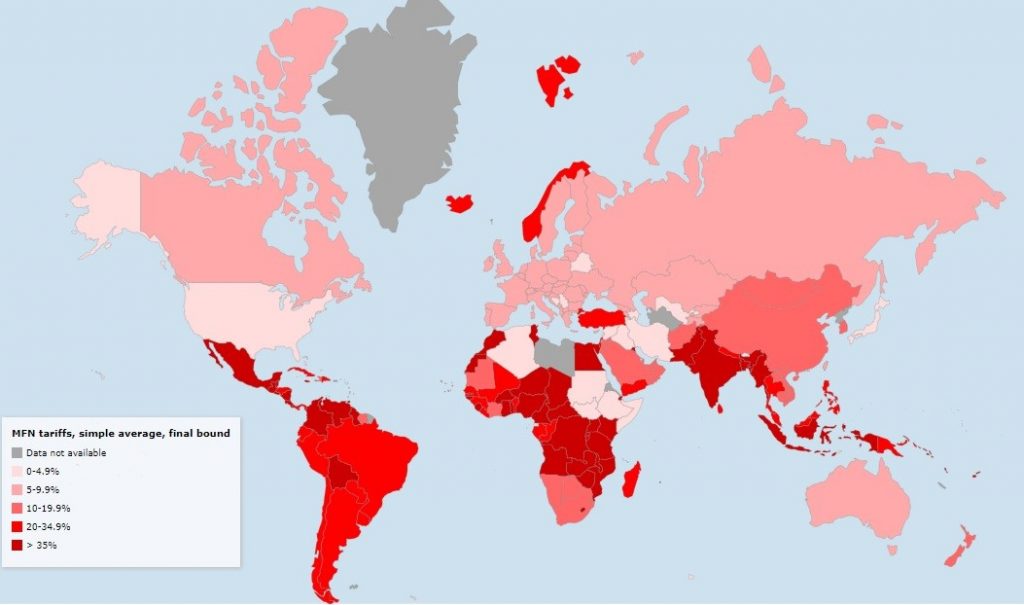
There is certainly potential for a trade war, but there needs to be nuance to the discussion. A light retaliatory response to the U.S. tariffs which doesn’t provoke a war is possible, if not likely if this measure passes. As you can see from the map below, America has one of the lowest final bound tariff rates in the world. Since Europe has higher tariffs, it shouldn’t act too harshly to America coming closer to its level. Only Japan has a leg to stand on because it has similar tariffs to America before this latest potential action. One of the reasons for the stock selloff last week was the fear of the direction America is going in. This could be the first step towards higher tariffs on many goods. Considering the tough resistance Trump is getting from his own party on this tariff, I wouldn’t say a slew of new tariffs are likely.
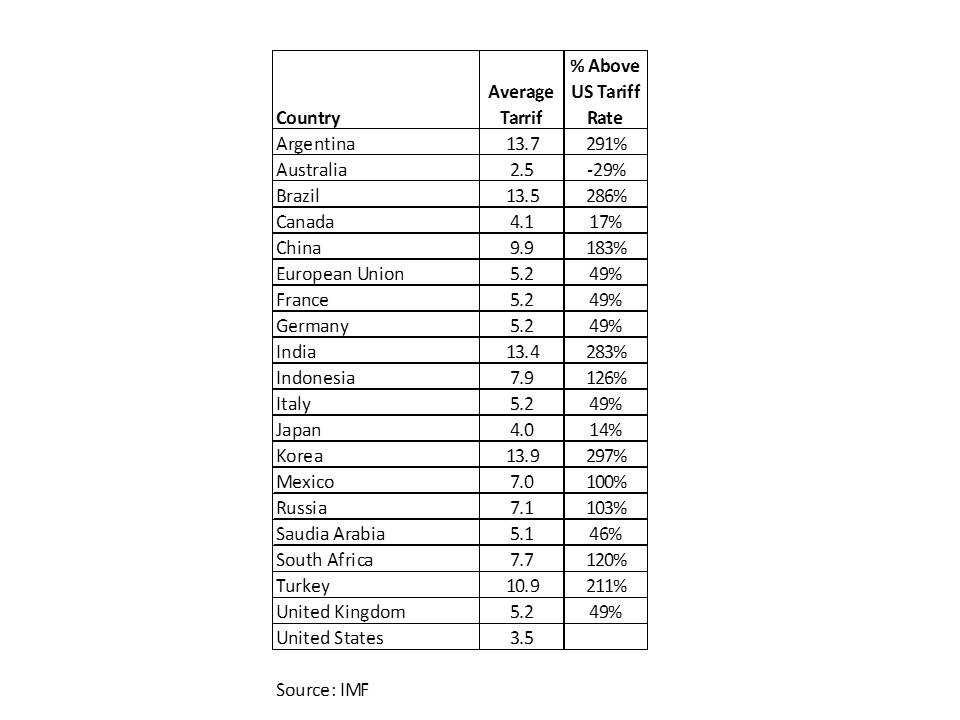
The table below shows the simple average tariffs to give you another angle on the situation. In this case, Japan has higher tariffs than America. The only country on this list with lower tariffs is Australia. It’s remarkable to see Brazil threaten higher tariffs since its tariffs are 286% higher than America’s tariffs. When you hear stories about how other countries are going to blast America because of this change, it’s important to contextualize the issue instead of act based off headlines.
The reason why this is a tough issue to analyze is because the President’s rhetoric was bombastic. Rhetoric can escalate a tariff into more than it is. Even a small tariff can have big consequences if it angers the leaders of trade partners. Political rhetoric will always be difficult to analyze because sometimes it doesn’t make sense. That’s why it’s reasonable to stay nimble until it dies down.
Conclusion
When stocks are falling over a news event which contains a lot of uncertainty, it’s a terrible idea to panic. It’s easy to get caught up in the rumors that this set of tariffs will be akin to the Smoot-Hawley tariffs which were around the time as the 1929 crash. Sober analysis tells you, the chance of a large trade war is unlikely. It’s not certain if the tariffs will stick, but if they do, a small retaliation seems likely since America is only moving from having one of the lowest tariffs to having slightly higher ones. This is just like how America lowered its corporate tax rate which puts it more in line with other countries. Hopefully, the tariffs aren’t as sharp a change as the tax cuts were.