
Investors and traders alike often find it difficult to get of the way when freight trains are barreling down on them.
Even when conductors like Carl Icahn have been blowing the horn as loud as they can for more than a year.
Sometimes, you can't blame them (them being the homegamers). Retail, for instance, had no way of understanding ahead of time how the monstrosity that Blythe Masters helped create in the BISTRO would eventually spawn the instruments that nearly destroyed the financial world.
Other times, however, things are a little more clear cut. There’s a bit more visibility. The concepts are easier to grasp. One example is HY credit. This a narrative that is so easy to understand that even an economist could get it.
Well, maybe we shouldn’t go that far because the PhD economist crowd has done everything in their power to perpetuate it.
It’s worth rehashing this narrative once in a while because frankly, it’s almost invariably guaranteed to play out at one time or another in the foreseeable future. We’re going to make this very straightforward.
Let's break this down as simply as possible. The Fed lowers rates to zero. Investors must find yield anywhere they can get it. It's perfect timing for HY energy companies who, because they're all cash flow negative, need capital markets to plug funding gaps. There's voracious demand for new supply (i.e. more HY debt) thanks not only to the quest for yield, but also to the proliferation of ETFs which make it easy for retail investors to pour money into esoteric corners of the bond market.
So, primary market supply? Check.
Demand for new issuance? Check.
Liquidity? No.
But why not? “There’s JNK!” you’ll shout! “There’s HYG!”
See that’s the thing. There’s really not. There are these units that you imagine exist called JNK and HYG units but they are of course just back by the actual bonds. Well, guess what? Some of those bonds aren’t particularly liquid and they’re made even less liquid by this chart:
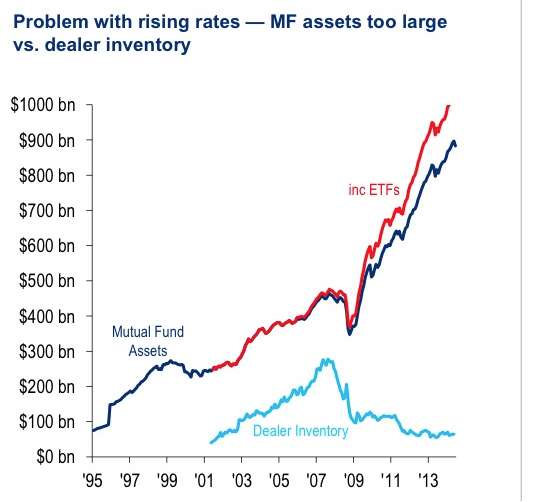
(Chart: Citi)
Guess who the “dealers” are there? That’s right: Wall Street. But Wall Street doesn’t want to middle those bonds (i.e. inventory them for your fund manager in a pinch) anymore. That’s because in the post-crisis regulatory regime it's costly to inventory bonds (you know, legislatures had to kill off the “evil” prop traders).
If this happens on a large scale (i.e. if the fund sponsors come calling for buyers at the same time) there will be only two relevant words: "fire" and "sale."
To meet redemptions ETF managers - yes, even the ones at venerable firms like the mighty BlackRock - will have to take whatever price they can get to meet your redemption requests. And that’s when you realize why everyone has been shouting from the roofs about this set up.
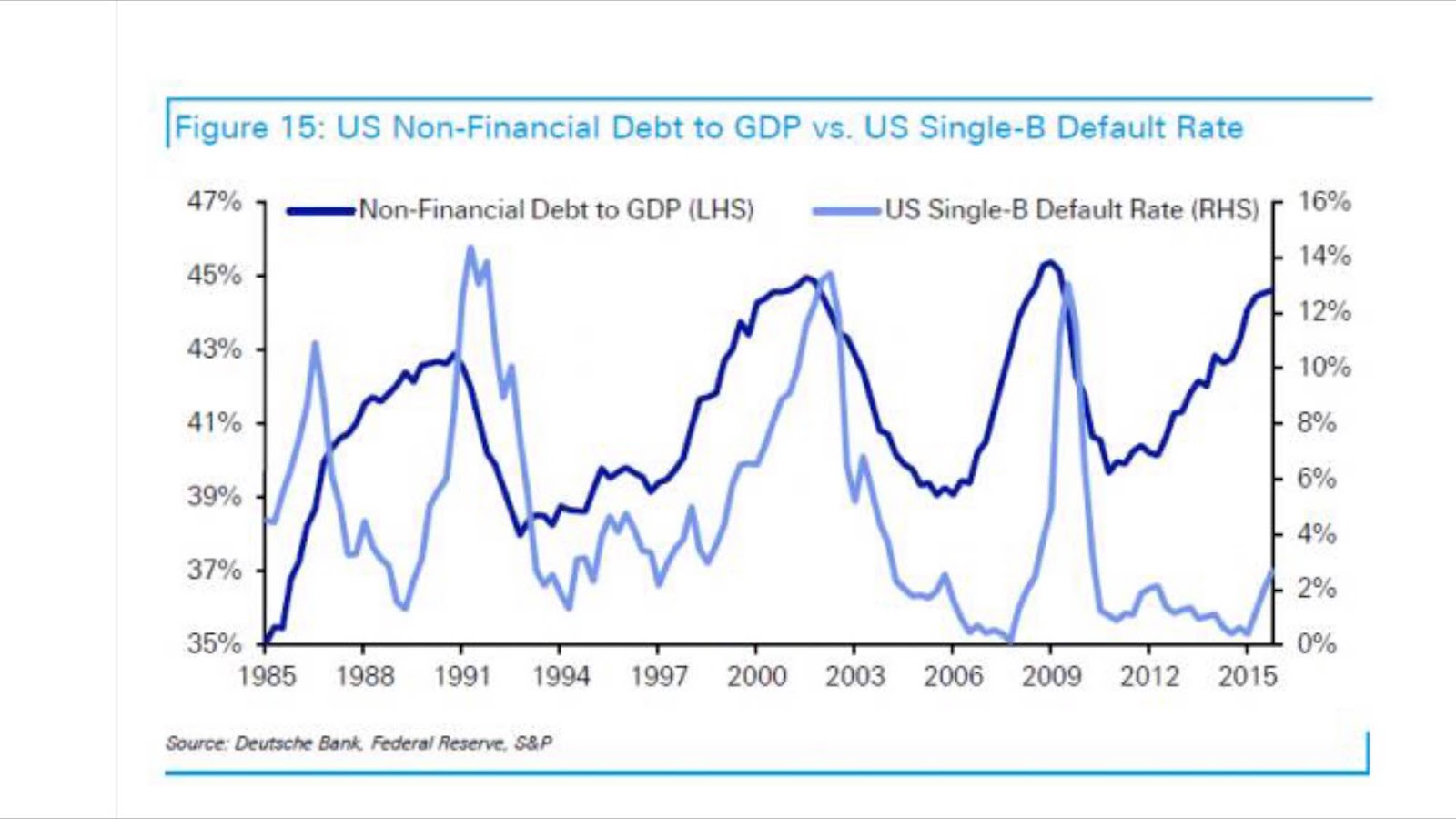
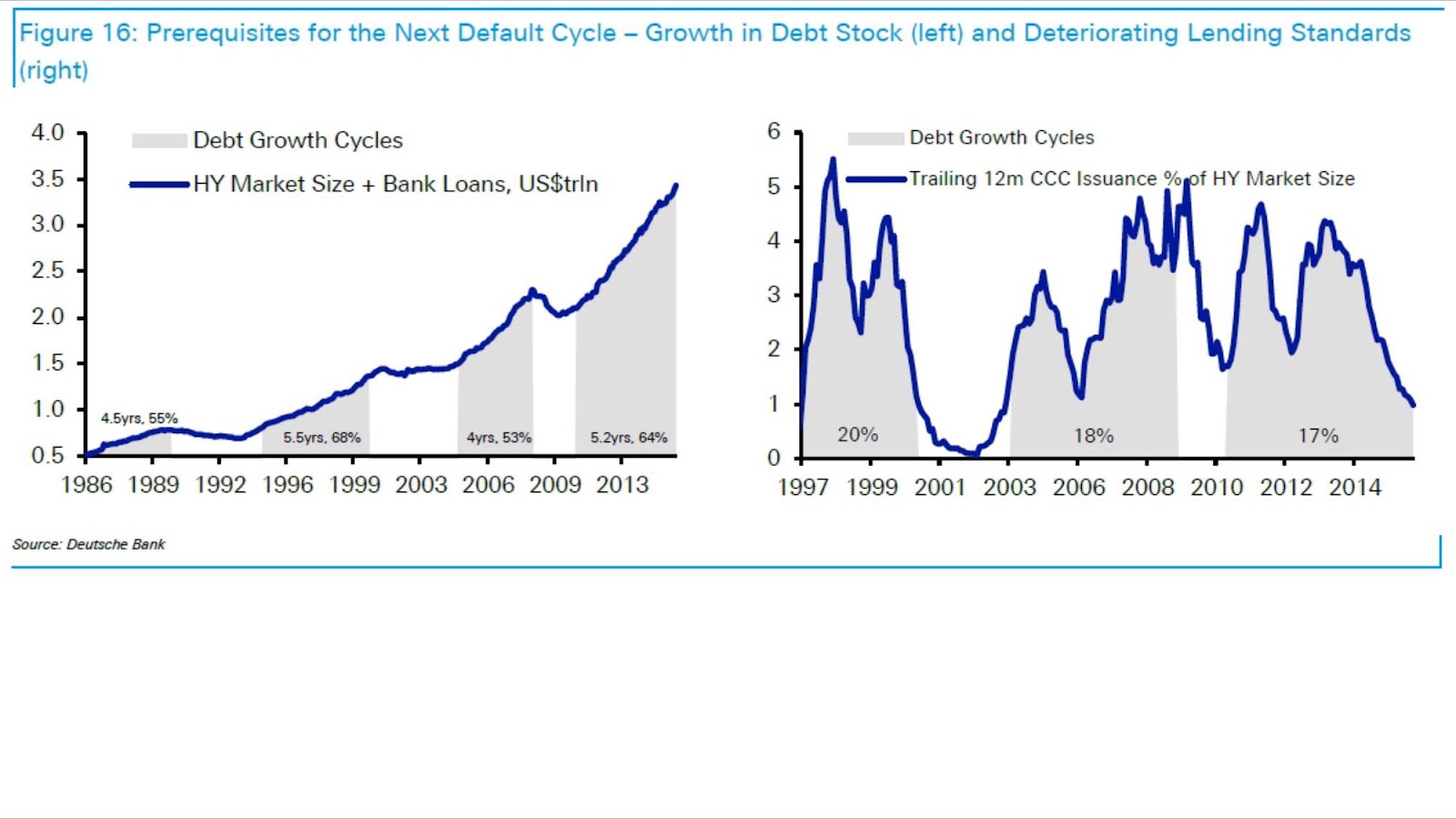
One can make it more complicated than it need be, but that is the long and short of it. We'll close with three graphics from Deutsche Bank from which you should be able to divine quite a bit more about everything said above.