Counterpoint To Consumer Spending
We’ve gotten mostly weak Redbook same store sales growth. October retail sales report showed a little weakness. And Chase’s card data showed a modest decline in yearly growth in the past few weeks. That all makes sense when you see the spike in COVID-19 cases, hospitalizations, and deaths. It’s the consensus that the next few weeks of economic data will be bad. However, let’s not stop there. Let's be willing to look at everything before closing the case on the economy.
As you can see from the chart below, the 7 day average yearly growth in BAC aggregate card spending shows a modest improvement in the past couple weeks. This normally wouldn’t be anything to write home about because it’s within the recent range, but it’s interesting now because other data suggests weakness. Everyone wants to believe the consumer is in a lot of trouble because it makes so much sense.
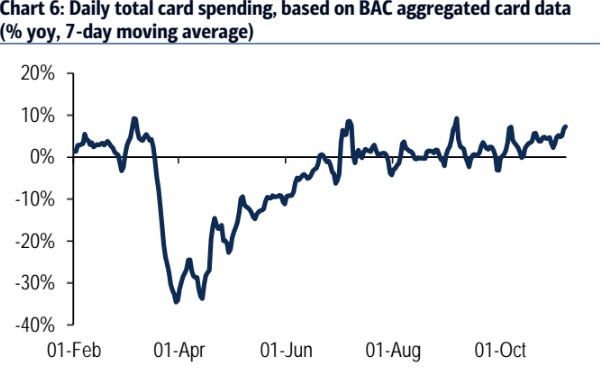
Regardless of this overarching theme, we must stay neutral. It’s important because if the consumer stays strong through this negative event, imagine how great spending will roar higher in 2021 once the virus is gone. Indeed job postings index showed yearly growth stop improving in the week of November 13th, but at least it’s not getting worse.
Plus, jobless claims are still falling. It’s possible the consumer stays strong until December. I’m just presenting the data. It makes no sense to ignore legitimate facts.
Latest news on the economic restrictions is that NYC schools will be closed because there is over a 3% positivity rate of COVID-19. That’s a low rate compared to most states, but the legislation was done in the summer, so it needed to be followed. Secondly, Minnesota is barring indoor dining and closing fitness centers for 4 weeks.
Retail Wage Growth
We hear that retail is dead, but it’s not true. Department stores are in trouble, but retailers like Costco and Target are doing very well. Target had blowout earnings again. The firm reported EPS of $2.79 which destroyed estimates for $1.60. Sales of $22.63 billion beat estimates by $1.7 billion. That’s 21% growth. For what is usually a slow growing business, that’s amazing. Same store sales growth was 20.7% which beat estimates for 11.2%. There was “outsized growth in electronics.”
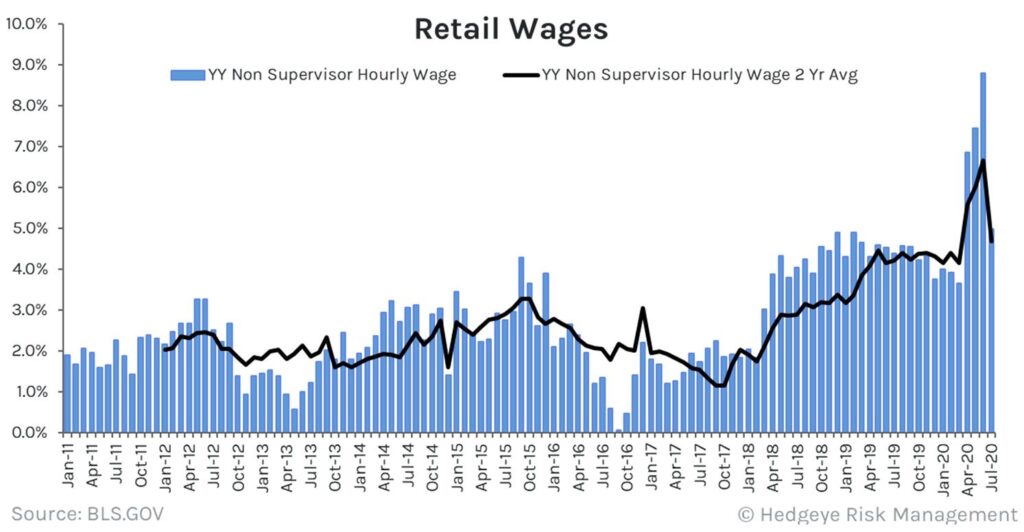
Those great results explain why retail wage growth has been so strong. People rushed to grocery and home improvement stores which boosted demand. Some retailers are struggling, but others are struggling to find more workers. As you can see from the chart above, non-supervisory hourly wage growth spiked in the summer.
Even as the unemployment rate is falling, wage growth is staying high which suggests the strength wasn’t only caused by low paying jobs being eliminated. Instead, the hot parts of the economy can’t find enough workers to hire.
Latest Economic Data
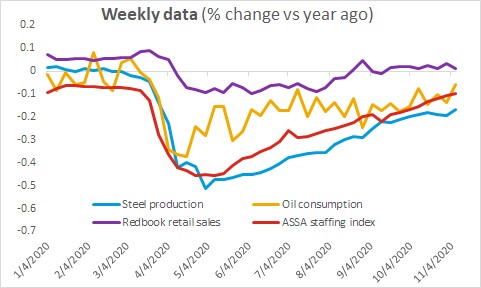
The latest economic data seen in the chart below shows the recovery is still going. Yearly Redbook same store sales growth has been weak. However, there has been improvement in oil consumption, steel production, and the ASSA staffing index.
Specifically, the staffing index improved to -9.2% growth in the week ending November 7th which is a pandemic high. This stat is a good proxy for temp help payrolls as it has a 94% correlation with it.
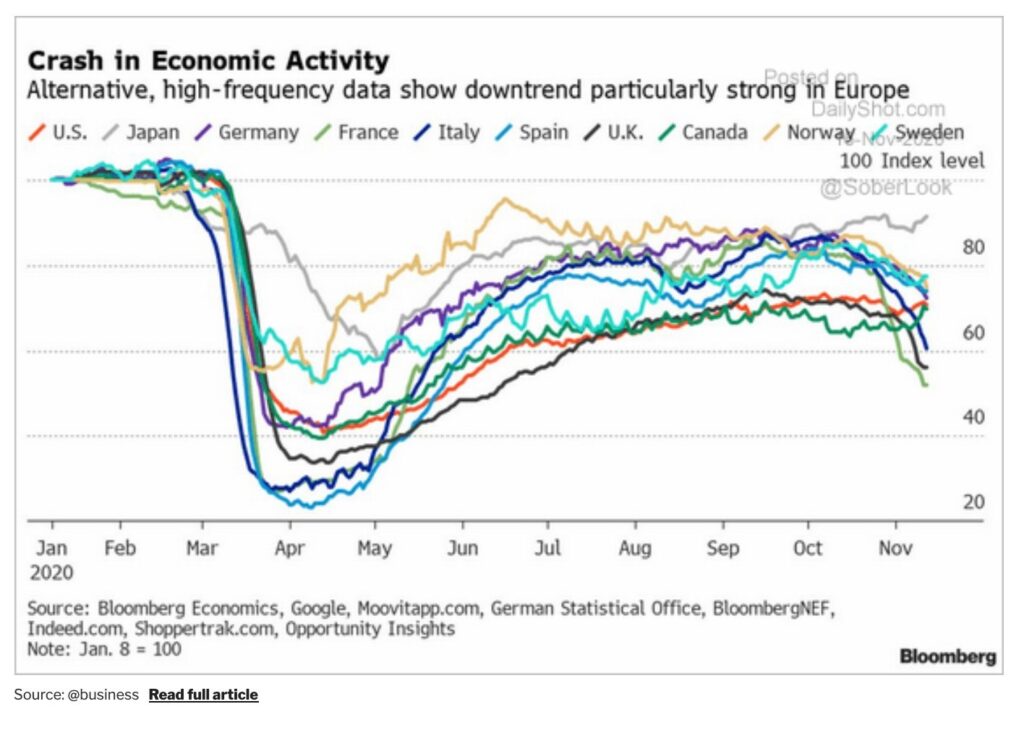
High frequency data in America and Japan isn’t like Europe’s since Europe has been in a lockdown for the past couple weeks. Europe decided cases were exploding out of control, so they needed to act. It certainly stopped the spread of COVID-19. 7 day moving average of new daily cases in France peaked at 56,377 on November 7th and has since fallen to 25,469 as of November 18th. However, so too has the European economy.
As you can see from the chart below, many European countries are seeing declining activity with France having the biggest decline. America is in the opposite state as Wisconsin still hasn’t peaked. From those same dates, the 7 day average of cases went from 5,394 to 6,563.
7 day average of deaths in the state is 48. It’s a cost benefit analysis that must be done to determine the right course of action. Maybe America is delaying the inevitable because at a certain point the hospitals will have too many patients and people will willingly stay inside.
Specifically, as of Wednesday, the total number of people hospitalized jumped to 79,410 which is another record high. 7 day average of deaths is now 1,209. It’s above 1,200 as many predicted. It still has a couple more weeks to rise even if the virus cools off.
Some slightly good news is the rate of increase in cases has slowed in the past few days. Maybe the positivity rate will peak soon. On the negative side, Thanksgiving might increase the spread.
NY Fed Quarterly Update
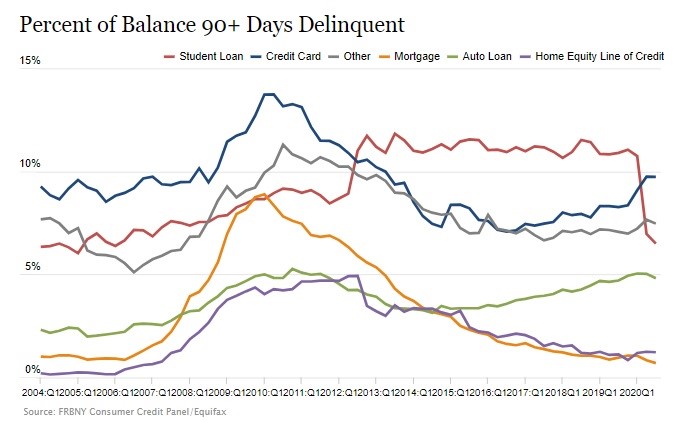
One favorite economic report is the NY Fed’s quarterly household debt and credit report. The chart below shows the 90+ day delinquency rate in each of the major loan categories. Student loan delinquencies fell from 7% to 6.5%. Credit card delinquencies fell one tenth to 9.7%.
Auto loans even fell from 5% to 4.8%. Mortgage loans fell one tenth to 0.7%. Housing debt went into forbearance and then most people restarted paying the loans back. There is no issue with the housing market. If you listen to what banks are saying, they worry about hotel loans, but not residential housing loans.
Conclusion
The consumer might not be doing badly if we follow what Bank of America’s data shows. Target is doing well and so is retail wage growth. Many high frequency economic indicators aren’t suggesting weakness. October industrial production report was actually strong.
Europe’s economy is tanking because of the shutdown. COVID-19 cases fell in France unlike in Wisconsin. Some good virus-related news is case growth is slowing slightly. Household balance sheets are in pretty good shape based on the delinquency rate updates in Q3.