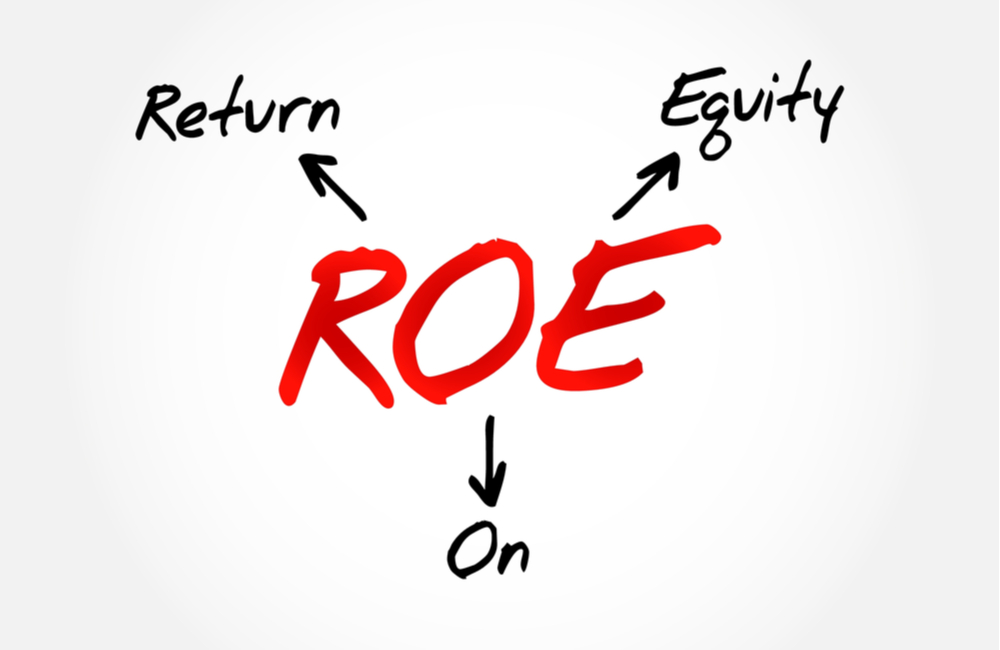
How do you evaluate the effectiveness of a company's management? One measure that can be used on a wide variety of stocks is Return on Equity. That means that if you're looking for a growth, value or income stock you can apply this measure. That's due, in part, to the fact you're considering the return to shareholders. In this post, we're going to look at this metric and how to apply it when evaluating a company.
Return on Equity Basics
Return on Equity (ROE) is a management effectiveness metric. It represents the amount of income the company is generating for shareholders. You can calculate shareholder’s equity by taking the book value of the assets of the company and subtract the book value of the debt. Shareholder equity is what is left over after liabilities are covered. The calculation for ROE is, therefore, the net income of the company divided by the equity of the company.
Return on Equity Expanded
Similar to Return on Assets (ROA), Return on Equity uses Net Profit Margin (NPM) to derive its value. Essentially, ROE is just the ROA of a company times its Leverage Ratio (Assets/Equity). Since most companies carry some degree of liabilities, it’s common to see a leverage ratio of greater than one. That means that ROE is generally higher than ROA. However, a significant difference between the two values is indicative of a company with high leverage or debt. Also, companies can have negative equity. Unfortunately, you can't calculate ROE when equity is negative.
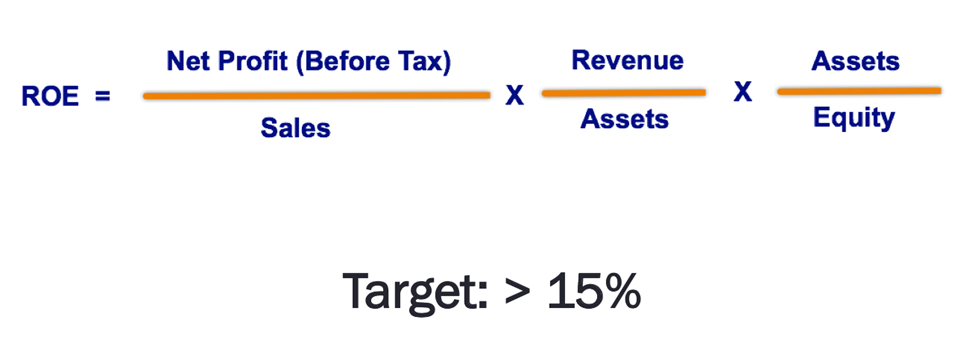
That means that ROE isn’t just for analyzing growth stocks. It's important to consider management effectiveness for value and income stocks as well. A value of greater than 15% would be a reasonable minimum value, but values closer to 20% of higher would be more typical for a well-functioning company.
Return on Equity Applied
You can use ROE as a part of any search whether fundamental or technical. A positive value for ROE means that the company is making money on a GAAP basis and has positive equity. This will eliminate those stocks who are making it on revenue growth and no earnings, but that isn't necessarily a bad thing.
Even for companies that have lower margins and growth prospects ROE is applicable. A company that has lower profit margins and stable earnings has likely levered those earnings through debt. That means the company can still have a high ROE because of the leverage ratio and maybe even high asset turnover (Revenue/Assets).
Conclusion
Return on Equity is a good all-around fundamental measure for evaluating companies from all fundamental stock types (growth, value and income). It can also allow you to compare companies from various sectors or industries. That's because the focus on owner's equity, margins, asset turnover, leverage and return are universal when evaluating the effectiveness of management. You just happen to be considering all of those variable with a simple return on equity value.
See how unlocking the Vomma Zone can help you better understand when volatility is about to rise.
Want learn more about how to work with me? Check out Trader by Your Side!
Not a subscriber? Become a TheoTrade member