
The title is from SocGen’s incorrigible “permabear” Albert Edwards who is out with an interesting note on the current state of corporate balance sheets (among other things). Here’s one chart that stuck out to us:
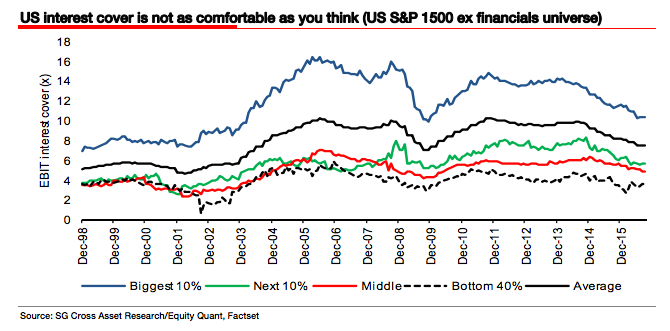
(Chart: SocGen)
What that shows is that the despite the hunt for yield that’s driven interest rates into the ground, interest cover in the US corporate sector is the lowest it’s been in years.
And this comes just as - you guessed it - companies continue to tap wide open debt markets for funds they subsequently use to buy back shares. Have a look:
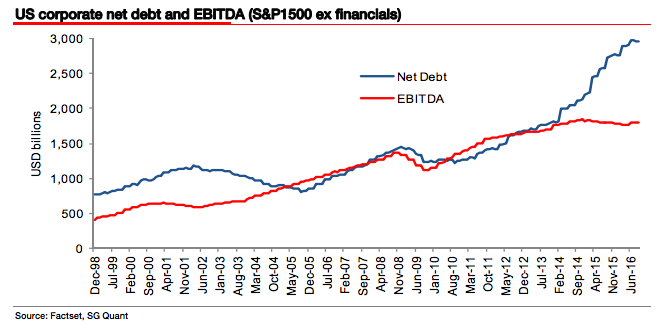
(Source: SocGen)
Barclays was out this week warning of similar issues.
Specifically, if you lump together buybacks and dividends and other things that inflate stock prices, bottom lines, and investors’ perception of the relative wiseness of their investments, what you find is that spending is set to exceed FCF by more than $100 billion per year going forward:
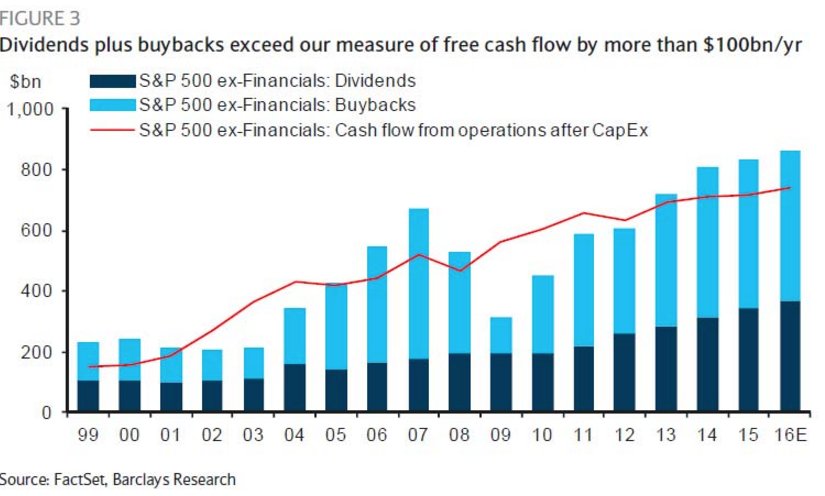
(Chart: Barclays)
Obviously, that’s simply laughable. And with sluggish topline growth, we’re not entirely sure where they think they’re going to make up the difference besides borrowing more money. But what happens when the cost of capital rises and you’ve spent all your borrowed money on buybacks and dividends. Then you couldn’t even even take advantage of an economic surge if there was one because you haven’t invested enough in productive capacity!
Here’s a key highlight from Barclays’ note:
“Companies have been able to spend more than they generated in cash flow because leverage measures were low coming out of the financial crisis. But they are not low anymore. Since 2013, the total amount of debt owed by non-financial companies in the S&P 500 has increased by almost $1 trillion. Net of cash the increase has been even more meaningful, as the growth rate of debt has exceeded the growth rate of cash and equivalents.”
There’s simply no way this works out well. You can’t just keep borrowing to inflate results, multiples, and keep shareholders happy - even in a world where everyone is looking to ferret out any semblance of yield they can.
We’ll close on another note from Albert Edwards:
“But hang on a second, let’s just look at interest cover for the quoted sector, for Andrew finds that despite record low interest rates, cover has declined to levels last seen in the depths of the last recession (see chart below)! In the next recession a sharp decline in both profits and the equity market will reveal this Vortex of Debility. US corporate spreads will then explode as the economy is overwhelmed by corporate defaults and bankruptcies. And with the Fed having been the midwife of yet another financial crisis, what price do you give me for it to lose its independence?”