The VIX Volatility Spread (VVS) using VIX Index options is a strategy our members have on pretty consistently. This is a relatively low risk and high reward strategy for capitalizing on a sharp move higher in the VIX. Because this trade requires very little maintenance and generally little cost, it’s great to have going as a hedge in case of a market decline.
We have an entire rule set for placing these trades. Also, we have a weekly video that discusses management for TheoTrade members. Inevitably, the discussion of management and what to do as you approach expiration comes up. At times, this may even require you to hold through expiration. As a result, understanding the settlement of VIX options is critical.

VIX Index Option Settlement
VIX Index options have a Wednesday AM expiration and settlement. As a result, the last trading day is on Tuesday. The Special Opening Quotation (SOQ) of the VIX published Wednesday morning represents the settlement price. This settlement value will determine the final price of the VIX for the options that are expiring. The value typically comes out about 30 minutes after the open and can be viewed on a chart using the VIX Options Settlement Index (Ticker: VRO).
The image below is a chart of VRO over the past three months.
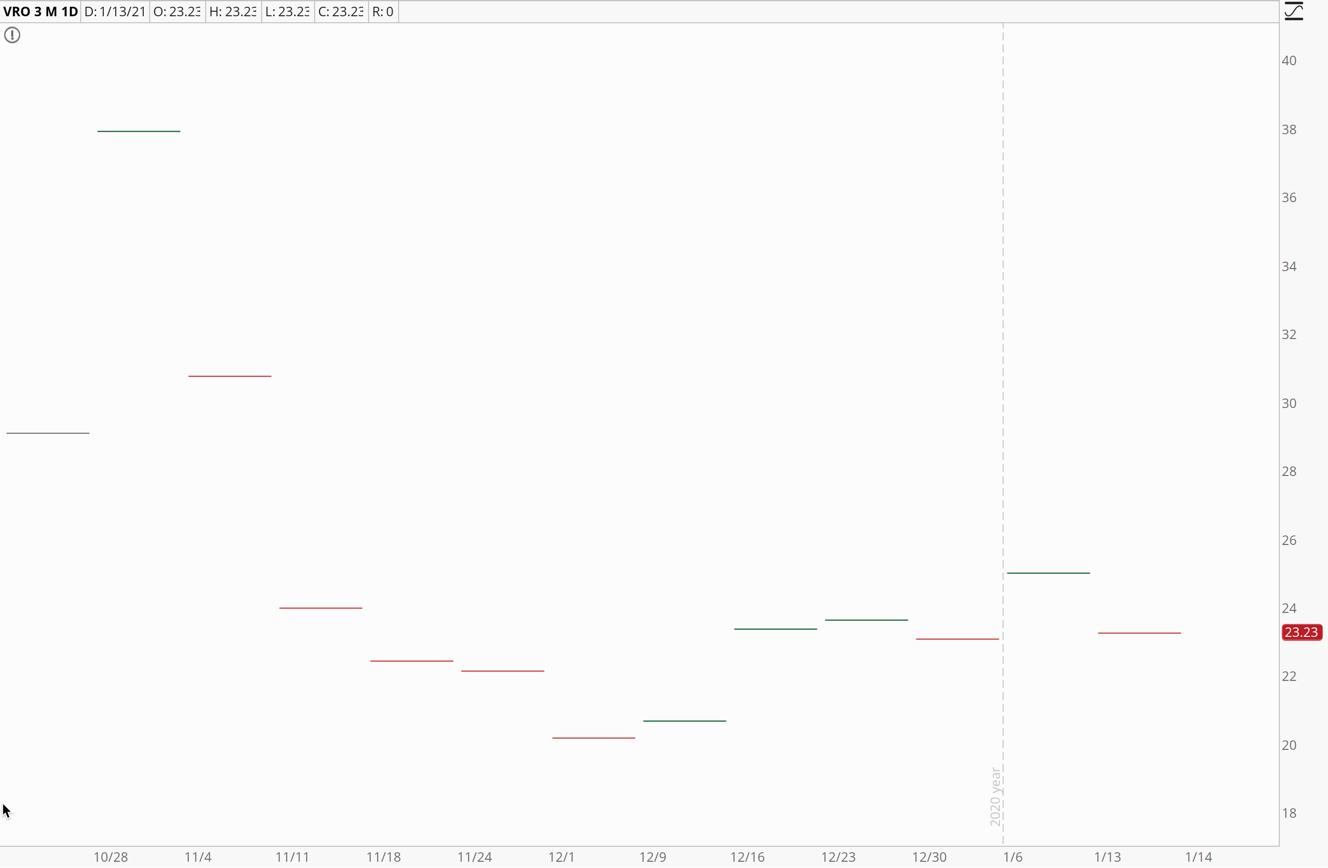
VIX Index Option Settlement
One of the great features of VIX index options is that there is no underlying that requires settlement. That means that you don’t have shares of stock to take ownership of or to end up being short. This allows the option trader to have truly defined risk trade if holding through expiration.
This comes in handy for VVS trades. That’s because the trade can be entered for a small credit and can be held close to expiration. By letting slightly out-of-the-money options expire, the trader ends up keeping the initial credit or incurring a small loss that is settled in cash.
For example, let’s say that you sold the 22 put on the VIX and you placed the VVS trade for a $0.05 credit. In this example, the initial credit is kept if the VIX settles at 22. This is a result of all the options expiring worthless. That means that the breakeven is $21.95 and a VIX settlement of 21.50 would incur a $0.50 loss. For a trade that has significant upside potential, this is typically a small risk to take.
Conclusion
Trading VIX options and using the VIX Volatility Spread strategy can be a great way to hedge or capitalize on a market decline. Frequently, traders jump into trades that they don’t fully grasp, and settlement is a unique feature to index options compared to equity options. Hopefully this introduction helps you make more informed decisions when trading this product close to expiration.
Wondering when to hedge? See how unlocking the Vomma Zone can help you better understand when volatility is about to rise.
Not a subscriber? Become a TheoTrade member.