The stock market sold off on Wednesday because of the threat President Trump made in his speech on Tuesday to shut the government down if he didn’t get funding for the southern border wall. This is in direct conflict with the Treasury Department which is asking Congress to raise the debt ceiling. Usually presidents are in favor of raising the debt ceiling, but President Trump wants to use it as leverage to get what he wants. The biggest problem with this tactic is it adds another faction to the already contentious debate. Normally, there are two main factions: those who want to raise the ceiling cleanly, meaning with no legislative add-on and those who want to add spending cuts to the increase. This is sort of like the opposite of pork. Pork is special spending deals to get a bill approved.
The reason President Trump’s tactic might be seen as potentially dangerous is because funding the wall is an increase in spending. The President has been asking for $33 billion in new funds for defense and border security with $1.6 billion for the wall. Now you have 3 factions, two of which are willing to shut the government down to get what they want. The American people see shutting the government down negatively because it shows a stubborn lack of an ability to compromise. I still think the debt ceiling will be raised, but this new tactic makes the process potentially more stressful for the markets. The debt ceiling issue is like the tax cut issue; if the Republicans don’t get something done, they may lose the 2018 election. The best part about the debt ceiling is there’s no consequences unlike tax cuts which potentially lower government revenue. The debt ceiling is an arbitrary limit which is meaningless. It would make more sense to look at the debt to GDP ratio as I have discussed previously.
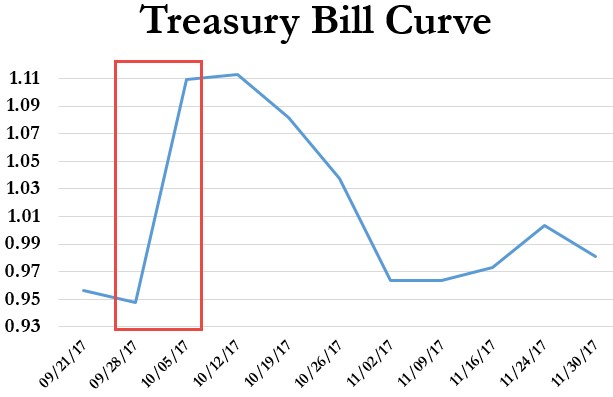
The result of the risk surrounding the debt ceiling is causing bonds due in October to have higher yields than they normally would. You may ask the obvious question which is why the stock market would fall if everyone knows the debt ceiling will be raised. The answer is the potential for a debt rating downgrade and the chance that an elongated government shutdown would negatively impact business activity as many federal employees would be put out of work. The Treasury curve adequately depicts these risks with a higher yield. The stock market has almost no chance of crashing 60% because of a default, but a 5%-10% correction is possible the longer it goes on for the reasons I just mentioned. This is the same reason why stocks go down on the threat of nuclear war. No one thinks there will be a nuclear war, but a 1% chance of a war should send stocks lower by almost 1%.
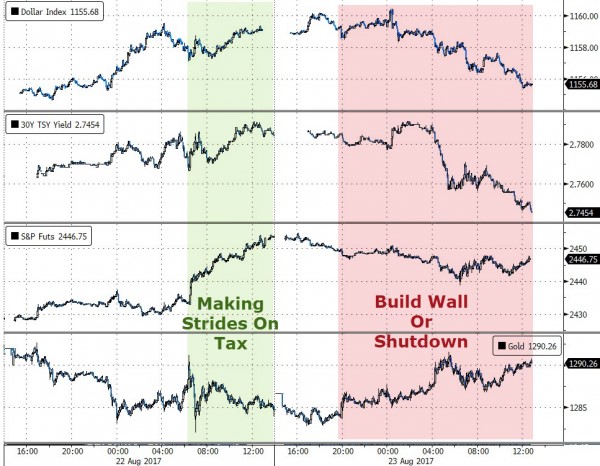
The chart below reviews the various market impacts from President Trump’s rhetoric. The dollar index fell, the 30-year treasury rallied, the S&P 500 fell, and gold rallied. The idea that the government was making strides on tax cuts boosted stocks and the idea that the government was going to shut down caused this latest ‘risk off’ trade. A declining dollar is good for earnings, but this isn’t the best way to get there. A weakened American economy isn’t the best catalyst for corporate profits. The best catalyst would be what we’ve seen in the past few months, namely strength in emerging markets, Europe, and Japan.
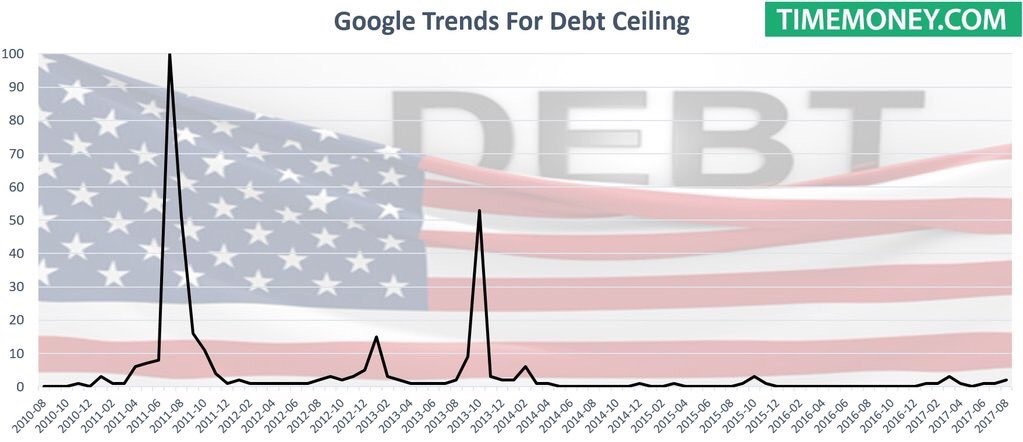
As with any move made by a politician, the debt ceiling issue is being transformed to help each political faction. The Democrats want to show how the GOP can’t govern, the establishment in both parties want to raise it seamlessly, the conservatives want to show how the debt is getting too high, and President Trump wants money for the border wall to appeal to his voters. As you can see in the chart below, currently there isn’t much search interest in the debt ceiling as many people focus on their plans for Labor Day. After Labor Day, the issue will hit prime-time as the media will make it the top story they cover. News channels love to put the ticker in the bottom for a countdown. It gets people excited without the network having to create good content. At that point, we’ll see what the political posturing has done.
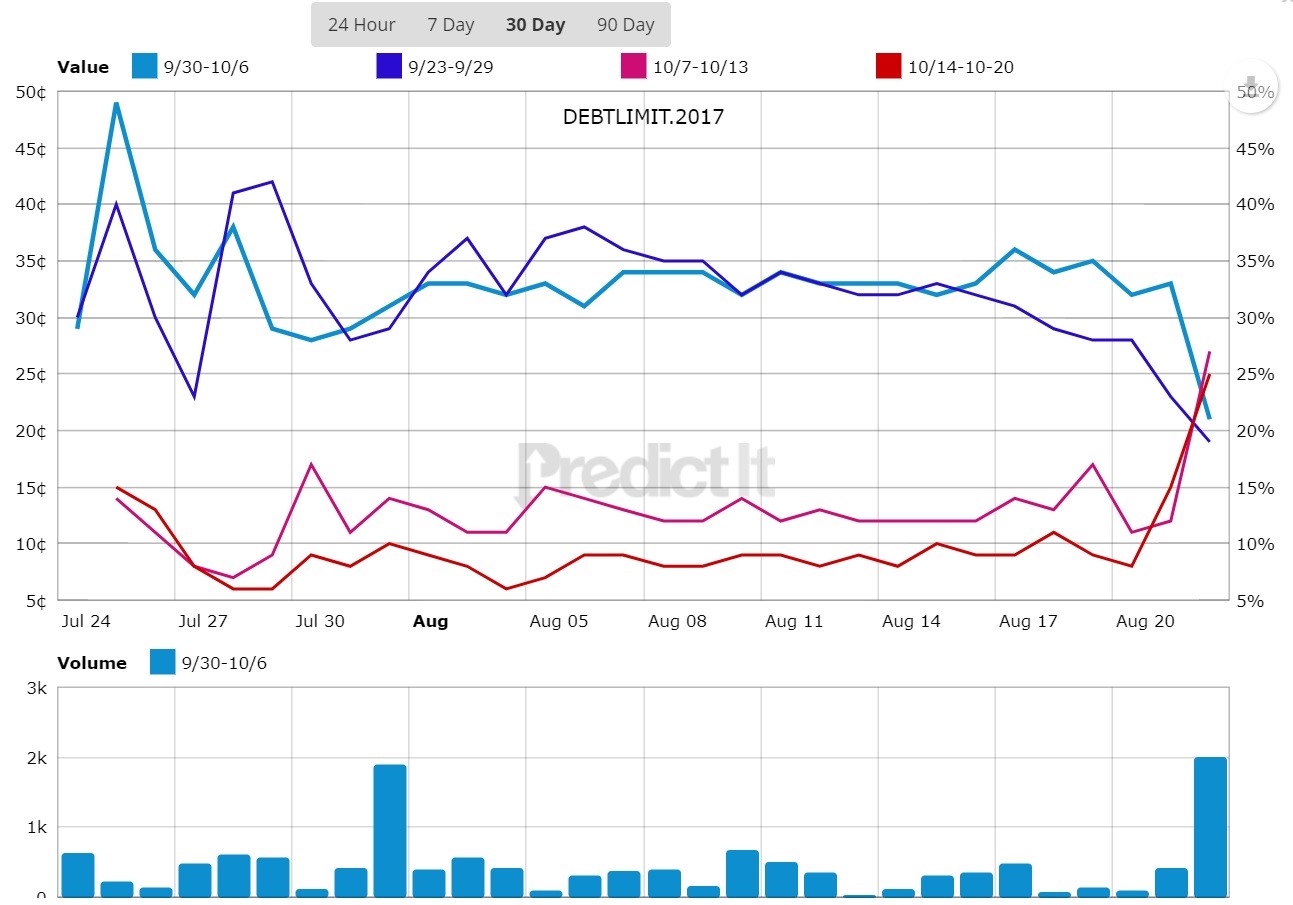
I think President Trump’s stance on the wall can have 3 possible outcomes. The first would be he gets some funding for boarder security. The second would be he gets a shutdown. The third is he becomes politically irrelevant as Congress negotiates a deal with or without his blessing. That third option is where I see this going because Mitch McConnell has already said there’s a 0% chance of a shut down. Speaking of percentages, let’s look at what the betting market has to say about the matter. The chart below is from Predictit. That website uses online betting to come up with chances of various events. The chart adds up the chances of the debt ceiling being raised in each week and plots them on the chart below. I have been expecting the debt ceiling to be raised in late-September or early-October. The chart shows the odds spiking for those betting it will get done in early to mid-October. My educated guess is that stocks will start falling in October if no deal is done. The upside to the market might be capped as early as now. Unless you’re a passive investor, why would you buy stocks now if the debt ceiling will hurt stocks in 6 weeks?
Conclusion
We’ve been following the debt ceiling issue for a few months. It is now becoming a factor for the market. The debt ceiling is more important than any other fiscal issue such as healthcare, infrastructure, and tax cuts. I think this can only hurt the GOP’s chances of passing a tax cut. Yes, they will be motivated to pass the tax cut to win the election, but when you have so much political contention coming from both sides, it’s tough to get anything done.