Stimulus Woes Hurt Stocks
The stock market fell sharply on Monday as investors feared a stimulus won’t pass. We will find out if that fear is true on Tuesday. Nancy Pelosi set a 48 hour deadline for a deal on Sunday. Obviously, politicians change their minds all the time, but if Steve Mnuchin and Pelosi are working together, she has a good idea of when a deal can be done.
On the other hand, it makes political sense for Pelosi to drag this out because she doesn’t want President Trump to benefit from the stimulus and people are voting now.
Democrats are calling for $2.2 trillion in spending and the GOP is calling for $1.9 trillion (the money is spent differently). A supposed difference is on national testing and state and local government relief. It’s ironic that there is a difference on testing since the number of tests is increasing anyway.
Regardless, of whether the stimulus passes, testing will increase because 150 million tests were already bought from Abbott. Many sense a deal is coming, causing the market to rally. However, then there will be uncertainty over whether the Senate GOP supports it. A decline in stocks on Monday probably pushed the GOP slightly more in favor of a stimulus. Everyone knows that if one doesn’t pass, stocks will sag further.
Buybacks Not Kicking In Yet
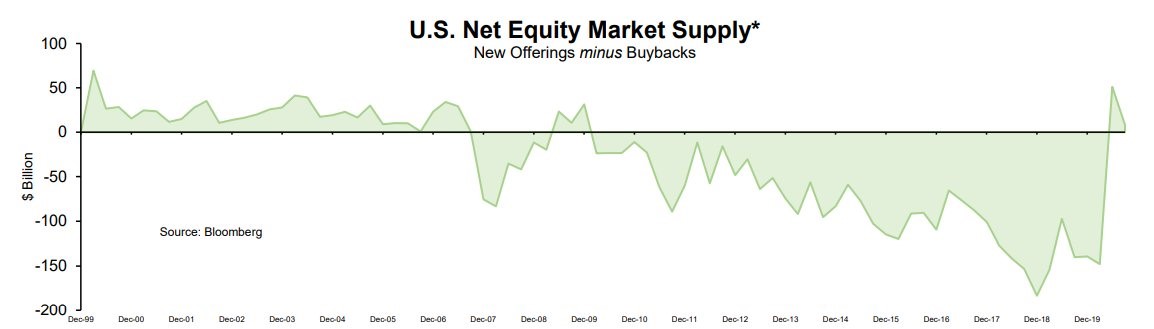
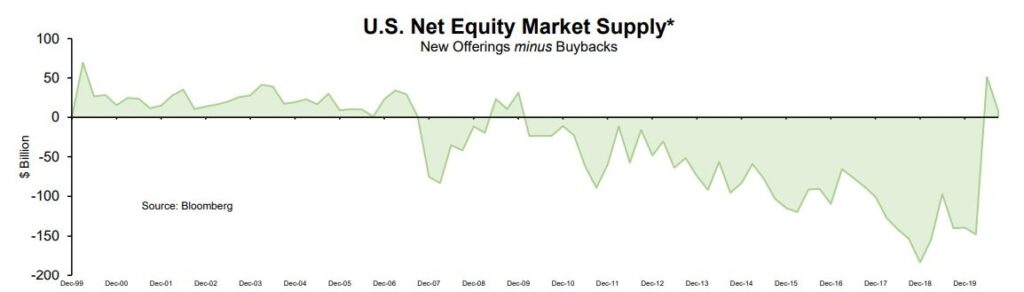
Currently, we are in an oversupplied market. As you can see from the chart below, there has been more equity issued than buybacks. Some might see this as a bad sign, but some see this as a good sign because a new wave of buybacks is coming next year as corporate profits recover.
We could see a spike in buybacks, a stimulus, and decline in COVID-19 cases in 2021. That’s a roaring cyclical upturn that pushes the cyclical and value stocks higher. Interestingly, even though stocks didn’t like the lack of stimulus talks, the 10 year yield increased from 74.6 to 77.1 basis points. That’s why value beat growth on Monday.
Cheap Stocks Are Very Cheap
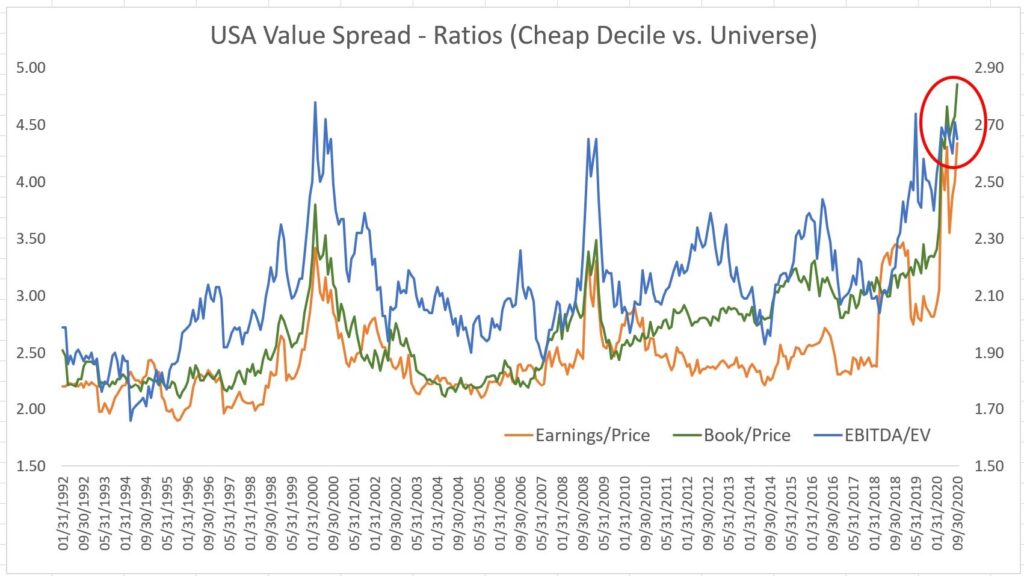
As you can see from the chart below, the cheapest decile of stocks versus the market is cheaper than ever on a price to earnings, price to book value, and EV to EBITDA basis than ever before. That’s because energy is at a record low versus the market and banks have done poorly. That’s what happens when the 10 year yield is below 1%.
Value stocks actually had an ok day on Monday as the small cap value index was down 1.17% which beat the Nasdaq 100 which was down 1.63%. We’ve seen a few instances in the past few weeks where stocks sold off on worries about a stimulus, yet the stocks most hurt by no stimulus outperformed large cap growth stocks.
It’s pretty easy to bet on the reopening stocks next year because a big stimulus is coming and we have a litany of therapeutics and vaccines coming down the pike.
Shorts Are Getting Crushed
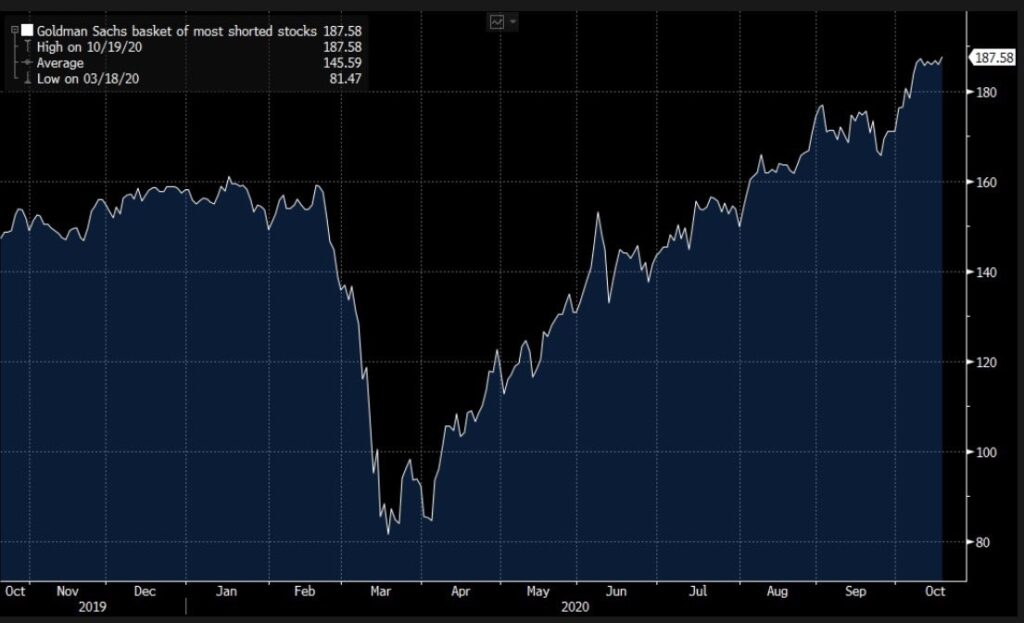
Even though reopening stocks like Cinemark (movie theater rose 6.7%) were up, Zoom also rallied to a record high. Zoom rose 1.7%, although it was up about 5% at its morning peak. As you can see from the chart below, the most heavily shorted stocks have had more than a V-shaped recovery.
That’s partially because of a short squeeze, partially because of a loosening of the corporate bond market, and because some of the companies in this group are weak tech firms benefiting from COVID-19.
For example, Carvana (which was down 3.5% today) is up 612% from its bottom despite losing gobs of money. Tesla is the most shorted stock in the market. It rallied substantially from its bottom as people thought it could go bust. The stock has fallen 6.6% in the past few days on worries about its earnings report since the firm is losing share in Europe. Penn Gaming was down 8.6% as it finally didn’t beat Draftkings which was up 0.5% because it is oversold.
Double Top?
Some speculators are starting to call for a double top in the S&P 500. The October 12th top is 1.3% below the record high which means it counts as a double top if the market falls sharply in the next few months. It’s tough because we could have seen a top in large cap tech. But many love small cap value stocks, like small banks. S&P 500 fell 1.63%, while the regional bank index was down 66 basis points. Cloud index was down 61 basis points. Amazon and Apple fell 2% and 2.6%.
Frankly, it's unlikely that 5G will be a big seller for Apple since so many people don’t have access to it. Yes, they will have access to it in the next few years. This is just future proofing the device. Telling someone the top new feature will be usable in 2 years doesn’t motivate them to buy it.
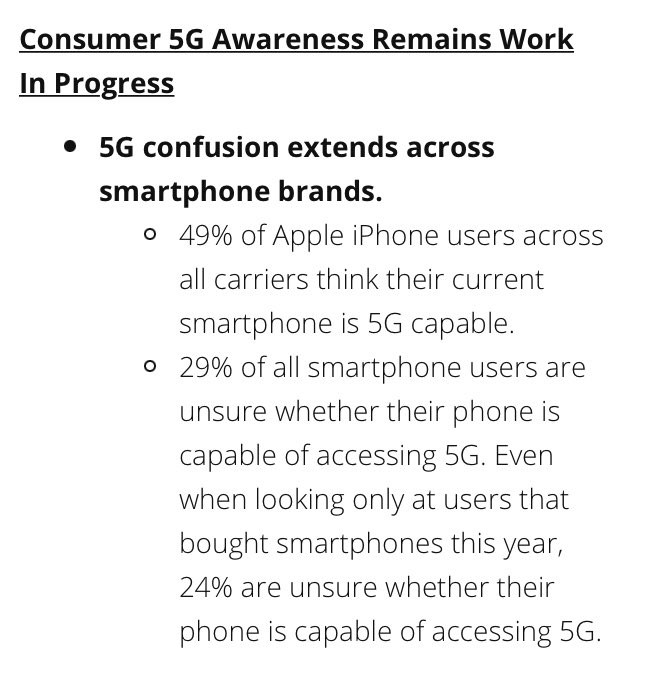
As the screengrab above shows, about half of iPhone users already think they have 5G, making this new release pointless to them. Obviously, they are wrong, but consumer perception trumps the facts. About one quarter of smartphone buyers this year didn’t know if their phone could access 5G. They don’t know because it’s not important to them.
Good news for Apple is there will be an onslaught of ads by the carriers telling consumers about how great 5G is. Traders will judge Apple stock by Q4 iPhone sales, so carriers and Apple better have great ads teaching consumers about how important 5G is.
Conclusion
Stocks fell sharply on worries about a stimulus. However, the 10 year yield rose which helped small banks and hurt large cap tech stocks. Stimulus talks are going to dominate markets on Tuesday. It's interesting how little consumers care about 5G. That’s bad for the Apple bull thesis that 5G will create a super cycle for the iPhone (it won’t).