Break Up Big Tech?
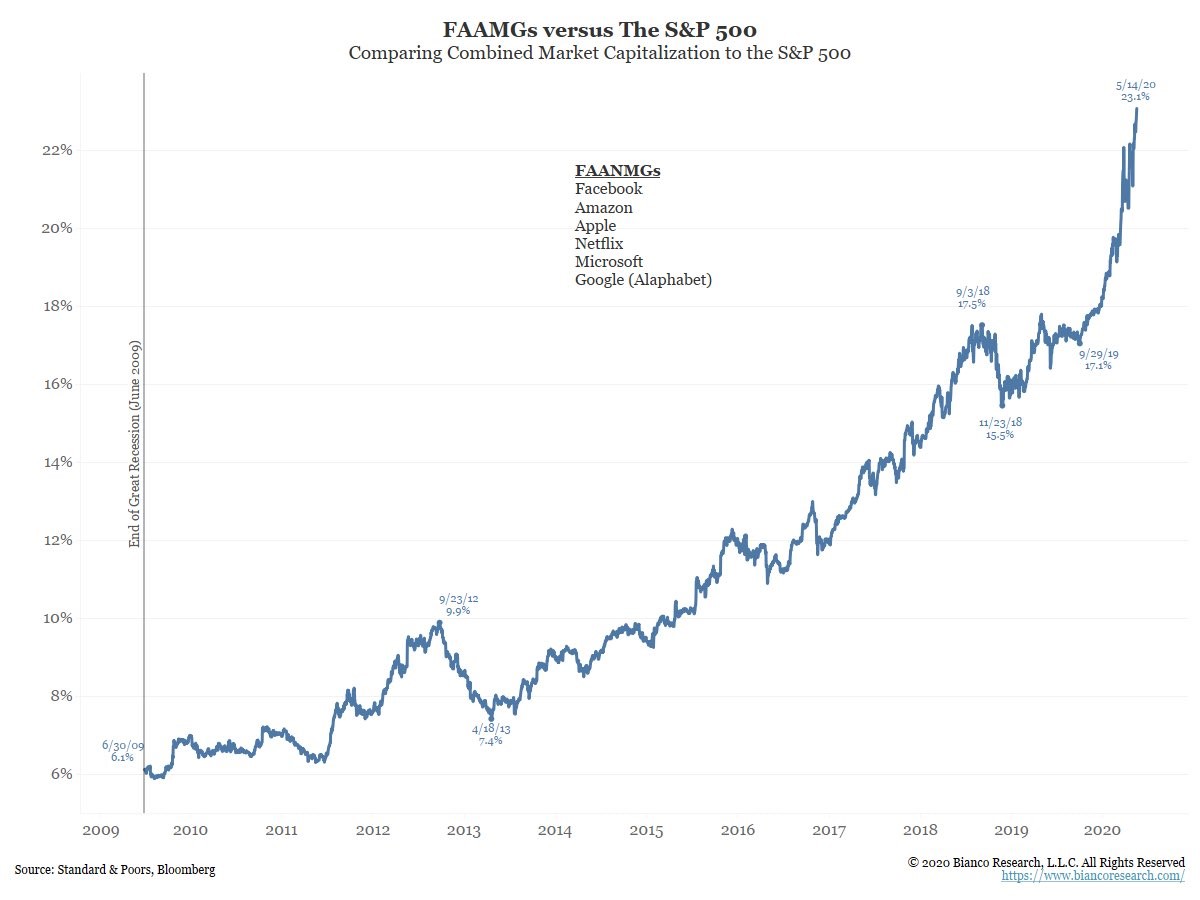
Everyone is all in on the big tech stocks. Companies that make up FAANMG which are Facebook, Apple, Amazon, Netflix, Microsoft, and Alphabet, were 23.4% of the S&P 500 as of May 14th. It’s very difficult to not like these businesses unless you are worried about regulatory issues.
By far, the weakest of the group is Netflix as it arguably has no moat. Personally, I don’t own any of them besides my exposure to the overall market indexes. Microsoft is my favorite because of Azure. Besides regulatory issues, the fact that everyone owns them worries me.
The stock market is a tough business because you can’t just buy the best companies. Valuations come into play. You also have to know your fellow shareholders. Many like Moody’s partially because retail investors don’t follow it. It’s tough to make decisions when a stock varies wildly based on emotion. When everyone is in on a stock, there aren’t people left to buy it. These companies remind me of terminal value calculations.
In discounted free cash flow analysis, you come up with a terminal growth rate after your model ends. You might model growth for 10 years and then have a terminal value to take into account the business in the following years. You can’t give a terminal growth rate higher than the economy’s growth rate or else the company would eventually be bigger than the entire economy.
With the way these big tech companies are expanding, you would think they can control the entire S&P 500 which is the vast majority of the market cap of publicly traded stocks. This is a rough estimate, but it’s almost impossible for these 6 firms to nab 50% of the index.
It’s difficult to be a large company because bureaucracies take hold. This how the conglomerate GE went down. Alphabet isn’t exactly a conglomerate, but it does face antitrust legislation. Public image of these companies is extremely important. If they become hated, the government will become more likely to break them up.
Does Anyone Own Energy?
If you talk to investors about energy stocks, they say they don’t invest in energy. We're not referring to moral reasons against energy. These investors don’t want to own it because it has done poorly for so long. It’s very cyclical. Obviously, that’s the case, but don’t start to think secular growing tech stocks never fall either.
Coud stocks are extremely volatile. Even if you weren’t investing in the early 2000s, it's quite certain there would have been investors who said they’d never own tech stocks. Reality is all stocks can fall. This is the worst period for energy stocks in human history. If now isn’t the time to buy energy then I don’t know what is.
If you don’t buy energy when oil is negative, then you will never buy energy stocks. That’s if you are a good investor who buys low and sells high. Many people who said they would never buy energy stocks will be caught owning energy stocks in the next few years.
We have a long runway of years where energy does well because of how poorly it did in the past few quarters. American fracking is becoming more competitive with foreign oil making it almost impossible to sustainably take back the market share American production took. Just like in the 2014-16 bust, production will fall and come back. Only the weaker companies like Whiting Petroleum will go bankrupt.
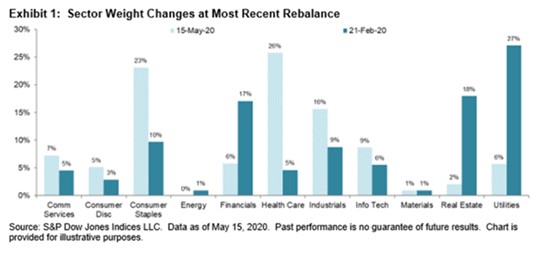
The chart above supports the obvious point that energy is unloved. It shows the sector weight rebalance of the low volatility S&P 500 index. Energy literally has a 0% weighting and materials is at 1%. It’s interesting how big of a haircut utilities took compared to February. Healthcare was a big winner.
Passive investing is fine for those who don’t follow companies, but if you do, there is a nice opportunity here. You’re supposed to buy when no one else will. Nothing was more hated than energy at the bottom in March which is why the sector has been the best performer since the bottom.
Managers Hate Value
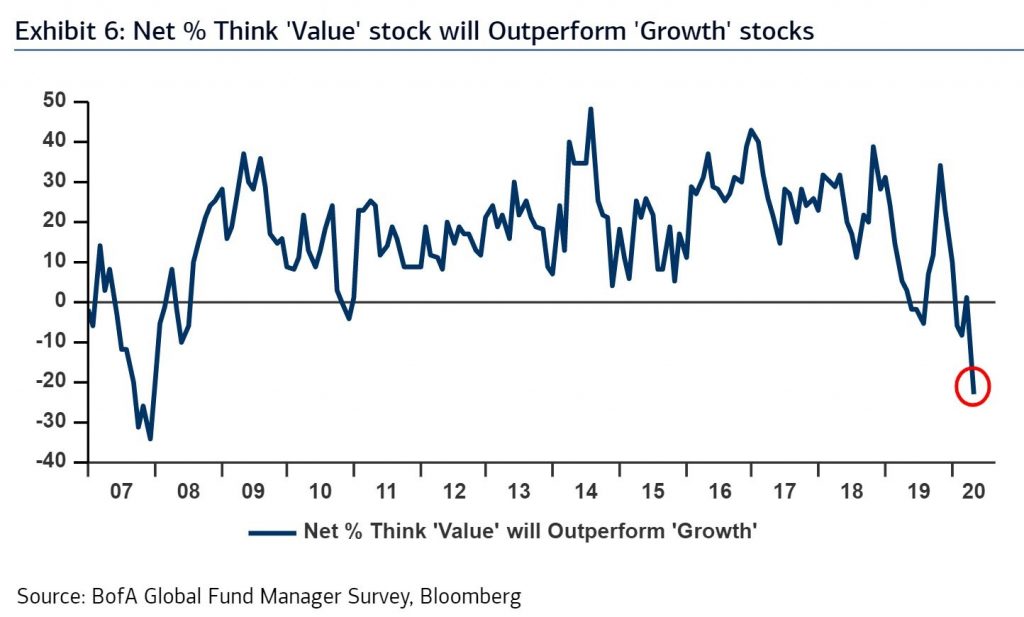
Before this recession, the idea that value stocks would do well became mainstream. Banks and energy stocks didn’t exactly do well, but people liked them. You can see in the chart below that in 2019 it was common to think value would outperform growth. It didn’t do that, but the sentiment was there.
Recently, there has been a huge swing against value stocks which means against banks and energy. Net percentage who think value will outperform growth is the lowest since December 2007. If you're not a factor investor, then just avoid the big tech stocks and buy energy. Sometimes factors can be confusing. Many investors will stick with sectors and individual companies.
Reopening Now
States have been reopening for weeks, but the ones in late April were a very small part of the economy. Good news is Georgia hasn’t seen a spike in new cases or deaths and has increased testing. Potential for the reopening to go smoothly is here.
Specifically, the map shows only 4% of the economy was reopen in the 2nd half of April. In the first half of May, 57.5% of the economy reopened which means most of the economy is reopened.
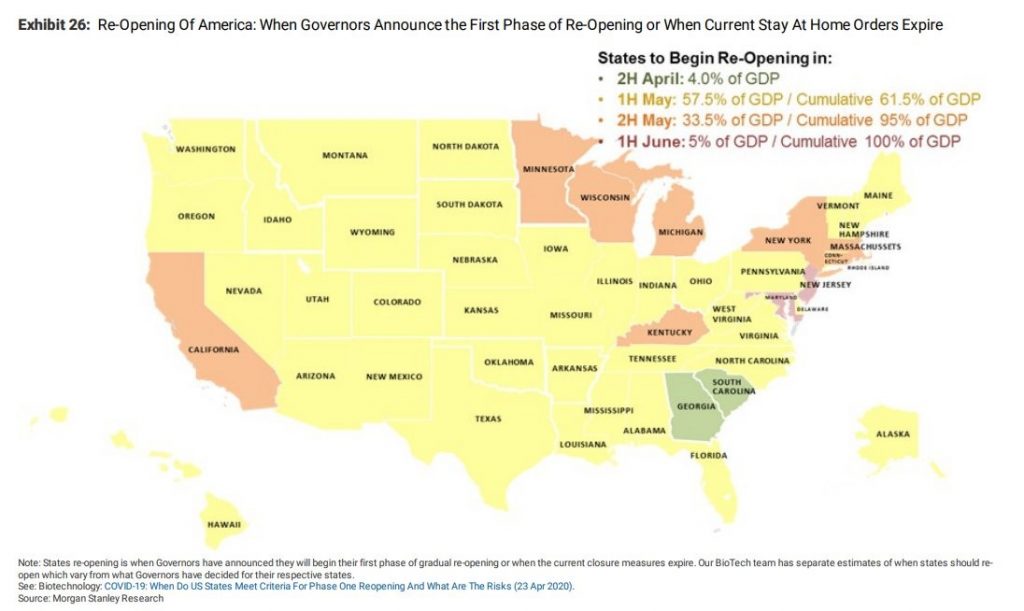
This map shows New York will reopen in the 2nd half of May, but that’s not exactly what’s happening. Upstate New York reopened in early May, but NYC, which is where most of the state’s economic activity occurs, won’t open until early June. NYC schools are closed until September and NYC beaches will be closed for Memorial Day weekend.
Because NYC had the biggest outbreak in the world, politicians are being overly cautious. There were a few states which weren’t affected that badly. Once NYC reopens, we could see the stock market hit new highs because the worst will be over. The unemployment rate is a backwards looking indicator. It will fall after peaking in May.
1 Comment
Kevin Morgan
May 23, 2020A rising tide raises all boats. The largest flood of new money in world history coming from the Fed has raised the stock market, in absolutely standard "bear market bounce" fashion. B waves of this type in the early stages of a bear market aren't just common, they are virtually universal. But they can't print and flood markets with new cash forever to defend the investor class's interests. At SOME point, the flood slows down, the rush of new hot air into the balloon slows to a trickle, and THEN...economic gravity takes hold. And we start the C wave (probably a waterfall process lasting a year or more) down, and down, and down. We are in depression and there is no "instant on" that's going to happen. Shedding tens of millions of jobs only took a few months: recovering them will take YEARS. The entire thesis that this "bull market" is in any way shape or form real or going to last is fallacious in every regard. One could argue, and I believe the future will show, that this is the one of the greatest market head fakes in history. The massive rush of new retail traders is just one of so many indicators. The momentum of this B wave is another: bull markets are slow steady grinds high on low volatility; this has none of those traits. So sure, the "economy" will reopen, in a general sense. But working back from -30% GDP, a real unemployment rate that rivals the great Depression, and the continuing economic cold freeze in place now due to disease concerns will take years, of mostly bear market action. Watch out below.