Neel Gets A Brief Surge Before Falling
Wednesday was a very interesting day for the Fed prediction market because Neel Kashkari made his debut. This was spurred by Jeffrey Gundlach’s interview on CNBC where he named Neel as his non-consensus pick. The ironic part of this is that his non-consensus pick became the consensus pick because of his statement. I am very familiar with Neel’s opinions because he’s active on Twitter. He is in favor of deregulating the small banks and he has been a dove lately. He has been called the most unpredictable Fed Governor so Gundlach calling him a dove was a poor assessment. Either way, Gundlach drove Neel to about 30% in the prediction market before Steve Liesman reported that Trump hasn’t interviewed Neel. Now he’s at 8%. Being above 0% makes sense to me because he’s a good fit. At this point, I think Warsh and Powell are the frontrunners. Neel could become one if President Trump interviews him. While there are no reports yet, that doesn’t mean it isn’t possible. We all know President Trump pays close attention to the news. Gundlach could inspire him to consider Kashkari
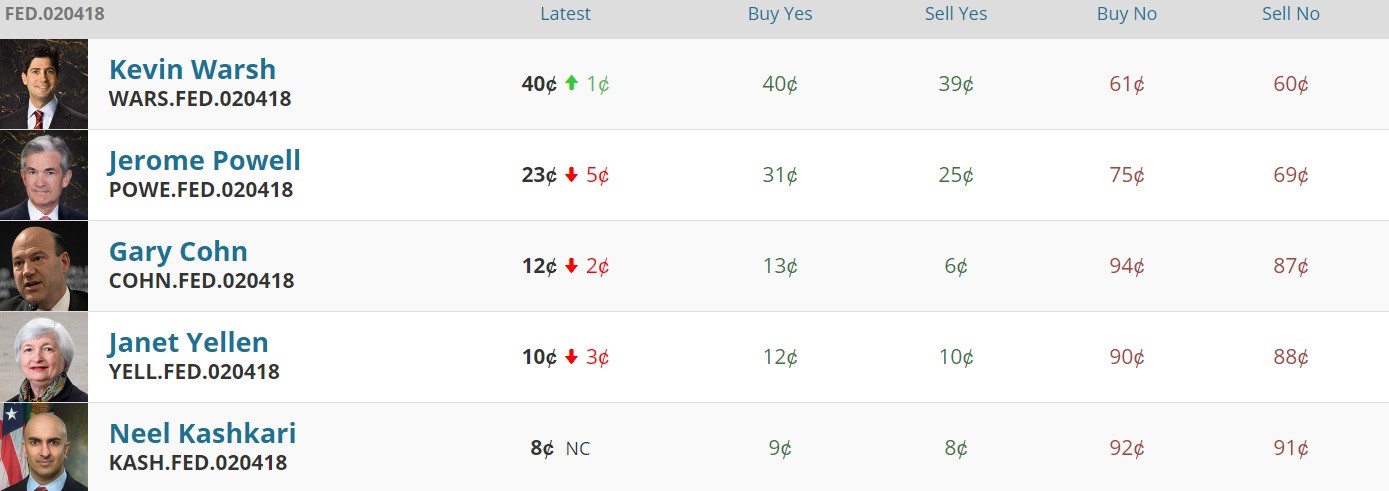
The chart below lists the top 5 contenders with their odds. I think Neel is priced reasonably because he’s a good fit, but hasn’t been interviewed. I think Yellen is too expensive because she is strongly against deregulating the banks. She was only interviewed because she holds the position currently. I only thought she was a slight contender back a few months ago when we didn’t know if Trump could find someone who fits his needs. I also think Cohn is too expensive at 12% because he has no experience. President Trump can’t just put someone he likes in a position if they don’t fit well. Plus, the President criticized Cohn over the handling of the Charlottesville riots. I think Powell is underpriced because he has met with President Trump, is a dove like Yellen, and has private sector experience. He might not deregulate the banks as much as the President wants, but the status quo monetary policy has worked for the first 9 months of Trump’s presidency.
I think Warsh is fairly priced at 40%. He was always the front runner in my eyes. His only blemish is he is hawkish. I think the rest of the field is undervalued because someone like Powell or Kashkari can still come out of nowhere. President Trump has only interviewed 4 people and 2 of those people don’t make any sense for the position. Interviewing 2 serious candidates for the most important job Trump selects would be foolish. I think President Trump already knows who he will pick, but interviewing 1 or 2 more candidates makes sense. I think Trump will make his pick in the 3rd week of October, barring any unforeseen events. Given the crazy weather events and geopolitical news cycle, I wouldn’t be surprised to see the date moved. It will occur sometime in October or November.
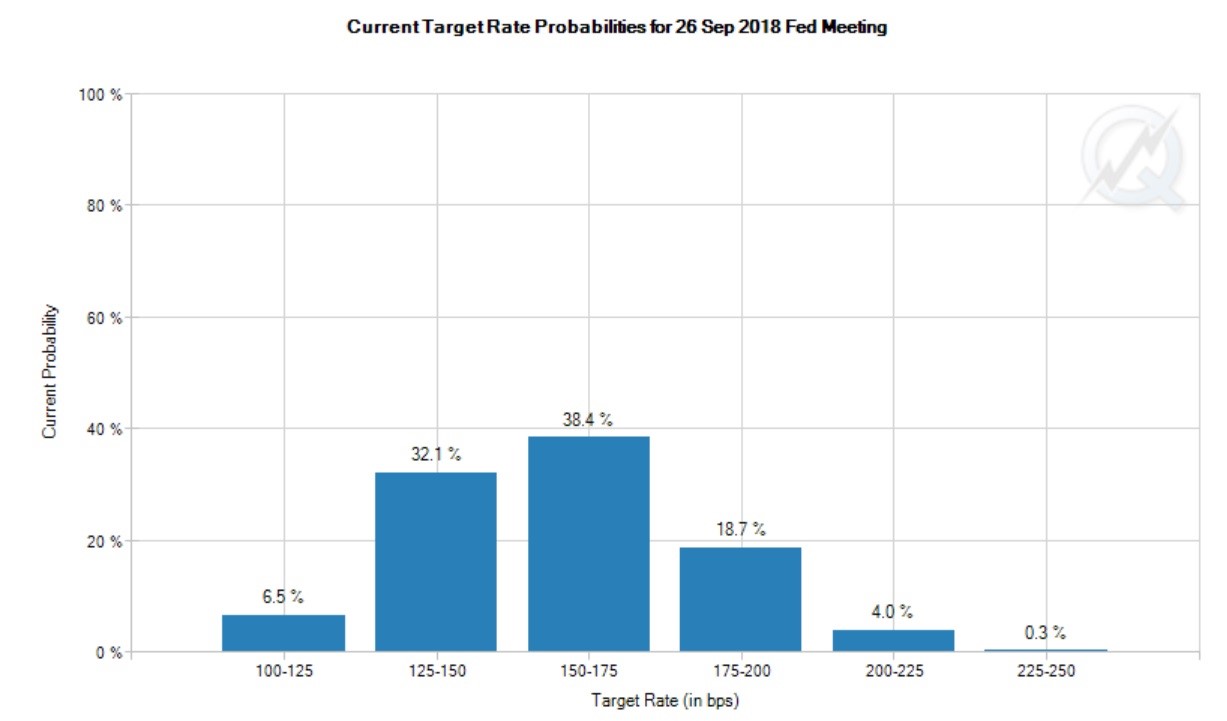
The follow up question to asking about who will be picked as Fed chair is what this means for the Fed funds rate. The Predict market doesn’t affect stocks or bonds like the Fed futures market does. The chart below is how the market is pricing the Fed funds rate 11 months from now. I don’t think any of the possible choices would set interest rates at 100 basis points because that implies a cut. I think Neel would keep them at 125 basis points. I think Yellen and Powell would say they were going to raise rates twice, but actually only raise them one. Warsh would raise rates twice or three times. The fact that Warsh is the front runner and the Fed funds futures don’t have high odds for 2 or 3 hikes shows that his odds haven’t been fully translated to the bond market or stocks. This means there will be further jostling in the markets (sector rotation and changes in the yield curve) in the next few weeks even if the front runner is picked. That might be expected since he’s only at 40%, but it’s still notable.
ADP Report Is Weak
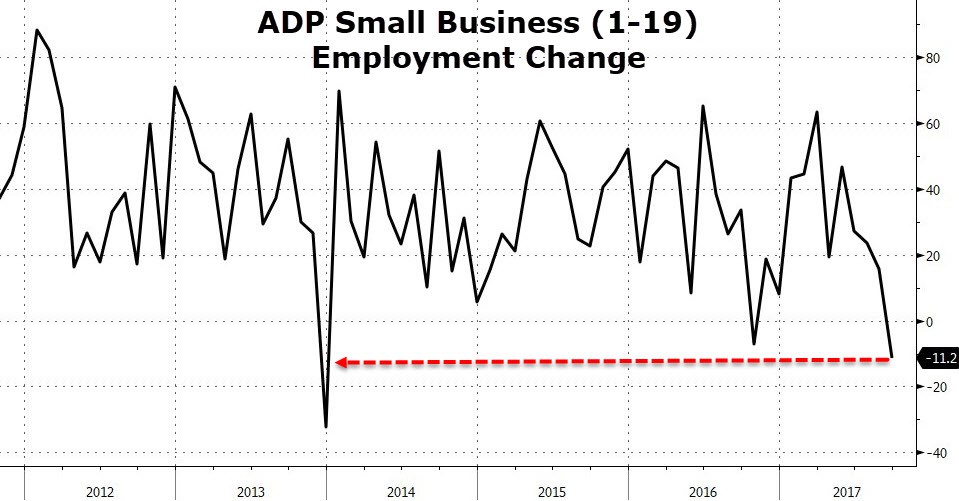
The ADP report came out on Wednesday since this is the week the BLS jobs report comes out. I’ve been expecting a weak report because of the hurricanes. The BLS report and S&P 500 profit margins could end up being the places where we see the biggest weather related effects. The September private sector jobs growth was 135,000 which is the lowest amount since October 2016, but beat expectations by 10,000. As you can see from the chart below, very small businesses had the worst employment change since late 2013 as they lost 11,000 jobs. Other small businesses (20-49 employees) gained 4,000 jobs. The service sector within the small business cohort lost 22,000 jobs which is the biggest loss since 2009. The mid-sized and large businesses didn’t do that poorly as they gained 63,000 and 79,000 jobs respectively. The worst two segments among all sizes of businesses was -11,000 for information technology and -18,000 for transportation, trade, and utilities. It’s not surprising to see very small businesses do the worst because they probably weren’t as prepared for the storm as larger firms and didn’t have the resources to recoup quickly. If the business owner fled to safety, the business won’t be back in service until he/she comes back. If that person’s house was destroyed, he/she may not come back at all.
The economist consensus for Friday’s payrolls report is for 93,000 jobs created. Since the ADP report came almost in line with expectations, I don’t expect that to change. I have been forecasting between 50,000 and 100,000 jobs created which is consistent with everything we’ve seen so far. I don’t think this weak report will affect stocks or the Fed futures because everyone expects the hurricanes to have impacted it. That being said, if the report shows better than 150,000 jobs created or less than 50,000 jobs created there might be a reaction. I think it’s more likely to disappoint than to beat estimates.