

Hey trader,
You know that saying, “Never put all your eggs in one basket?”
Private credit firm Blue Owl is learning why.
Responsible for managing $1.6 billion in debt into private enterprises, they funded data centers, AI startups, you name it.
They were exactly the kind of firm that thrived when money was cheap and narratives were running hot.
Unfortunately for them, reality arrived.
Blue Owl is down nearly 60% from its highs. Executives wrote off $600 million in losses already. Yet, $1 billion is still exposed on their books.
I know what you are thinking. Blue Owl is a drop in the ocean. One firm in a $1.8 trillion private credit market barely registers.
That logic is the reason this is dangerous.
There are thousands of Blue Owls out there. This is just the first one prominent enough to be exposed.
Garrett Baldwin, Blake Young, and I have all been watching this carefully. Something is not right here.
Twenty years ago, the canary in the coal mine was the housing market. This time, it is the private credit market. And the canary is already on the floor.
The $1.8 Trillion Problem Nobody Is Discussing
The private credit market now exceeds $1.8 trillion in total size. That is larger than the entire public credit market.
Most traders never think about private credit. It operates far from headlines and far from the tape.
Blue Owl did not collapse because of a rogue trade or bad management. They collapsed because the enterprises they funded — the data centers, the AI buildouts, the private startups — are no longer generating returns that justified the debt load.
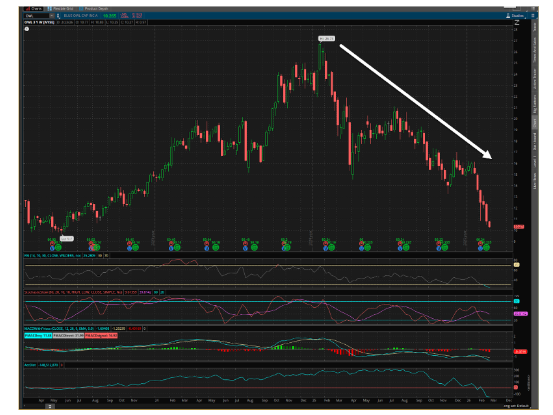
The write-offs are just beginning. $600 million is already gone. Another $1 billion of exposure sits on their books with no clear resolution in sight.
Now multiply that by thousands of firms operating with the same model, the same exposure, and the same silence.
Private credit has no transparency requirements like public markets do. That is its feature for investors. It is its fatal flaw for everyone else. When losses mount, you do not see them until they are already catastrophic.
Where the Damage Spreads
Blue Owl alone is not the systemic threat. What Blue Owl represents is the threat.
Here is the domino sequence I am watching:
- Regional banks, small-cap and mid-cap lenders, are correlated to private credit firms like Blue Owl through their balance sheets.
- These institutions carry exposure that quarterly reports do not fully reveal, because private credit losses take time to surface.
- When write-offs accelerate, margin calls will hit these institutions simultaneously across the sector.
- JPMorgan and several larger firms likely carry more private credit exposure than current market pricing reflects.
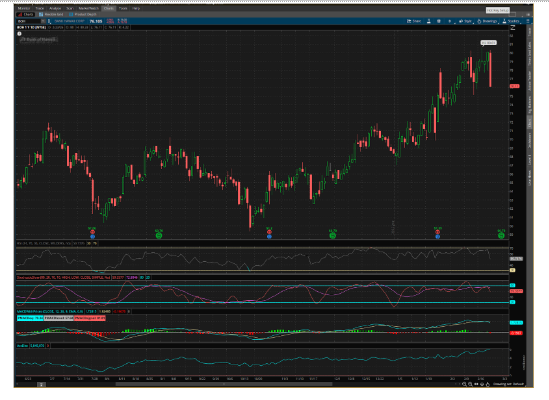
I am short Bank of Hawaii right now. The stock is down two dollars today. That is not my point.
My point is what Bank of Hawaii represents. When you start pulling on the thread of private credit exposure, you realize how many institutions are woven into the same fabric.
I told my members to lighten up on bank stocks. Not because the charts say so. Because the underlying credit structure is deteriorating in ways that price has not yet reflected.
A White Swan Is Still a Swan
This is not a black swan. A black swan is a tail risk you cannot see coming at all.
This is a white swan. The risk is visible. The warning signs are already public.
Twenty years ago, the housing market blew up and it caught most people off guard. Nobody has any excuse to be surprised this time.
Bitcoin cracked first. Bonds cracked a couple of years ago. Now private credit is cracking, and equities are still priced as though none of it matters.
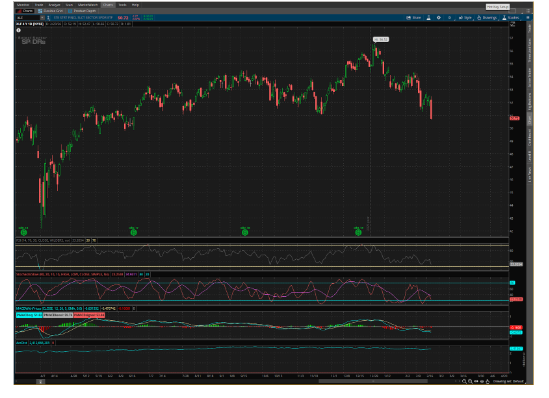
Markets that ignore visible risks do not avoid them. They absorb them all at once at full speed.
I am carrying 55% cash across all of my accounts right now. When this breaks, I want buying power ready. You need to ask yourself whether you are in the same position today.
The Genesis COG System tracks institutional money flows and sector momentum across the entire market simultaneously. It identified the deterioration in financial sector leadership before today's selling confirmed what the credit market was already telegraphing.
You cannot afford to wait for the headlines to tell you what the private credit market is already saying.
See how the Genesis COG System detects structural breakdown before it hits the tape →
Professor Jeffrey Bierman
Creator of the Genesis COG System