

When you turned on the radio as a kid, you had two dial settings. AM and FM.
AM stands for amplitude modulation. It's a signal compression technique where electronic waves cycle between maximum and minimum boundaries.
The wave expands to peak amplitude. Then it contracts to minimum. Then it expands again.
The S&P 500 follows the same pattern. Not frequency cycles that distribute evenly. Amplitude cycles that compress and expand between mathematical extremes.
Right now, we're at maximum amplitude.
The compression can't continue. And when this wave reverses, the descent won't be gradual. It will be violent because amplitude cycles always collapse faster than they build.
Most traders don't recognize when markets reach amplitude extremes. They see new highs and assume momentum continues indefinitely. They miss the mathematical reality that compressed waves must release pressure.
The Genesis COG Scanner tracks these exact amplitude shifts across multiple timeframes. It reveals when weekly momentum indicators show maximum compression before the reversal confirms on price.
Today I'm showing you how amplitude cycles actually work in markets.
You'll see the specific indicators that reveal maximum amplitude.
And you'll learn why the descent phase destroys accounts twice as fast as the climb.
From Electronic Signals to Market Cycles
Amplitude modulation compresses electronic signals within defined boundaries. The wave can't expand beyond maximum amplitude. Physics won't allow it.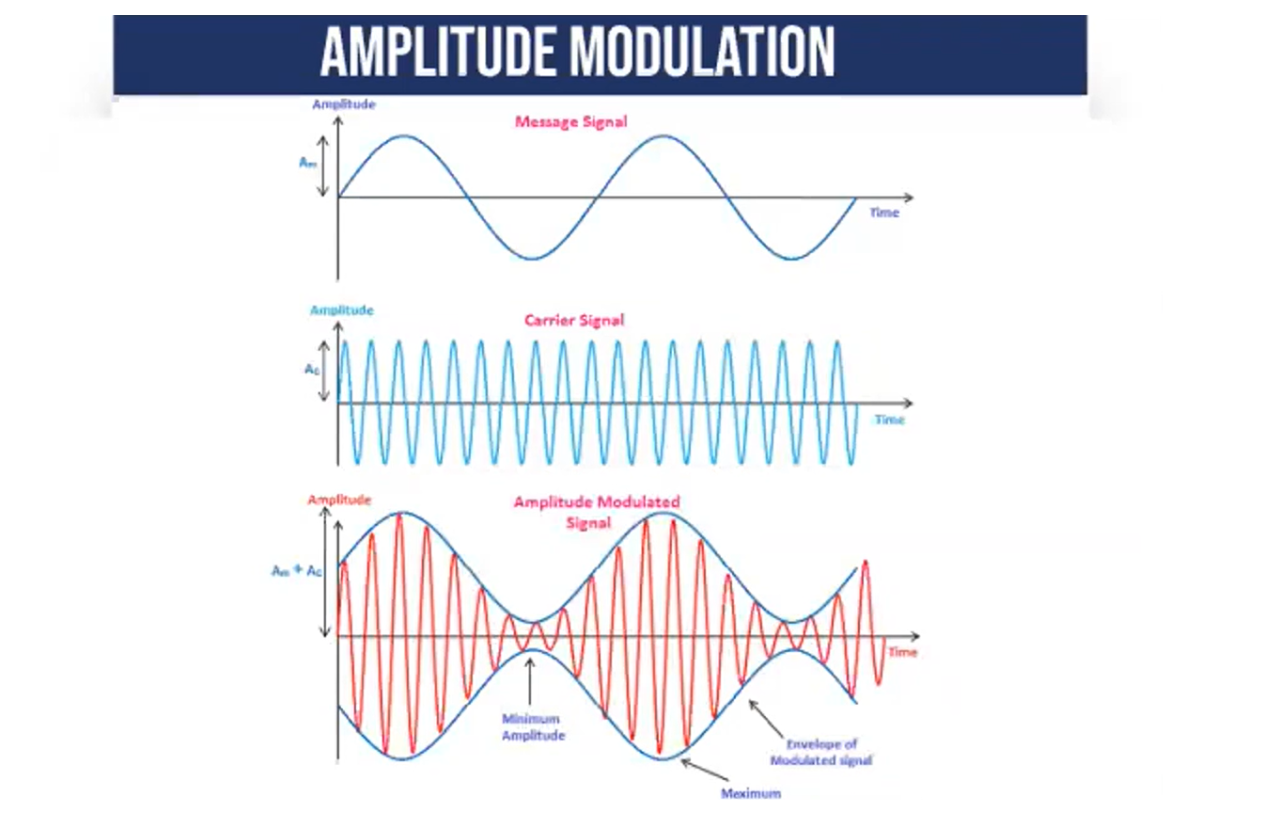
Markets operate identically. They can't maintain vertical slopes indefinitely. Mathematical reversion forces the wave back toward equilibrium.
We hit minimum amplitude in April at market lows. Since then, the S&P has cycled upward through the entire compression pattern. The weekly charts show we've reached the opposite extreme.
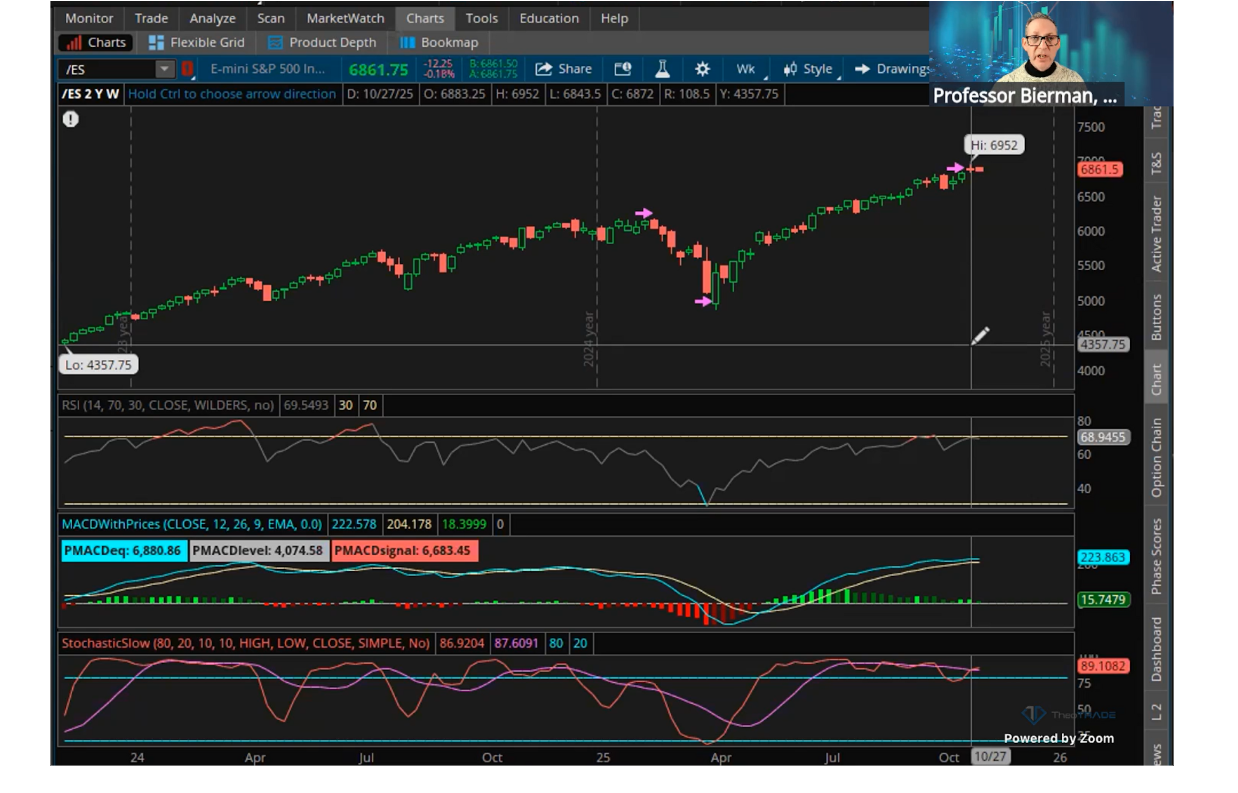
The question isn't whether this reverses. Amplitude cycles always complete. The question is whether you're positioned when the compression releases.
Why the Descent Happens Twice as Fast
Here's what separates survivors from casualties. Understanding the asymmetry between expansion and contraction phases.
Going up requires constant energy. Algorithms must defend slopes systematically. They fight gravity at every level. They buy every dip. They absorb selling pressure gradually.
Coming down is pure gravity. No resistance. No algorithmic defense. The weight of descending pressure accelerates the fall.
Look at what's happening right now. Applied Materials announced a $500 million revenue shortfall. The stock barely dropped. Southern Company got downgraded at 52-week highs. Call buyers rushed in within minutes.
The algorithms are still programmed to buy. The amplitude hasn't peaked yet. But when those weekly indicators finally roll over, the same machines that defended every dip will attack every bounce with identical precision.
Fear drives selling faster than greed drives buying. Algorithms recognize this asymmetry and exploit it ruthlessly. That's why amplitude contractions happen twice as fast as expansions.
The Three Indicators That Reveal Maximum Amplitude
The weekly MACD is flattening. Not rolling over yet. But flattening means the amplitude is reaching maximum extension. This indicator compresses before it reverses.
The weekly RSI sits at 72. Extended but not peaked. I believe it's going to 77-80 before this completes. That final push represents maximum amplitude before the wave must contract.
The slope itself has gone parabolic. Vertical angles can't sustain. They represent the final compression phase before mathematical reversion forces the wave down.
Below 6,150 on the S&P, there's no support. The first contraction leg is 600 points minimum. If we don't bounce there, we're going to 5,500 or lower.
Why This Isn't Random Volatility
You can't have 480 stocks at 52-week lows while 20 stocks run the entire market. This represents maximum amplitude distortion.
The compression becomes unsustainable when breadth deteriorates this severely. When the wave reverses, there's no cushion underneath. Just air and gravity.
I'm now at 65% cash. Half my remaining trades are long. Half are short. I'm barely 18% net long. When this amplitude wave reverses, I'm sleeping fine.
The weekly indicators haven't confirmed the peak yet. This is not a sell signal. But when that MACD crosses below the signal line, the algorithmic sell program activates instantaneously.
You won't get out in time. The contraction happens twice as fast as the expansion. The machines will turn this upside down before you can react.
Recognizing Where You Are in the Cycle
The amplitude modulation pattern repeats across 150 years of market data. Waves always complete their cycles. Compression always releases.
We're at maximum amplitude right now. The weekly MACD is flattening. The RSI is extended. The slope is parabolic. These aren't random coincidences.
The difference between survivors and casualties comes down to recognizing where you are in the wave. Not where you hope you are. Where the mathematics say you are.
When that weekly momentum finally peaks and the contraction phase begins, there's no reset button. No second chance. Just systematic algorithmic selling that accelerates downward faster than any rally built upward.
The Genesis COG Scanner measures these exact amplitude patterns in real time. It tracks weekly momentum compression that signals maximum amplitude before the violent contraction begins.
Stop trading like waves expand forever. Start recognizing when you're at the peak of the cycle.
See how Genesis COG detects amplitude peaks before the contraction accelerates →
Professor Jeffrey Bierman
Creator of the Genesis COG System