

The S&P just printed another all-time high yesterday. Again.
Caterpillar beat earnings by 10% and ripped 68 dollars higher. Storage Technology delivered strong numbers and exploded 37% in a single session.
Goldman Sachs and Morgan Stanley crushed estimates and kept climbing for days.
You keep asking: "How is this market still going up?"
Wrong question.
The right question is: "Why am I still shorting strength during post-earnings drift cycles?"
Post-earnings drift is the tendency for stocks to continue moving in the direction of their earnings surprise for 10-20 days after the announcement.
This isn't momentum chasing. This is institutional repositioning playing out in slow motion while retail traders fight it.
Here's what's actually happening. A stock beats by 10%. It gaps up 5% overnight.
Then it grinds another 8-12% higher over three weeks as money managers update models, adjust risk parameters, and systematically accumulate shares.
That grind is post-earnings drift. And shorting it destroys accounts.
Every day you short during active drift costs you 2-3% losses that compound into career-ending damage.
The problem isn't your analysis. It's that you can't distinguish between normal overbought conditions and systematic institutional accumulation that won't stop for weeks.
We’re going to take a look at the mechanism driving this pattern.
Pretty soon, you'll see why your technical indicators become useless during these windows.
Plus, we’ll look at the exact rules for surviving drift season without getting destroyed.
Let's start with why Wall Street processes earnings slower than you think.
Institutions Take Weeks to Fully Reposition
Wall Street doesn't digest earnings results overnight.
The initial reaction is just algorithms and retail traders. The real money moves slower.
Institutional portfolios reposition over 10-20 trading days. Models get updated.
Committee approvals happen. Position sizing increases gradually as conviction builds across multiple decision layers.
This creates systematic buying pressure that looks irrational to technical traders.
The stock already jumped 5%. RSI already hit 75. Every indicator says overbought.
But institutions are just starting their accumulation.
Ball and Brown documented this pattern in 1968. It's not new. It's not a glitch.
It's how Wall Street systematically processes new information through hierarchical decision structures.
When you short two days after earnings "because it's up too much," you're positioning against systematic accumulation that hasn't finished.
You're fighting algorithms executing programmed repositioning requirements.
That's why you keep losing money on "obvious" shorts.
This slow institutional processing creates a specific market condition that makes normal shorting strategies suicidal.
Understanding this condition is the difference between surviving earnings season and getting destroyed by it.
Why Active Drift Makes Stocks Unsortable
That institutional repositioning window creates what I call unsortable conditions.
Technical analysis stops working. Valuation concerns get ignored.
Every short gets systematically crushed as wave after wave of institutional money continues flowing in.
The four-hour timeframe tells you everything you need to know.
Channel pointing vertical. MACD gaining traction above zero. Money flow confirming institutional accumulation.
Those conditions mean algorithmic buying pressure that won't stop until weekly momentum indicators roll over.
Look at what's crushing shorts right now.
Caterpillar beat by 10%. Stock up 68 dollars.
Shorts called it overextended every single day for three weeks. Every short got systematically destroyed as institutions accumulated.
Storage Technology delivered strong numbers. Exploded 37%.
Expected move was maybe 10%. Algorithms doubled that because institutional repositioning created sustained buying pressure that technical traders couldn't comprehend.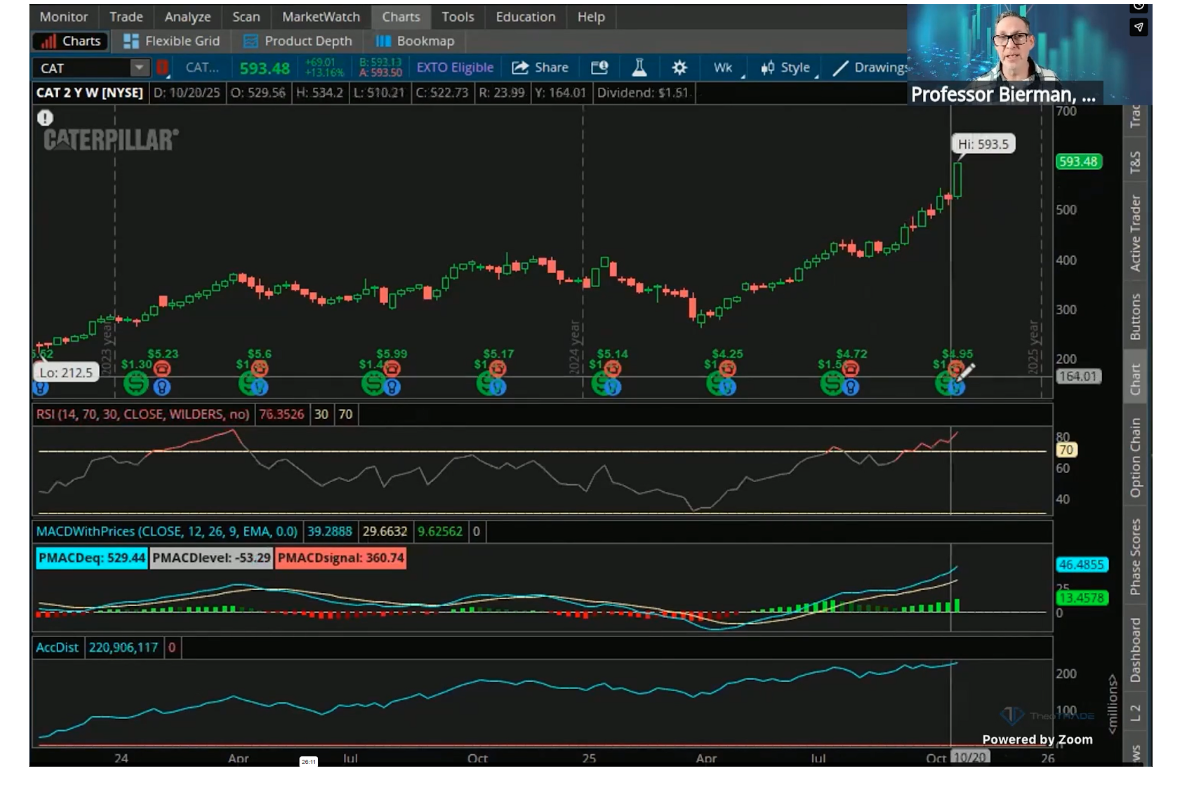
The problem is those signals mean something completely different during institutional repositioning windows.
During normal markets, RSI at 75 signals potential reversal.
During active drift, RSI at 75 signals more systematic buying ahead. The indicator is accurate. Your interpretation is wrong.
Caterpillar at 30 times earnings after beating by 10%? Expensive by historical standards.
But institutions see consistent execution and pile in systematically. Your valuation concerns don't matter until the drift cycle completes.
This is why the same analysis that works during normal conditions gets you destroyed during earnings season.
You're applying the wrong playbook to the wrong market structure.
Drift cycles last 10-20 trading days minimum.
You wait for weekly MACD to flatten. For money flow to reverse. For the drift cycle to complete.
Fighting it before then guarantees losses.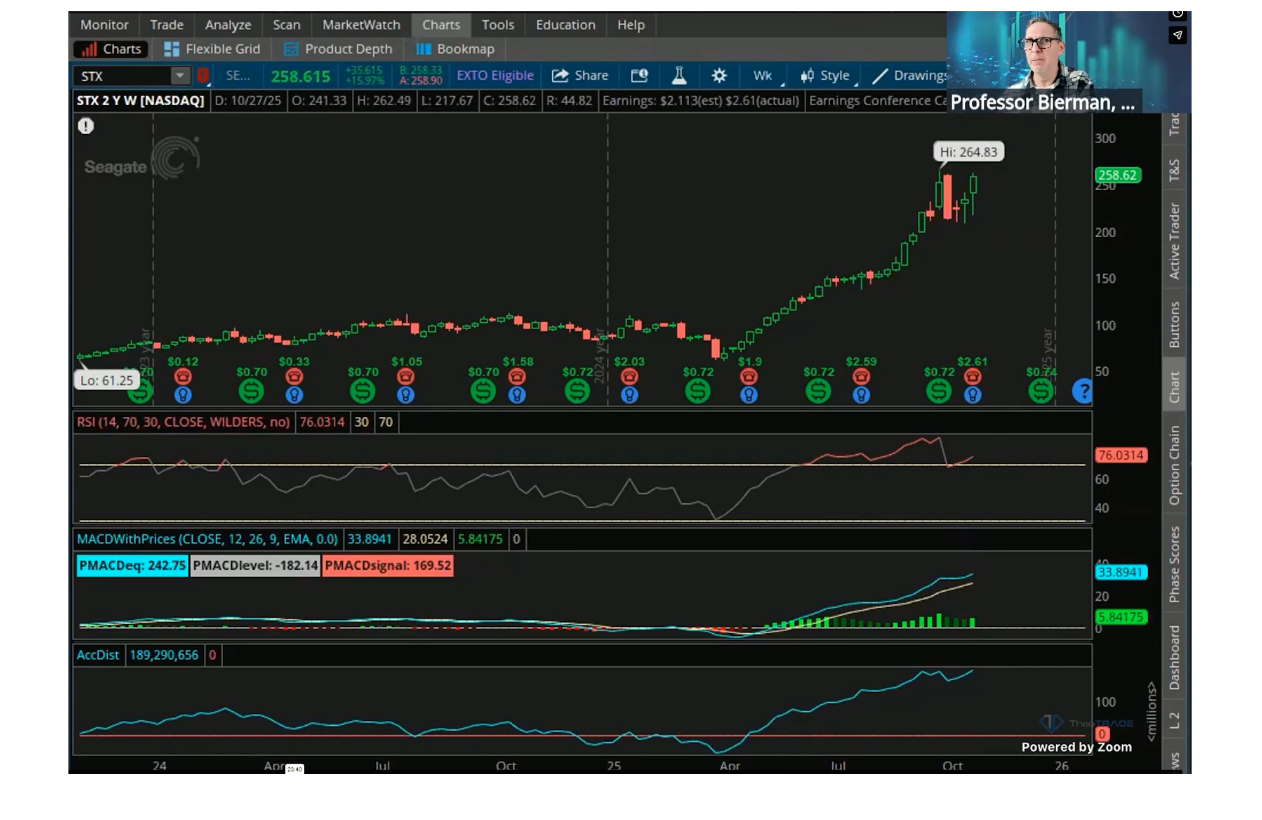
Your Two Non-Negotiable Rules
Don't short on the way up. Don't buy on the way down.
These two rules can make you a millionaire if you follow them.
But most traders can't. Their ego demands they call the top. Their analysis says "this can't continue."
So they short. And they lose. Every single time.
I don't short tech during earnings season. Ever.
Storage Technology up 37%? Not touching it. Caterpillar up 68 dollars? Not interested.
Why? Because fighting algorithms executing programmed repositioning guarantees losses.
During earnings season, recognize which phase you're in.
Are institutions still processing results? Is systematic accumulation ongoing?
If yes, you cannot short profitably.
The current market rally isn't about the Fed. It's not about rate cuts.
It's about mega-cap stocks delivering better-than-expected earnings while trading in active post-earnings drift cycles.
Goldman Sachs. Morgan Stanley. Caterpillar.
These aren't random rallies. These are systematic institutional catch-up patterns playing out over 10-20 day windows.
The market is catching up to reality. Not ignoring it.
When I see traders shorting strength during active drift, I'd fire them.
Either buy the drift or avoid it completely. Those are your only two options.
The Pattern That Separates Survivors from Casualties
I've watched post-earnings drift destroy accounts for 37 years. The pattern never changes.
Retail traders apply technical analysis during institutional repositioning windows.
They short overbought conditions during systematic accumulation. They fight algorithms that process information on completely different timeframes.
The result is always the same. Systematic losses that compound into account destruction.
Here's what separates survivors from casualties: knowing when you're in an active drift cycle versus normal market conditions.
That single distinction determines whether you survive earnings season or get destroyed by it.
The challenge is detecting when systematic buying pressure exhausts itself.
When do institutions finish repositioning? When does the drift cycle complete? When do shorts finally become actionable?
Manual analysis can't track this across hundreds of stocks simultaneously.
You're watching three or four positions while drift cycles are playing out across entire sectors.
The algorithms controlling today's market calculate institutional repositioning velocity before they execute trades.
They measure money flow acceleration patterns. They identify exactly when systematic buying pressure exhausts itself.
The Genesis Cog Scanner reveals these same institutional footprints across the entire market.
It tracks the money flow signatures that separate active drift from exhausted moves. It monitors weekly momentum thresholds that signal when cycles are completing.
When drift cycles finally break, you'll know before price confirms the reversal.
That's the difference between positioning ahead of the move and chasing it after everyone else already knows.
Stop applying normal market logic to post-earnings drift cycles.
See how Genesis Cog distinguishes active institutional accumulation from exhausted drift →
Professor Jeffrey Bierman
Creator of the Genesis COG System