

If you bought gold 55 years ago and held it until today, do you know how much money you made?
Zero.
Zero real returns over more than half a century. That tells you everything about what money printing does to real wealth.
We're living through the biggest bubble in financial history.
Stocks hit all-time highs. Home prices reached record levels. Bitcoin sits near all-time highs while gold crushed its previous records. Money supply exploded to levels never seen before. National debt ballooned beyond comprehension.
Everything peaked simultaneously.
Can't see this bubble forming around you? I can't help you.
Everyone panicked about gold yesterday. Others chased Reddit like lemmings off a cliff.
I made money on BJ's Services.
Understanding what AI algorithms actually do separates winners from losers. Most traders operate in complete darkness.
Oracle lost $13 per share because the algos detected what humans missed
Oracle flew higher all week. Stock looked absolutely unstoppable to every human watching the charts.
Algorithms detected a momentum breakdown that escaped human notice entirely.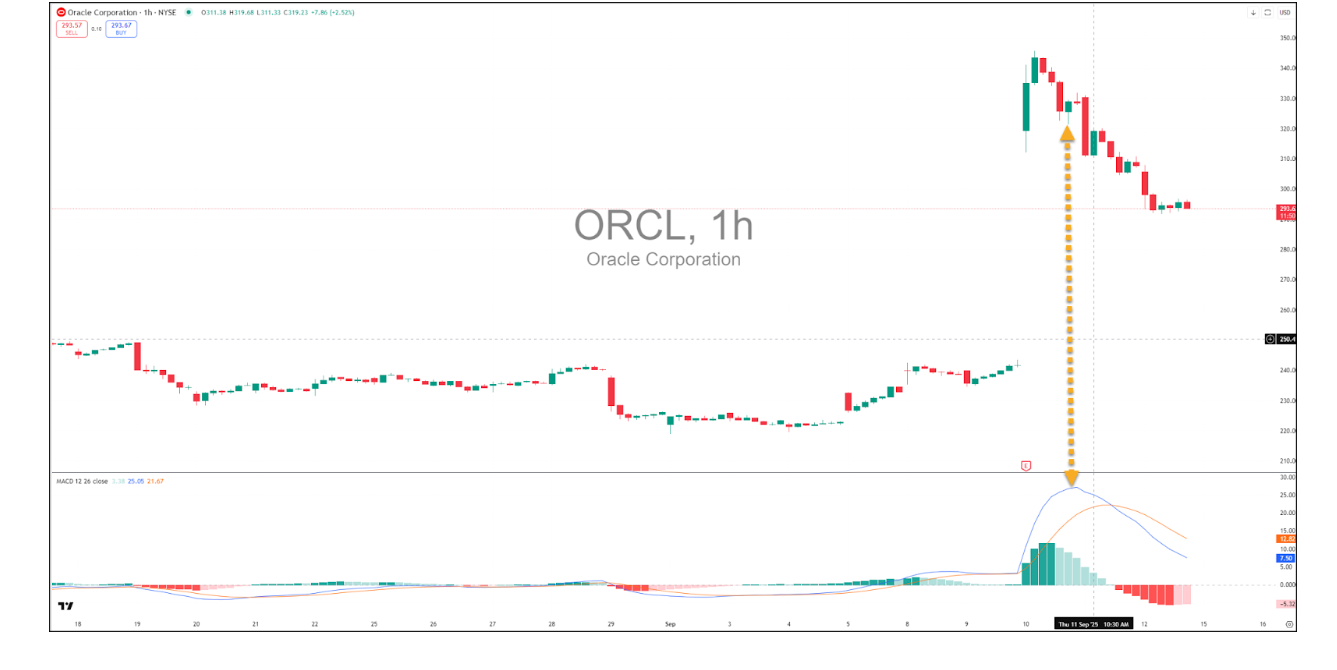
They dumped the stock overnight without hesitation.
Seeing this coming wasn't luck or magic. Tracking the same momentum signals these algorithms use gives you the same information they process. Price diverges from momentum and these machines sell with mathematical precision.
No emotion clouds their judgment. No second-guessing delays their execution.
Algorithms process this information in milliseconds.
You see Oracle dropping and assume you're witnessing the beginning. They already moved billions of dollars while you were sleeping.
Arriving late to every party becomes your specialty when you don't understand their signals.
Algorithms now control 80% of all trading volume.
Don't know what they're seeking? You're trading completely blind in a machine-dominated market.
US Steel prints money while you chase overvalued tech garbage
US Steel jumped significantly this month. 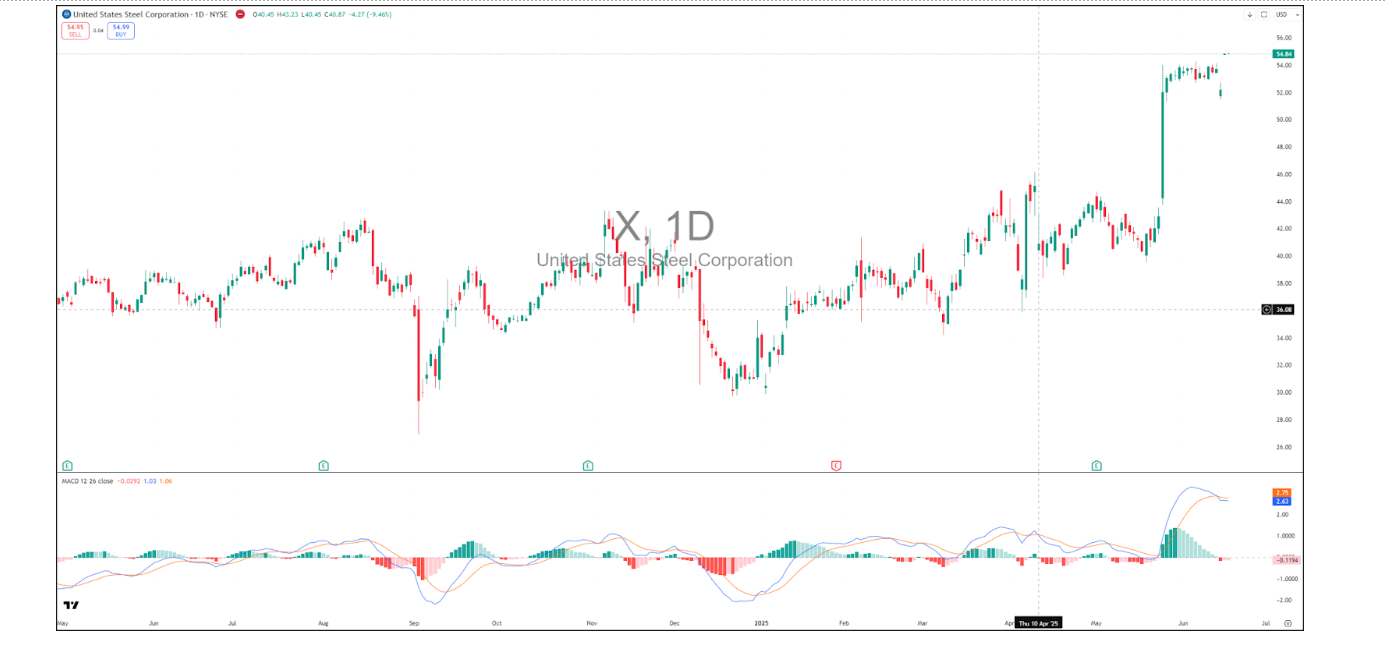
Steel Dynamics followed the same pattern with impressive gains.
Nobody discusses steel companies because they lack the glamour that financial television demands.
Algorithms accumulate these positions like programmed machines following ancient code.
Steel prices spike and algorithms interpret this data as economic acceleration. They automatically purchase steel companies when this specific pattern develops across commodity markets. Programmed behavior built on decades of historical data drives every decision.
Ball Corporation caught my attention at $50. They manufacture packaging materials for major consumer brands.
Sounds boring until you realize algorithms recognize packaging demand as a leading economic indicator.
You waste time arguing about Tesla valuations. These industrial companies generate actual profits while you debate.
Algorithms ignore exciting narratives. They hunt for predictable patterns that repeat across market cycles.
Energy stocks surge while you miss every profitable opportunity
Phillips 66 gained over 15% this month. 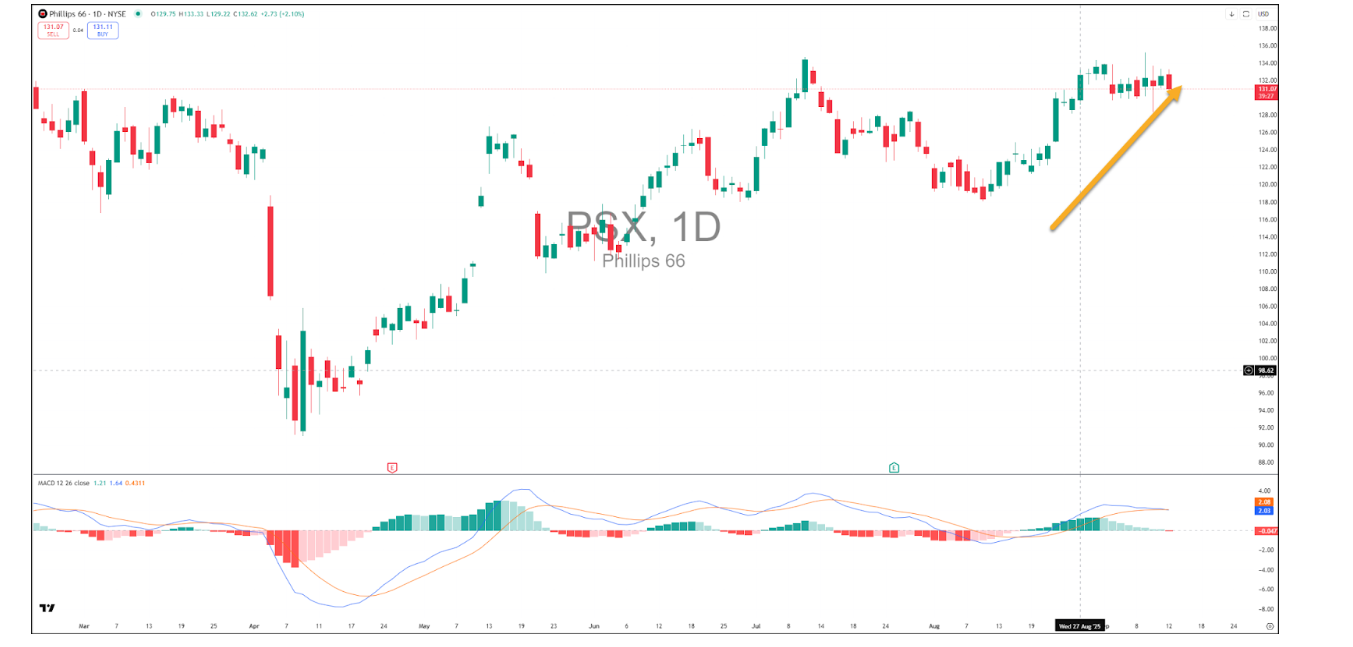
Chevron demonstrates similar strength across multiple timeframes.
Energy became the forgotten sector because everyone maintains tunnel vision on technology stocks.
Algorithms treat energy stocks as pure commodity momentum plays.
Oil prices hit predetermined levels and they systematically purchase energy companies. Pattern recognition operates at machine speed without human emotional interference. Fundamentals don't matter. Company analysis becomes irrelevant.
This creates massive opportunities for traders who understand the underlying game mechanics.
Retail investors fight over overpriced technology stocks. Algorithms quietly build substantial energy positions that can run for months without interruption.
Missing these moves happens when you watch the wrong stocks.
Adobe proved algorithms understand psychology better than humans
Adobe reported sequential earnings growth from $4.56 to $5.31 per share. The stock dropped anyway, despite clearly positive fundamental developments.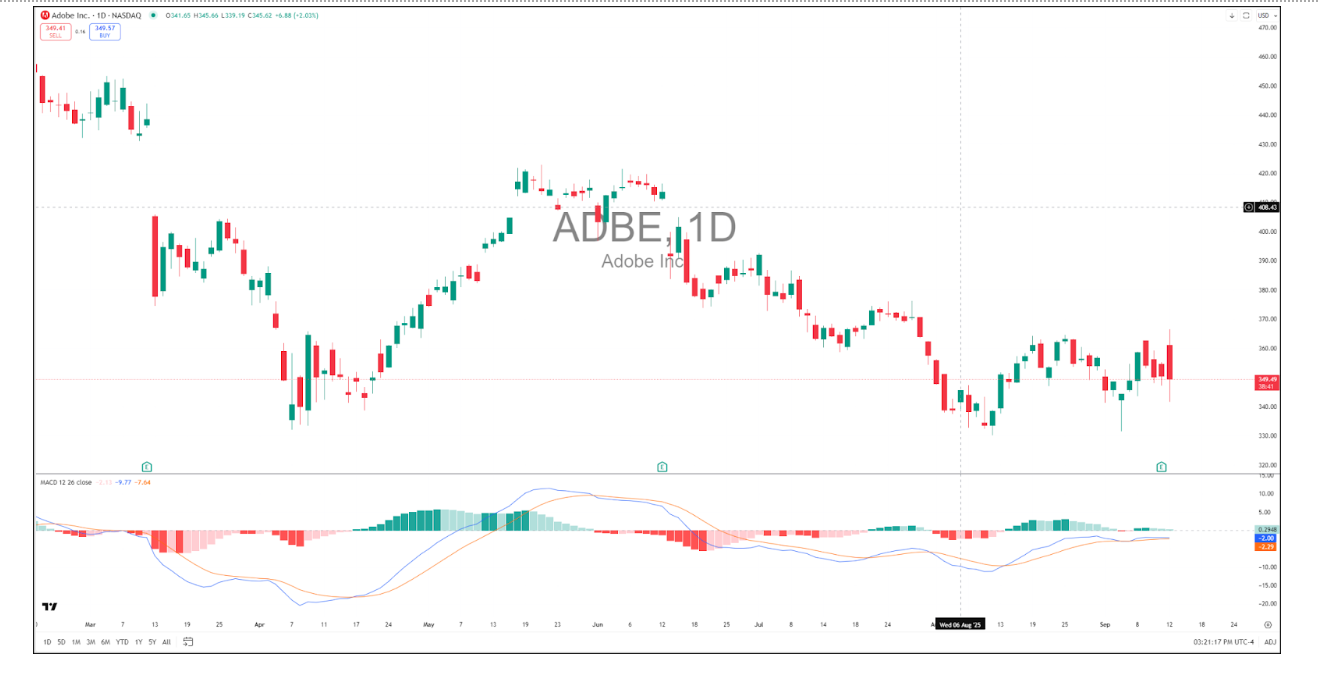
Most traders couldn't comprehend why strong earnings would trigger selling pressure.
Algorithms understood something that human psychology completely missed.
Beaten-down stocks report good earnings but investor psychology remains negative. Algorithms factor this sentiment data into their mathematical calculations with scientific precision.
Good earnings from a depressed price base create different market dynamics. Good earnings from all-time highs generate completely different algorithmic responses.
Same earnings data. Different psychological context. Different algorithmic behavior.
Fundamental analysis fails in modern markets. You need to understand how machines process sentiment alongside traditional financial metrics.
Algorithms won't sell until October because quarter-end programming controls them
Market keeps rising despite every logical reason demanding immediate selling.
Algorithms maintain strict programming that holds positions through September 30th.
Portfolio managers face judgment based on quarter-end performance. Trading algorithms support this institutional objective without deviation.
They refuse to initiate major selling programs during the final weeks of any quarter.
Economic data means absolutely nothing to their programming constraints.
Giving you 100 solid reasons to sell changes nothing. Market ignores every logical argument because algorithms follow their programming without question.
October 1st arrives and programming parameters change instantly.
Selling will be swift and absolutely brutal.
Understanding this timing gives you a massive edge over traders who expect logical corrections.
People, you're fighting machines and you will lose every time
After 38 years of trading, important lessons become crystal clear.
Markets stopped being about picking fundamentally sound companies.
You must understand what algorithms are specifically programmed to buy and sell.
These machines process information faster than human thought. They execute trades in milliseconds using patterns you cannot see or comprehend.
Still trading like it's 1995? You will get completely destroyed.
Real money comes from recognizing algorithmic behavior before it happens.
Same signals that called Oracle's dramatic drop. Same patterns that identified BJ's Services before it moved higher.
Monday brings a complete walkthrough of how to spot these patterns.
Momentum indicators that algorithms use religiously. Sector rotations they follow automatically. Timing signals that reveal when they change direction without warning.
Stop fighting the machines. Start understanding them.
Professor Jeffrey Bierman
Creator of the Genesis COG System