
Momentum Isn’t a Mystery. You Just Need to Read the Waves.
[Watch the clip above to see how I break down six momentum indicators I use in real trades]
Most traders either chase strength too late or panic at the first red candle. They treat momentum like it’s something you guess at, or something you hope will keep going. That’s not how any of this works.
Markets move like water. There’s structure. There’s current. When energy builds, momentum forms. You don’t force the wave. You read it. Then you move with it.
I rely on six key indicators: RSI, MFI, MACD, ATR, ADX, and the Ultimate Oscillator. No gimmicks. No noise. Just clean signals that show when price, volume, and trend are lining up.
I use these every day. On SPX. On XLE. On anything that’s setting up clean. When the indicators align with structure, that’s when I act.
Let’s go one by one. I’ll show you what matters, what I ignore, and how I trade momentum with confidence.
RSI – Relative Strength Index
Not every wave is worth chasing. RSI tells you which ones are already crowded.
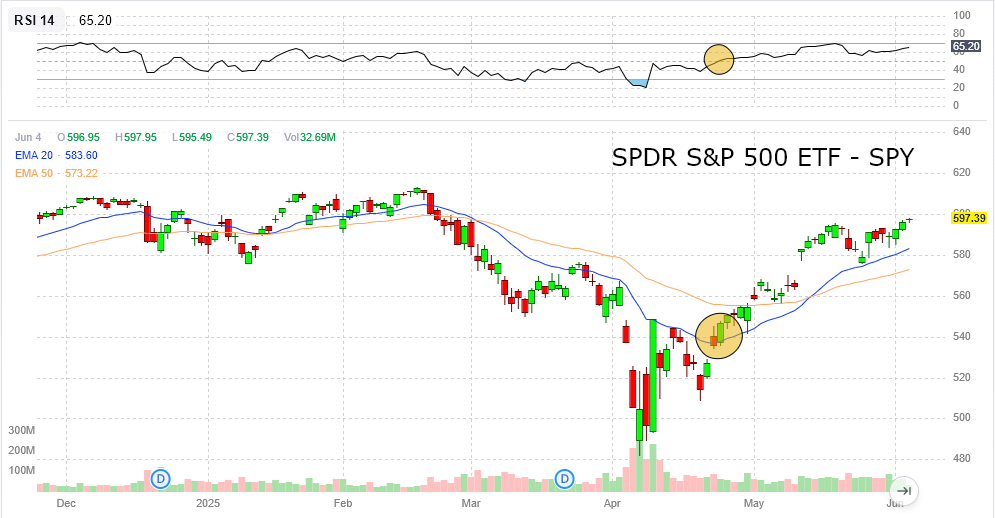
When RSI moves above 70, the trade is likely overextended. Too many traders are already in. Below 30, the setup is overlooked. That’s where the cleanest reversals often begin.
I use RSI as a pressure gauge. It doesn’t give the entry. It tells you where you are in the cycle.
What I look for:
- RSI crossing back above 50 — momentum is rebuilding
- Price reclaiming the 20-day moving average — structure is shifting
- Rising volume — confirms conviction behind the move
When these conditions align, I start planning long entries. Especially in sectors like energy, where these shifts can trigger fast moves.
But if RSI is stretched and volume fades, I stay out. That’s where traders get trapped.
RSI won’t tell you when to pull the trigger. But it will tell you when the water’s moving right.
MFI – Money Flow Index
Momentum is nothing without volume. MFI tells you if money is actually moving into the trade.
MFI combines price and volume to show whether capital is flowing in or out. It’s not just about direction. It’s about conviction.
When prices rise and MFI climbs, the move has force behind it. But if price is pushing higher and MFI stays flat or falls, that’s a warning. It means the crowd isn’t buying in. It means the wave might collapse.
I pay close attention when MFI and RSI both dip into oversold territory. That’s often where short covering begins. In energy, for example, when XLE hits that zone on both indicators, I start watching for fast reversals.
The number I care about most is 50. When MFI climbs back above it, especially after a long fade, that’s usually when the real move starts. It means money is flowing back in.
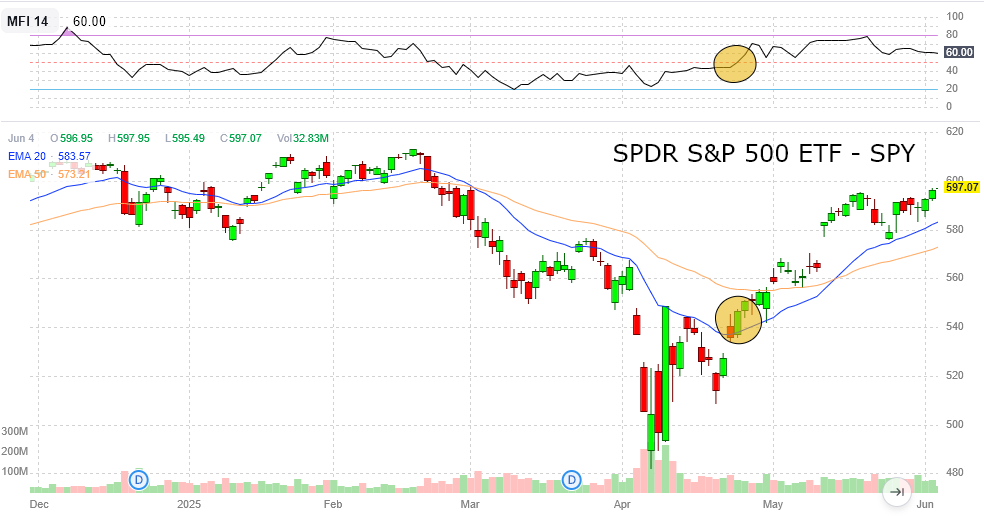
Price can move without volume. But real momentum doesn’t. MFI shows whether the setup is real—or just noise.
MACD – Moving Average Convergence Divergence
This is where you feel the shift. Short-term momentum crossing long-term trend. The wave is forming.
MACD tracks the relationship between two moving averages. It’s one of the cleanest ways to see when short-term pressure is overtaking long-term direction.
When MACD crosses above its signal line, the swell is building. You’re getting confirmation that momentum is shifting. When it crosses below, the wave is breaking down.
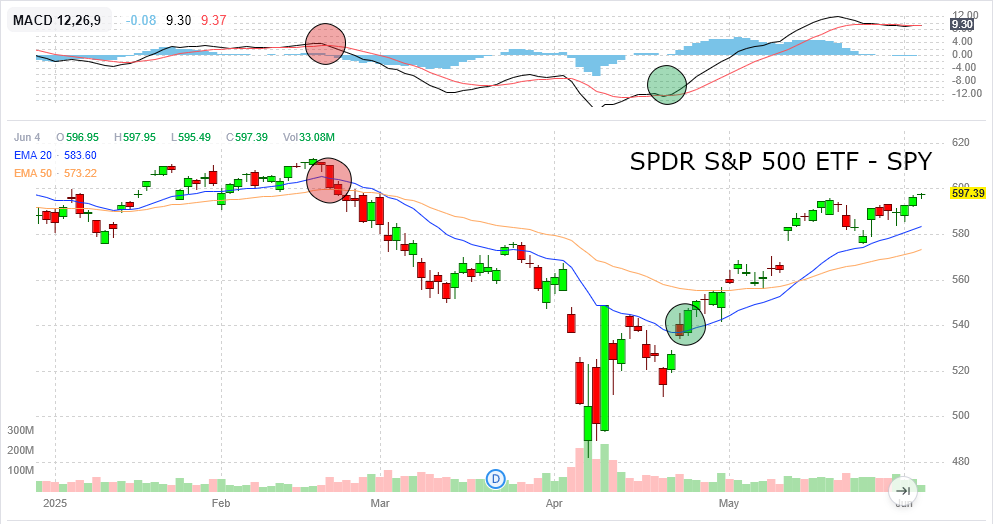
The MACD histogram shows how fast that shift is happening. Bigger bars mean stronger pressure. When the histogram flips and the bars grow, that’s usually when the move gets violent.
I don’t use MACD in isolation. I want to see price reclaiming structure. I want RSI moving above 50. I want volume rising. When MACD lines up with those elements, that’s when I press.
MACD doesn’t tell you what to trade. It tells you when to lean in. When the pressure is real, and the trend is starting to flip.
ATR – Average True Range
Every wave has a size. ATR tells you how big it is—and how dangerous.
ATR measures volatility. It doesn’t care about direction. It just tells you how far a stock is moving on average. High ATR means wide swings. Big risk, big potential. Low ATR means calm water. Smaller trades, tighter stops.
Before I enter a position, I always check the ATR. It tells me how much room I need to give the trade. If I’m trading a name with high ATR, I widen the stop. If volatility is low, I tighten it.
This matters more than most traders realize. Some setups look identical on the chart. But if one has twice the ATR of the other, the size and risk are completely different.
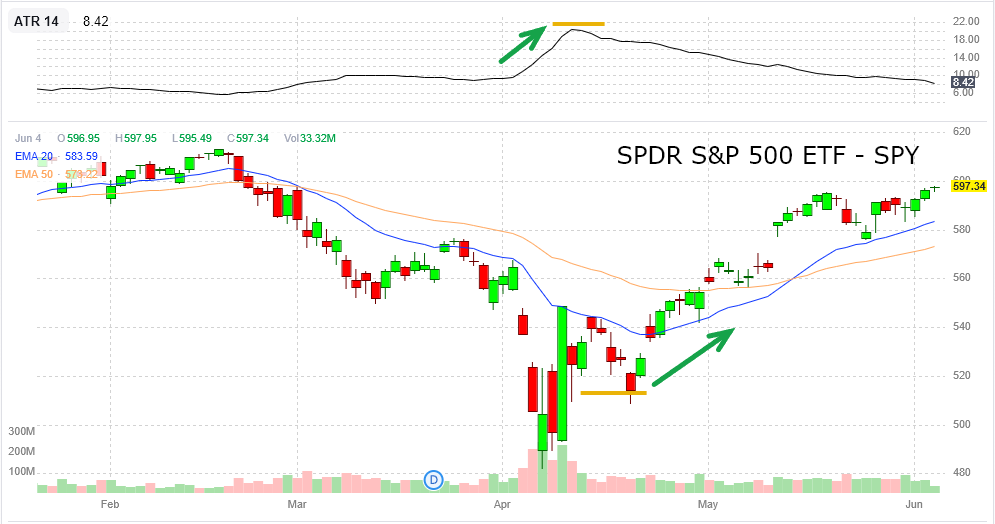
ATR doesn’t tell you when to trade. It tells you how much room to give your trade once you’re in.
ADX – Average Directional Index
Clean waves have direction. ADX tells you if the trend has power—or if it’s just chop.
ADX measures trend strength. It doesn’t say whether the move is up or down. It only tells you how strong the move is, regardless of direction.
When ADX is above 25, the trend is solid. That’s when you can surf cleanly in one direction. Below 20, the water gets messy. Range-bound. Sloppy. False starts and failed breakouts.
I use ADX to confirm what I already suspect. If RSI is climbing, MFI is positive, and MACD has flipped—but ADX is still under 20—I wait. The market might not be ready.
When ADX starts to rise with those other signals, that’s the green light.
Weak trends break down fast. ADX keeps you honest about the quality of the setup.

Ultimate Oscillator
Most traders stare at one screen. The Ultimate Oscillator checks three.
This indicator blends short-, medium-, and long-term momentum into a single view. It helps you avoid getting faked out by short-term moves that don’t have broader support.
When the Ultimate Oscillator turns higher across all three timeframes, that’s your tell. The current is shifting. The setup has depth behind it.
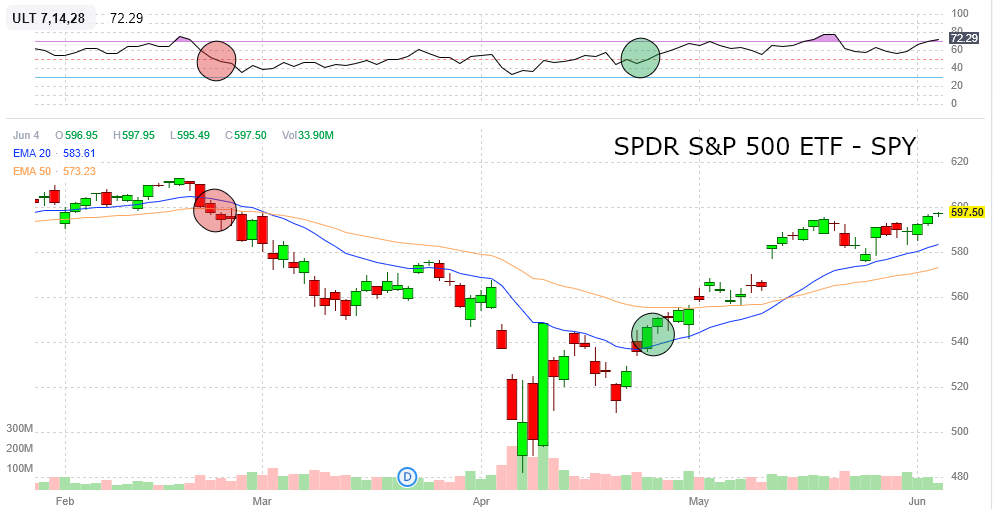
I don’t use this as a trigger on its own. I use it as confirmation. When the other indicators start to flash, I look here to see if the bigger picture agrees.
It works especially well in choppy environments where one timeframe alone isn’t enough to trust. This is where you spot the turning points that others miss.
When everything aligns, you move. If it doesn’t, you wait. That’s how the best waves get caught—and how the worst ones get avoided.
Never Miss Another Lesson
Momentum isn’t magic. It’s structure, flow, and confirmation. You don’t need to guess where the market is going. You just need to know how to read what’s already happening.
Every indicator you’ve seen on this page helps you do one thing: trade with confidence. When the signals align, you act. When they don’t, you wait. That’s how real momentum traders stay in control—no matter what the market throws at them.
If you found this helpful, don’t let it be a one-off. Market Masters LIVE is where I teach momentum, liquidity, and insider-driven trading in real time—every weekday at 8:45 AM ET.
You’ll get:
- The real-time signals that matter
- The sectors and setups worth watching
- How to spot momentum shifts before the crowd
This isn’t a newsletter. It’s not a tipsheet. It’s live market intelligence that helps you trade smarter—every single day.
Click here to learn more and catch the next broadcast.
Until then...
Stay positive,
Garrett Baldwin
